
ORE Catapult and Vattenfall just extended their North Sea partnership so more innovators can test crewless vessels and autonomous drones on a live wind farm
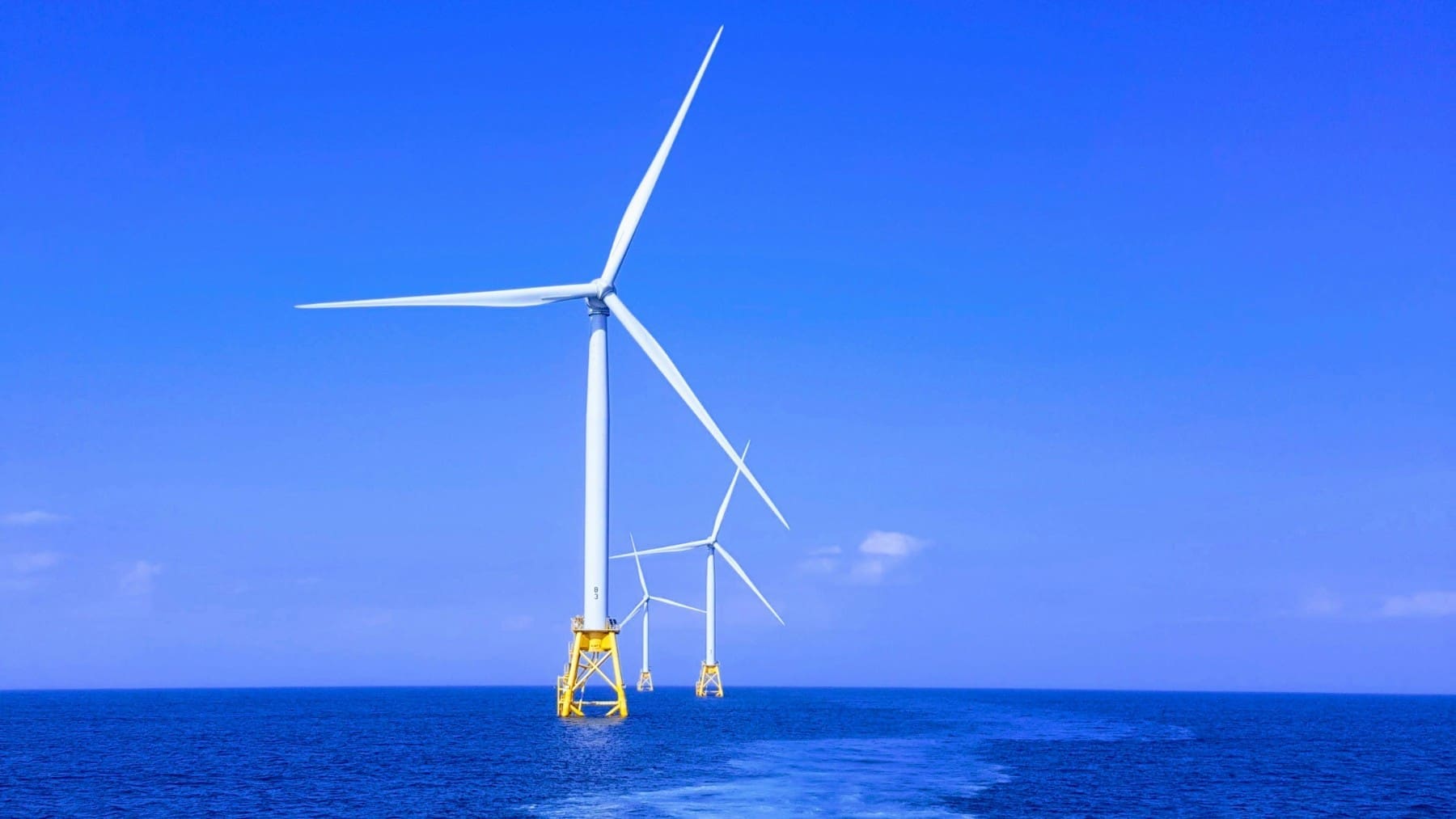
2.5 kilometers off the Aberdeen coast, eleven turbines rise from the North Sea, turning steadily against the wind. But something beyond routine power generation is happening here.
Drones circle turbine blades on their own, running inspection passes without a pilot at the controls. Crewless vessels glide between structures, relaying data back to operators sitting safely onshore. Inside each tower, a small fixture — practical, almost mundane — quietly signals that the people working this farm are changing too.
Aberdeen Offshore Wind Farm has become something more than a wind farm.
Zelim tested its Swift Rescue Conveyor System at the site, demonstrating it could recover people who had fallen overboard 20 times faster than conventional systems.
From Test Bed to Proving Ground
The partnership between ORE Catapult and Vattenfall at Aberdeen Offshore Wind Farm began in 2019, when the 96.8MW facility was positioned as a purpose-built test and demonstration site. The premise was straightforward: give innovators access to a working offshore environment where their technologies could be validated under real conditions. Five years on, a newly signed three-year extension runs to the end of 2026 — opening the site to a broader range of companies than before.
What makes Aberdeen genuinely useful to innovators isn’t just its location. It’s the variables that only offshore environments produce: wave motion, vessel movement, turbine scale, and the unpredictability of open water. No onshore test facility can replicate those conditions. The farm also carries real operational stakes — each year it offsets around 134,000 tonnes of CO2 and supplies power to roughly 80,000 UK homes.
Crewless Vessels and Remote Eyes: Redefining Offshore Inspection
Among the most significant milestones at the site, Fugro completed what is believed to be the world’s first fully remote ROV inspection of an offshore wind farm. Using its uncrewed surface vessel Blue Essence and electric ROV Blue Volta, the company conducted turbine generator inspections, scour surveys, and seabed grid surveys — with the entire crew onshore in Aberdeen, receiving real-time data via high-bandwidth VSAT connection.
The carbon footprint reduction was substantial: 95% lower emissions compared to conventional crewed support vessels. Since the Aberdeen demonstration, Fugro has expanded its USV fleet across Europe, completing pipeline inspections and additional wind farm surveys. The trial didn’t just prove the technology worked — it gave the industry a reference point it could trust.
Cyberhawk’s experience followed a similar arc. The Edinburgh-based company used the site to validate Sulzer Schmid’s autonomous drone blade inspection technology in an offshore setting for the first time. Offshore variables — turbine size, vessel movement, environmental conditions — are simply impossible to replicate on land, as Cyberhawk noted. Completing the demonstration gave the team the confidence to bring the product to market.
Safety, Welfare, and the Human Side of Innovation
Not every breakthrough at Aberdeen involved robotics or remote sensing. Some addressed more immediate human concerns.
Zelim tested its Swift Rescue Conveyor System at the site, demonstrating it could recover people who had fallen overboard 20 times faster than conventional systems. For an industry where crew transfer vessels operate in unpredictable sea states, that performance gap matters considerably. The system can be built into new vessel designs or retrofitted to existing ones.
Pegasus Welfare Solutions — now part of OEG Renewables — installed what are described as the world’s first in-turbine toilets across all 11 of Aberdeen’s turbines. Fewer vessel transfers for comfort breaks, less time lost, greater operational efficiency. The company also frames the innovation as a step toward improving gender diversity in offshore wind, where workforce conditions have historically been a barrier to inclusion. It’s a small fixture with an outsized implication.
These developments reflect a broader recognition that human factors — safety, comfort, accessibility — are as central to offshore wind’s future as any engineering advance.
Data, Sensors, and the Digital Layer Growing Across the Farm
Aberdeen has also become a testing ground for the quieter revolution in asset monitoring. Synaptec retrofitted passive fibre optic sensors to the farm’s export cable termination points, generating live data that can flag abnormal behavior before it becomes a costly failure. The shift from scheduled maintenance to continuous, real-time monitoring is precisely the kind of operational improvement the industry needs at scale.
A prototype wave radar and fusion sensor were also installed, capable of measuring directional wave spectra in all conditions — including shallow waters and near structures. R2S digital twin technology was tested at the site too, producing virtual walkthroughs of the installation embedded with operational data. Technicians can now assess conditions remotely, reducing non-essential offshore visits and supporting training before deployment.
What the Next Chapter Looks Like
The extension signals that Aberdeen’s role as a proving ground is expanding, not consolidating. Future projects will focus on robotics and sustainable solutions — areas where the gap between laboratory performance and offshore reality remains wide.
For ORE Catapult and Vattenfall, the goal is explicit: de-risk innovations on a live farm, build customer confidence, and accelerate routes to market for UK companies. Offshore wind capacity continues to grow globally, and the need for validated, deployable technology will only intensify with it. Aberdeen’s model — a real farm, real conditions, real stakes — may well become the template other markets look to as they develop their own innovation pipelines.
Daniel García is an Editor-in-Chief with strong expertise in structural work and engineering principles. He combines this technical foundation with deep knowledge of energy, spatial design, and emerging technologies, bringing a forward-thinking and analytical approach to editorial leadership.
