
PTTEP reports THB 39 billion net income for H1 2026, approves THB 4.50 interim dividend as domestic gas output tops contractual targets
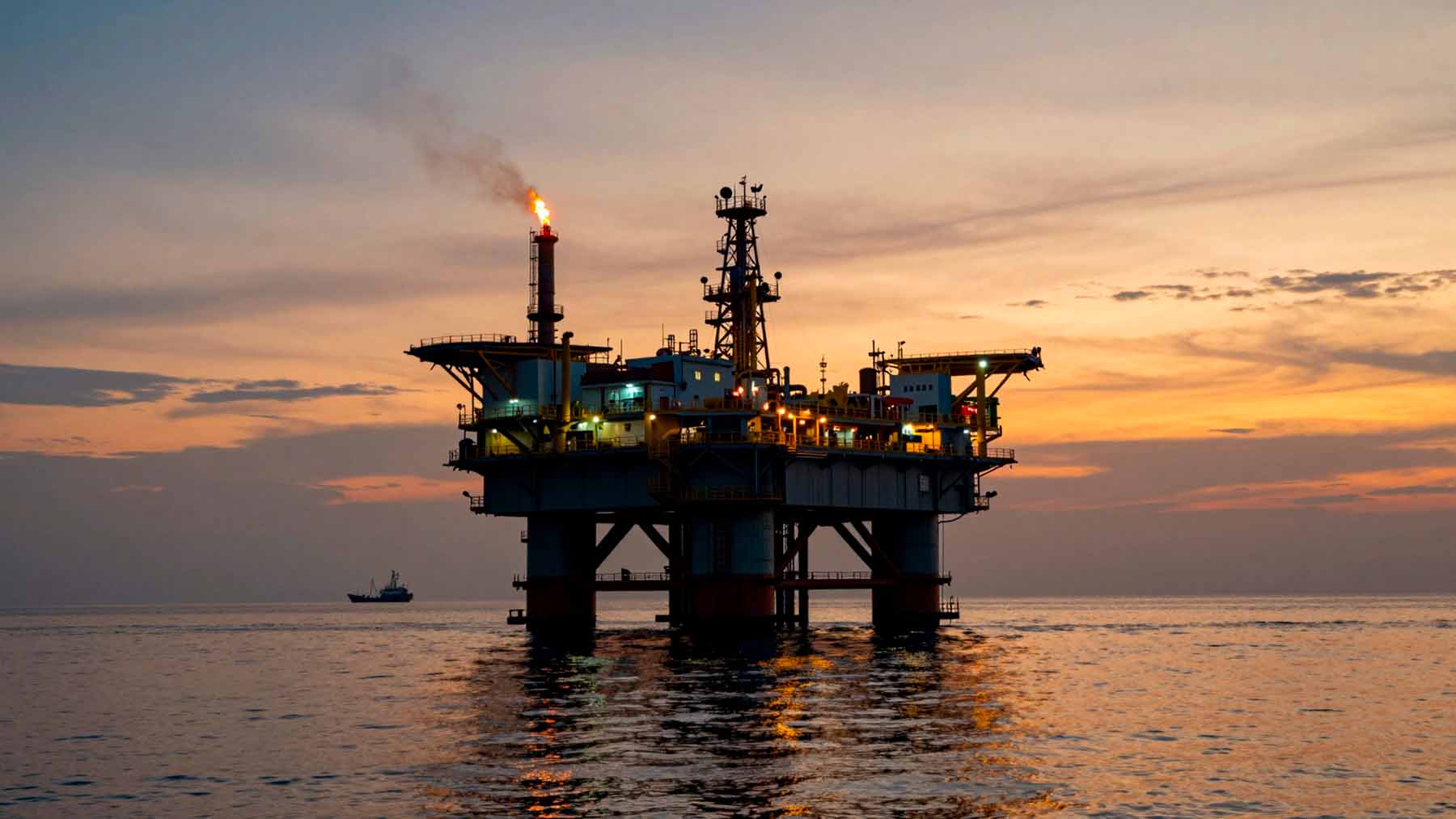 Image generated with artificial intelligence
PTTEP reported a net income of THB 39,032 million (USD 1,209 million) for the first half of 2026, as total revenue reached THB 176,756 million ($5.495 billion) and average sales volume climbed 14% year-on-year to 563,179 barrels of oil equivalent per day. On July 31, the company’s Board of Directors approved an interim dividend of THB 4.50 ($0.14) per share, payable August 28, reflecting what the company described as a solid financial position sustained through a period of ongoing Middle Eastern tensions.
PTTEP posts strong H1 2026 revenue and net income
Total revenue for the first six months of 2026 came in at THB 176,756 million—that’s USD 5,495 million. Two things drove that top-line number: more volume and better prices.
Average sales volume hit 563,179 barrels of oil equivalent per day (BOE/d), a 14% jump from the same period last year. The average selling price rose 10% year-on-year to USD 49.54 per BOE, tracking broader gains in global crude. Together, those figures produced net income of THB 39,032 million (USD 1,209 million) for the half.
PTTEP says the approach reduces costs, speeds execution, and cuts greenhouse gas emissions compared with conventional decommissioning and new-build methods.
The numbers suggest PTTEP came into 2026 carrying real operational momentum, built on the portfolio moves it made throughout 2025.
Production growth driven by new project acquisitions and Gulf of Thailand fields
That volume increase didn’t happen by accident. PTTEP points to stronger output from its existing Gulf of Thailand projects, along with production from assets where it picked up participating interests during 2025—specifically the Malaysia–Thailand Joint Development Area A18, Algeria Touat, and Malaysia SK408. Each added incremental barrels to the daily count, widening PTTEP’s production base well beyond its traditional domestic footprint.
On the domestic side, natural gas production held at roughly 2,680 million standard cubic feet per day (MMSCFD)—above the daily contractual quantity of around 2,500 MMSCFD. The company is deliberately running ahead of its minimum obligation.
The reason isn’t complicated. Ongoing conflict in the Middle East has tightened global energy supply, and PTTEP has kept its fields at full capacity to help cushion the impact on Thai households and industrial users. The company frames this as a national energy security move, not purely a commercial one.
The board approves an interim dividend; government contributions exceed THB 27,700 million ($860 million)
Shareholders will see a direct return from the strong first-half performance. On July 31, 2026, PTTEP’s Board approved an interim dividend of THB 4.50 ($0.14) per share, with the ex-dividend date falling on August 14 and payment following on August 28. That decision signals confidence in a financial position that’s held up through a period of elevated global uncertainty.
PTTEP also made a substantial contribution to the Thai state. During H1 2026, the company paid over THB 27,700 million ($860 million) in income taxes, royalties, and other remunerations to the government—funds that feed into community programs, education, and research. Under the Production Sharing Contract structure for the G1/61 and G2/61 projects, the state receives a direct share of petroleum profits on top of those tax and royalty payments.
PTTEP advances circular economy and marine habitat initiatives
PTTEP’s H1 2026 story isn’t purely financial. The company completed what it describes as Thailand’s first “Total Wellhead Platform Reuse—a project at the Jakrawan K wellhead platform in the Funan field, part of the G1/61 Project. Rather than decommissioning the structure, PTTEP relocated and reinstalled the topside, jacket, and selected pile sections within the same field. The logic is straightforward: don’t scrap usable infrastructure when it can be put back to work. PTTEP says the approach reduces costs, speeds execution, and cuts greenhouse gas emissions compared with conventional decommissioning and new-build methods.
A separate initiative takes retired offshore structures in a different direction entirely. PTTEP signed a Memorandum of Agreement with the Department of Fisheries and the Department of Mineral Fuels to repurpose nine retired wellhead platform jackets as artificial reefs in the Gulf of Thailand. Deemed environmentally safe, the structures will be transferred under the supervision of the Department of Mineral Fuels before being handed over to the Department of Fisheries, with installation scheduled to begin in Q4 2026. The goal is to restore marine habitats and support sustainable fisheries in coastal communities.
A first half that went well beyond the income statement
PTTEP’s first-half 2026 results reflect a company benefiting from both higher volumes and a firmer price environment. Revenue of THB 176,756 million ($5.495 billion) and net income of THB 39,032 million ($1.209 billion) were supported by a 14% rise in average daily sales volumes and a 10% increase in average selling price year-on-year.
Domestic natural gas production running above contractual targets—roughly 2,680 MMSCFD versus a DCQ of around 2,500 MMSCFD—has been a deliberate response to Middle East supply pressures. The approved interim dividend of THB 4.50 ($0.14) per share, payable August 28, signals confidence heading into the second half. Contributions of over THB 27,700 million ($860 million) to the Thai government, alongside the launch of offshore sustainability initiatives, round out a first half that went well beyond the income statement.
Kelly is an experienced writer with 15 years of experience exploring the big stories that shape our world, from tech breakthroughs and space exploration to climate, energy, and the fascinating quirks of science. She has a talent for turning complex ideas into sharp, memorable insights that stay with readers long after they’ve finished reading.
