
When substantial amounts of clean energy production result in an unexpected turn of events.
The sky is the limit for the green energy transition, but for a certain solar facility, the sky becomes limiting.
It is no secret that all forms of renewable energy technologies face obstacles, but this particular one is concerning.

Global survival depends on sustainable solutions, but does this mean the lives of certain species should hang in the balance?
How green energies can breathe new life into the world
The burning of fossil fuels has suffocated the planet long enough.
Severe feverish global temperatures are pushing the world to the brink of extinction. This is why a cure is needed now more than ever.
Fortunately, power sources no longer have to be poisonous, and their toxic effects can be addressed.
Researchers have declared renewable energy to be the ultimate antidote.
Earth’s lifeforms could finally catch their breath. All it takes is administering clean energy to set the world free from the weight of carbon emissions.
If this can be achieved, ocean acidification will be slowed, and polar ice will not melt.
Pollutants will no longer impact human and wildlife health, and global biodiversity will be protected.
However, it is important to keep in mind that almost all medicines have at least one side effect.
This makes us wonder, what are the side effects of renewable power on the planet?
Some green lifelines could have life-threatening impacts
Many researchers have been exploring how renewable energy technologies can affect their surrounding environment.
In many cases, these effects can be predicted to some extent.
Conventional wind turbine blades rotate at 10 to 20 revolutions per minute. This is relatively slow, but when converted to miles per hour (mph), the tips reach between 100 and 180 mph.
This fast rotation speed is fatal to birds and bats. That is only one of many “side effects” of wind power.
Solar power also has concerning impacts on its surroundings.
Traditional solar plants require substantial land space for installations. This leads to the disruption of many species’ natural habitats.
These are all common examples of known side effects. However, once in a while, something completely unexpected happens.
The Association of Avian Veterinarians (AAV) shed some light on one of the more uncommon phenomena resulting from concentrated solar.
The strange side-effect of solar energy on birds
The use of mirrors for concentrated solar power has been increasing in popularity due to its extensive clean electricity production.
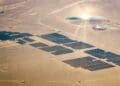
California is among those that have invested in this source. Its Ivanpah Solar Electric Generating System consists of more than 300,000 mirrors that concentrate solar energy onto three central towers.
The 377 MW power plant has, unfortunately, been part of a case study researching its impact on wild birds.
The AAV study’s results were concerning, to say the least.
Feeling the heat due to bird mortality
Concentrated solar power plants experience extremely hot zones where air can reach temperatures of 1,000°F.
The AAV case study found that birds that fly into this very hot air zone instantaneously “ignite” or get singed. IEEE Spectrum researchers documented the same grim phenomenon.
Birds fly into these dangerous zones due to a tragic optical illusion. To them, these shimmering mirrors resemble water.
Industry predicts approximately 1,000 deaths annually. However, wildlife experts fear the mortality could be as high as 28,000 annually.
With such a severely fatal side effect, one would expect this “antidote” to be removed from the shelf. The facility even experienced low performance and high operational expenses.
However, despite closure efforts by facility owners and Pacific Gas & Electric, the Ivanpah facility’s shelf life has been extended.
For now, as it faces a regulatory standoff, Ivanpah will remain open to meet grid demands. Is California’s “Solar Savior” truly worth it all?
Disclaimer: Our coverage of events affecting companies is purely informative and descriptive. Under no circumstances does it seek to promote an opinion or create a trend, nor can it be taken as investment advice or a recommendation of any kind.