
We are all familiar with the sadness that comes with the end of an era, but when one door closes, another one opens. This is evident in the world of renewable energy technologies. For years, we have benefited from a lower carbon footprint thanks to solar panels. Then, “kirigami” photovoltaic cells entered the picture, starting the end of the solar panel era. Fear not, however, as these photovoltaic cells track the sun to produce up to 40% more energy, and that’s not all that makes them more beneficial.
The end of the solar panel era
Eventually, all things come to an end, whether good or bad. In the case of traditional solar panels, they can be quite the enigma. Modern solar panels have been widely adopted to produce clean energy for energy security and to help offset carbon emissions from fossil fuels, which are all advantageous. Yet, traditional solar panels in our modern day and age still present disadvantages, including:
- Requires vast land space
- Habitat disruption
- Visual pollution
- Limited application
- Energy intermittency
- Expensive upfront fees
This is why new photovoltaic cells are being explored. With the end of the solar panel era comes the fear of the unknown of the future. However, the photovoltaic cells inspired by kirigami, an ancient Japanese art, present us with more than a glimmer of hope for the future of solar energy. The manner in which they operate produces substantial amounts of increased energy. Find out more below.




“Kirigami” photovoltaic cells track the sun
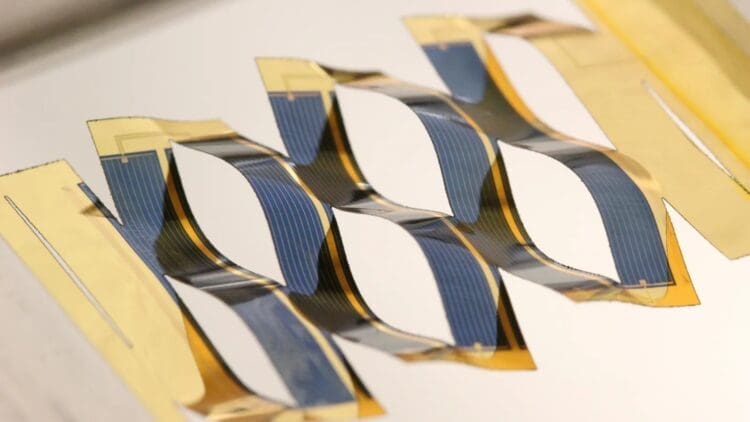
Kirigami, a Japanese art method, dates back to ancient times when paper was cut and folded to make detailed 3-dimensional creations. Fast forward to 2015, and this ancient method became the inspiration for a team of researchers from the University of Michigan at Ann Arbor to create the latest photovoltaic cell design that can track the sun.
“The beauty of our design is, from the standpoint of the person who’s putting this panel up, nothing would really change. But inside, it would be doing something remarkable on a tiny scale: the solar cell would split into tiny segments that would follow the position of the sun in unison.” – Associate professor of materials science and engineering, Max Shtein
So, it is what’s on the inside that counts. The University of Michigan team is not the first to downsize photovoltaics, as another solar technology company created the pioneering Sphelar cells that could become mainstream soon. While both designs are driven by the same cause, the kirigami-inspired photovoltaics stand out, as they produce up to 40% more energy, among other things.
They produce up to 40% more energy
These photovoltaic cells were created by first using a carbon dioxide laser to cut detailed, yet simple patterns into Kapton, which is a space-grade plastic. After the team was satisfied with the chosen pattern, customised photovoltaics were created and added to uncut Kapton, leaving enough space between the cells. The laser was then used to cut the desired pattern onto the photovoltaic-combined Kapton.
“We think it has significant potential, and we’re actively pursuing realistic applications.” – Shtein
Advantages of this design
- Decreased installation costs
- Easy installation
- Flexible, lightweight, durable material
- Decreased intermittency
- Decreased visual impact
- Increased application possibilities
- Pitched and residential rooftops
- Vehicles
- Drones
- Space applications
These kirigami-inspired photovoltaic cells are presently still in the research and development stage on both commercial and academic levels. The team is working towards creating the most optimal, scalable design possible. Their paper was published in the scientific journal Nature Communications. While this solar technology may not be commercially available yet, it proves that the world is ready for more unique and efficient solar technology designs. Another promising concept entails an “impossible” material that produces record energy with the blackest solar cell ever.
Anke Maree is a writer with a clear and engaging editorial style. Her work focuses on making complex topics accessible, informative, and relevant for readers across different areas of interest.