
RWE Americas sells 348 MW distributed solar portfolio and 1.2 GW development pipeline to Goldman Sachs Alternatives
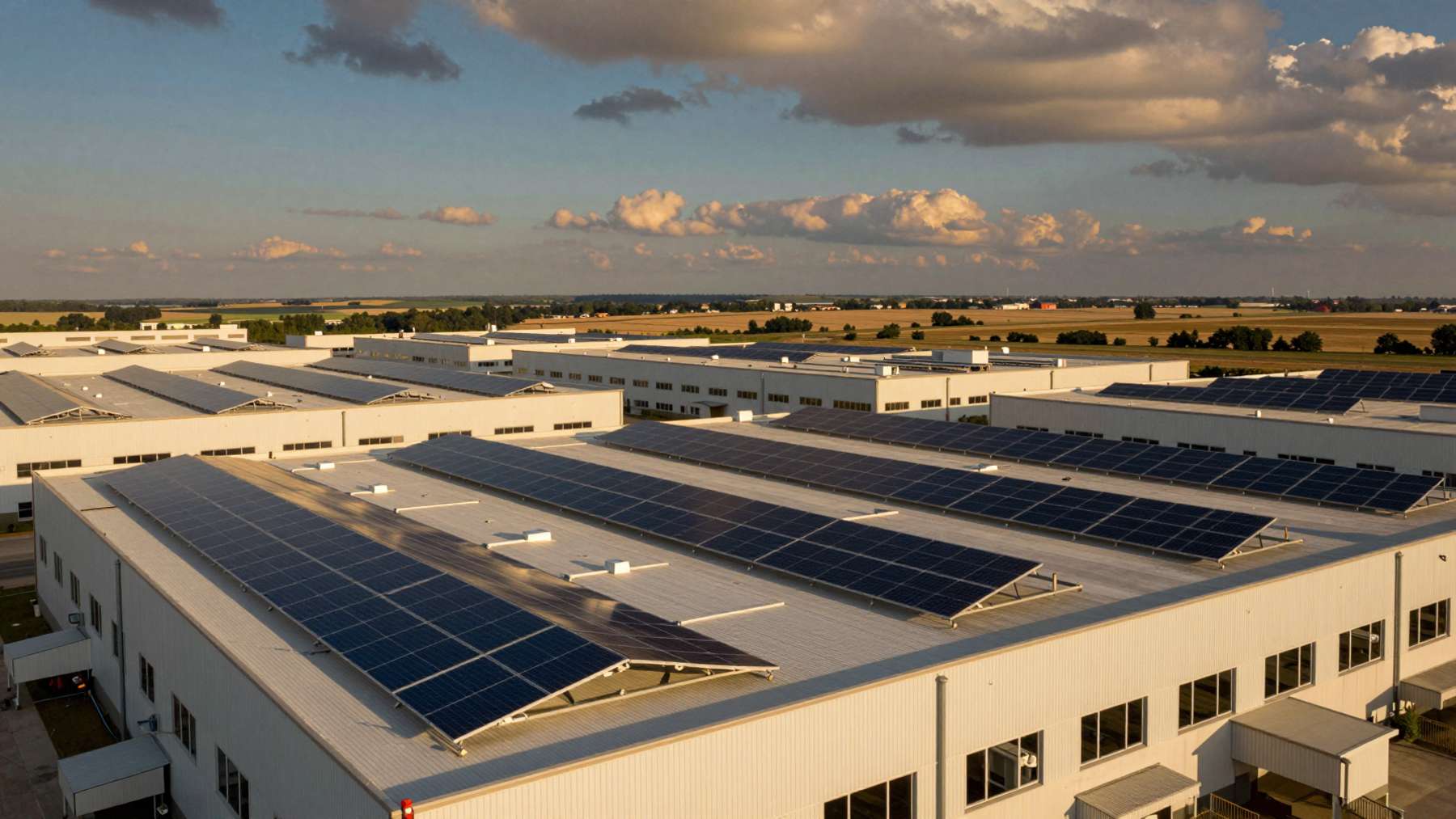 Image generated with artificial intelligence
RWE Americas just signed a deal to sell its U.S. Distributed Clean Energy business to Infrastructure at Goldman Sachs Alternatives. We’re talking about roughly 348 MWdc of operating solar assets across 16 states, plus a 1.2 GW development pipeline. It’s a meaningful ownership shift in the distributed solar space.
RWE Americas agrees to sell distributed solar business to Goldman Sachs Alternatives
The portfolio is substantial. Those 348 MWdc (308 MWac) of operating assets span 16 U.S. states—giving the buyer an immediately active, geographically diversified platform. The 1.2 GW development pipeline attached to the deal provides a clear runway for what comes next.
It is worth clarifying who Goldman Sachs Alternatives actually is. It’s not a standalone energy company—it’s the alternative investments and private markets platform of Goldman Sachs Asset Management, a vehicle that puts capital into clean energy, power infrastructure, and energy-transition businesses around the world.
The move also fits RWE’s broader “Growing Green” strategy—a global initiative targeting net-zero carbon emissions by 2040—and streamlining the U.S.
Why RWE is divesting its distributed clean energy segment
This isn’t a retreat from clean energy. It’s a deliberate narrowing of focus, with RWE Americas choosing to concentrate its resources on utility-scale power rather than running a separate distributed solar business alongside it.
CEO Andrew Flanagan spelled out that priority. He acknowledged the strength of the DCE business—its assets, its customer relationships, its team—before framing the deal as a strategic sharpening, not an exit. “This transaction allows RWE to further sharpen its strategic focus on growing our utility-scale power business in America,” he said. That framing matters: this is a company deciding what it wants to be, not walking away from something that failed.
RWE currently owns and operates 13 GW of power projects across 27 U.S. states. At that scale, concentrating on the core segment makes sense. The move also fits RWE’s broader “Growing Green” strategy—a global initiative targeting net-zero carbon emissions by 2040—and streamlining the U.S. portfolio is part of how the company plans to get there.
What the deal means for the DCE business and Goldman Sachs Alternatives
For the DCE business, new ownership doesn’t mean a shutdown or restructuring. Once the deal closes, operations and maintenance, asset management, and development activities are all expected to continue as-is. The platform keeps running. Only who owns it changes.
Goldman Sachs Alternatives, by contrast, gets a ready-made entry into distributed solar—an established customer base, operating assets already producing power across 16 states, and a 1.2 GW pipeline to develop. No building from scratch required.
The team has been active in infrastructure investing for nearly two decades. Since its inception in 2006, Goldman Sachs Alternatives has deployed an estimated $16 billion in global infrastructure assets, with clean energy and power infrastructure sitting squarely in its investment focus. That track record suggests the DCE business is landing with an owner that has both the capital and the appetite to grow it.
RWE’s remaining U.S. portfolio and expansion plans
Selling the DCE segment doesn’t slow RWE Americas down. The company has announced plans to add 9 GW of wind, solar, battery storage, and natural gas projects by 2031—an aggressive target that signals real confidence in U.S. demand for clean electricity.
RWE’s global footprint adds context to that ambition. Operating across Australia, Europe, and the Americas, the company delivers wind, solar, hydropower, and battery energy storage at scale. What started as a local utility in Essen, Germany, grew into a multi-technology global energy company over decades.
The DCE divestiture also fits a recognizable 2026 industry pattern. Large energy companies are increasingly restructuring through strategic asset transfers and partnerships, offloading segments that don’t align with their core focus while directing capital toward areas where they hold the strongest competitive edge. RWE’s move is a clean example of that logic.
9 GW of new U.S. capacity by 2031
Here’s the bottom line. RWE Americas is selling its 348 MWdc distributed solar portfolio and 1.2 GW development pipeline to Infrastructure at Goldman Sachs Alternatives—the private markets arm of Goldman Sachs Asset Management, not a separate energy company.
The DCE business keeps running under new ownership, maintaining its existing functions. Goldman Sachs Alternatives picks up a functioning distributed solar platform with a built-in growth pipeline, while RWE frees up strategic bandwidth to chase its utility-scale ambitions—targeting 9 GW of new U.S. capacity by 2031 and staying on track toward its global net-zero goal for 2040.
No closing date has been publicly announced, but both sides have signed the agreement. This is a calculated repositioning within a fast-moving energy market: not a distressed sale, but a deliberate strategic decision.
Kelly is an experienced writer with 15 years of experience exploring the big stories that shape our world, from tech breakthroughs and space exploration to climate, energy, and the fascinating quirks of science. She has a talent for turning complex ideas into sharp, memorable insights that stay with readers long after they’ve finished reading.
