
Floating solar array altered reservoir ecology as algae spread and aquatic plants declined
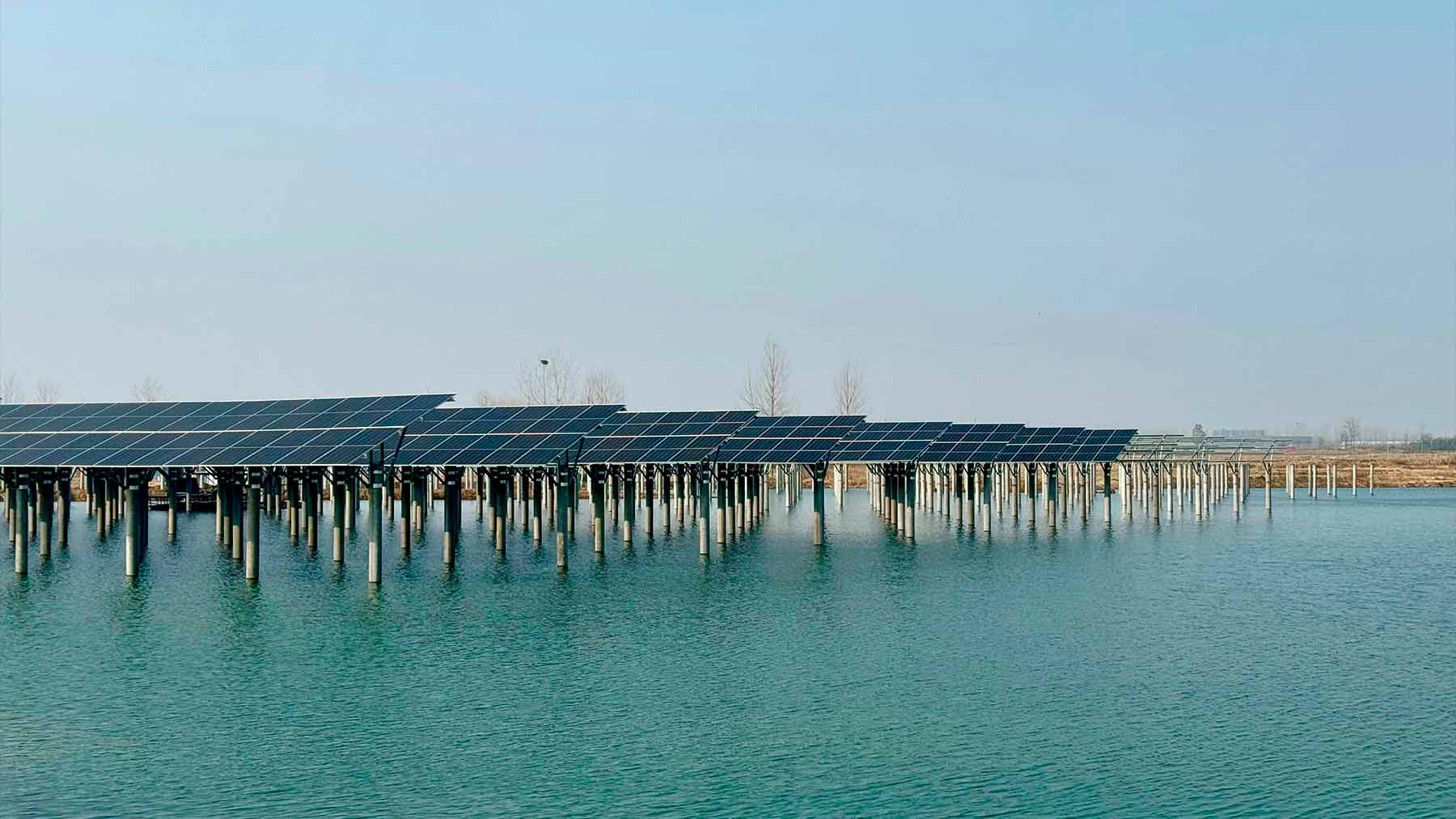
A Dutch study revealed that floating solar parks can alter aquatic ecosystems.
The Netherlands is racing to meet its distinctive renewable energy goals as climate regulations become stricter.
But as the push for rapid green capacity expansion continues, available land for deployment becomes scarcer.
Ultimately, floating solar power can help meet both climate targets and rising energy demands, but must incorporate ecological design standards.
With floating photovoltaics rising as a key solution, researchers are growing concerned about potential implications.
In what ways can floating photovoltaic structures trigger underwater ecology changes?
How modernization has affected Dutch energy and climate goals
Climate change is accelerating, which has led to several national and global climate targets being tightened.
This has especially been the case in Europe, where nations like the Netherlands are now rushing their renewable energy transitions.
By 2030, the Dutch aim to reduce greenhouse gas emissions by 55% compared to 1990 levels.
This interim target is meant to ease the shift toward the ultimate goal of achieving net-zero by 2050.
While these goals are vital in mitigating environmental degradation, achieving them is not as straightforward.
Worldwide, nations are experiencing unprecedented levels of energy consumption driven by rapid modernization.
In the Netherlands, data centers are responsible for approximately 4.6% of the nation’s total power demand.
The rest of the surge is fueled by housing development expansion and industrial electrification.
To ensure that both national climate goals and electricity demand are satisfied, green energy capacity must significantly increase.
From rising solar developments to rising tensions
Solar power has been life-saving across Europe, keeping grids stable and preventing blackouts.
As the energy source scales up, it becomes an ideal solution to the dual crisis nations like the Netherlands face.
So far, the Dutch have made rapid progress, raising their total installed solar capacity to almost 30 gigawatts.
However, this capacity must grow significantly more to close the nation’s widening supply gap.
Yet, major bottlenecks have made it challenging to expand traditional photovoltaics.
The Netherlands is densely populated and has limited land availability for utility-scale clean energy projects.
This has triggered major social tensions and competition over land use between energy projects, agriculture, and housing.
These issues are not limited to the Netherlands, as developers worldwide are experiencing similar pressures.
This has led to a rise in floating solar installations on inland water bodies.
Consequently, researchers are growing concerned over potential aquatic impacts caused by these structures.
The effects of floating photovoltaics on underwater ecology
Researchers from Evides Water Company teamed up with Wageningen University and ecological consultancies for a targeted study.
During the study, they monitored a shallow drinking water reservoir in Rotterdam.
A sun-tracking floating solar system covered 24% of the reservoir’s surface area.
Over several years, changes in water quality, temperature, and aquatic life were tracked beneath the floating array.
Discovering a major ecological disruption
The team found that natural mixing cycles and average water temperatures remained mostly unchanged.
Bird populations and fecal bacteria levels remained primarily the same after the installation.
However, native beneficial macrophytes and benthic algae like stonewort plants began disappearing due to reduced light penetration.
Meanwhile, the concentration of benthic cyanobacteria (blue-green algae) significantly increased across the reservoir floor.
The higher levels of blue-green algae pose potential water quality risks.
Furthermore, Dreissena mussels heavily colonized the submerged floating structure. Biofouling also impacts the water quality.
Floating solar installations successfully address land constraints in nations like the Netherlands.
However, the study’s findings emphasize that developers should proceed with caution.
It does provide water managers with useful insights.
They are advised to limit surface coverage, monitor benthic ecosystems closely, and restrict installations on shallow reservoirs.
This will help conserve aquatic biodiversity.
Ultimately, floating solar power can help meet both climate targets and rising energy demands, but must incorporate ecological design standards.
The study findings can be reviewed with: Sandrini, G., Wagenvoort, A., van Asperen, R., Hofs, B., Mathijssen, D., & van der Wal, A. (2025). Illuminating the Impact of a Floating Photovoltaic System on a Shallow Drinking Water Reservoir: The Emergence of Benthic Cyanobacteria. Water, 17(8), 1178. https://doi.org/10.3390/w17081178
Anke Maree is a writer with a clear and engaging editorial style. Her work focuses on making complex topics accessible, informative, and relevant for readers across different areas of interest.
