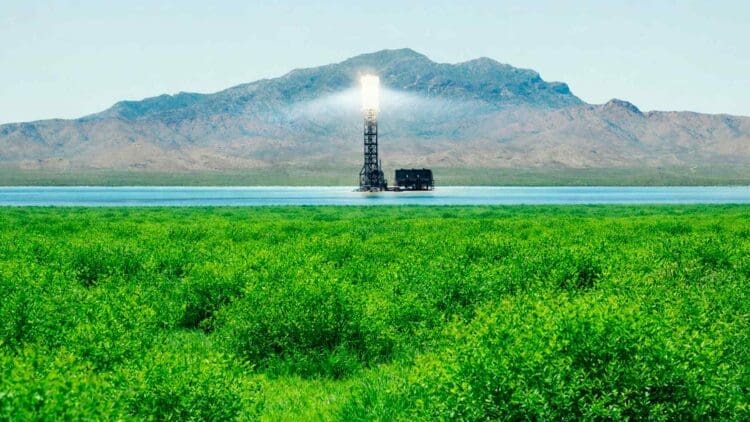

When a large-scale solar farm is in the right environment, it helps nature flourish rather than languish.
Renewable energy’s primary goal is to mitigate the effects of climate change, but it seems the damage is worsening regardless.
Globally, desertification has become a silent crisis affecting billions of people and incurring high ecological costs.

In this twist of fate, could this discovery help change the world and its perspective on this energy source?
How climate change effects are growing amidst a solar “PR problem”
In today’s fast-paced environment, something or someone’s stature can change from hero to zero in the blink of an eye.
Take solar panels, for instance. The technology has been leading in the global race to expand renewable infrastructure and has enjoyed great success.
But that does not mean that it has not faced significant criticism over the years.
Large-scale solar farms require vast installation space, especially when supplementing massive grids.
For rural and agricultural communities, this means valuable earth is stripped to make room for clean energy production. This particular trade-off creates skepticism among locals.
The debate over the visual and spatial impact of solar power is becoming heated, but so is the planet.
A phenomenon known as “desertification” is slowly and silently spreading, with or without renewable installations.
Now, all living organisms are facing the costs of this growing problem without knowing how or when it will end.
The toll of the “silent killer” on the planet
Since the quick, transformative age of industrialization, carbon emissions have been taking a toll on Earth.
Recently, NOAA has warned that atmospheric patterns are cracking. While some must keep heads above water in heavy rain and flooding, others are burning up in extreme droughts.
With these unpredictable weather patterns, most droughts no longer remain localized. Instead, the result is the structural collapse of the soil’s ability to sustain life.
Nearly 40% of the planet’s land surface is now considered degraded.
Soon, there will be no more grasslands and forests bursting with life, but lifeless, arid landscapes begging for mercy. Along with desertification comes a growing global freshwater bankruptcy.
The economic costs are just as significant as the ecological ones.
Destroyed infrastructure, lost crops, and natural water system degradation are costing the global economy nearly $878 billion annually.
Fortunately, a Chinese solar farm could have the answer to this silent crisis.
The micro-oasis that grows with solar capacity
China is known for carpeting its landscapes with solar panels. The nation is currently leading the global installed solar energy capacity, but its latest desert marvel could tip the scales.
In Qinghai province, 7 million solar panels stretched across the high-altitude deserts, transforming the arid region into a “micro-oasis.”
The results are remarkable. They are seen at Junma Solar Power Station in the Kubuqi Desert and Gonghe Photovoltaic Park in the Talatan Desert.
Solar farms healed the soil with this strange effect
The solar panels block up to 80% of solar radiation from hitting the soil. The lower temperatures allow soil microbes to survive the noon heat.
The installations also block harsh winds. Altogether, water evaporation decreased, leading to vegetation growing by more than 80%.
Regular panel cleaning also boosted localized “artificial rain” dripping from the panels to the soil.
The improved conditions caused significant grass growth, which sometimes “overtopped” the solar panels.
This new challenge led to the innovative “Solar Sheep Farming.” Local livestock serves as organic “lawnmowers” that can enjoy the added shade and fertilize the soil.
This proved that solar panels could once again enjoy the “hero” status. As China’s “Great Wall of Energy” rises in the desert, the landscapes could transform into lush greenery in no time.