
Swiss researchers have created a ‘living battery’ that runs on sugar but ends up consuming itself
 Credits: EMPA
A “living battery” with a sweet tooth to feed the power hunger of the remote world.
Renewable energy solutions are the future, but their shortcomings necessitate a reliable backup to ensure uninterrupted global operations.
However, several regions worldwide cannot easily access these greener energy solutions, and traditional backup systems present significant challenges.
The battery is technically speaking a microbial fuel cell, and by keeping this cell’s sweet tooth satisfied, it ensures continued power.
But could the latest Swiss innovation help some of the most secluded places on Earth gain access to clean power?
How renewable power shortcomings are leaving the world in the dark
On paper, renewable energy sources trump fossil fuels through and through.
However, when it comes to in-field performance, the world is left to deal with its Achilles’ heel: intermittency.
Daylight hours are limited, and the wind sometimes refuses to blow.
This makes solar and wind energy non-ideal as sole power sources.
Even when used in a complementary manner in hybrid systems, they present the risk of keeping us in the dark.
In the most remote regions found deep in forests or high up on mountain ranges, the challenges are even greater.
The traditional backup plans for renewable energy installations fall significantly short, as transportation is costly and difficult. These areas are often prone to extreme temperatures, making these systems fail more easily.
These obstacles make it more difficult for nations to achieve their respective climate targets.
This necessitates innovation to prevent these regions from falling back on fossil fuels instead of green power.
Traditional battery storage also presents an invisible footprint
Large-scale battery energy storage systems have become synonymous with renewable energy. However, they hide a dark secret beyond physical constraints and added expenses to transport them to remote places.
Batteries have a hidden footprint that makes the “victorious” transition to clean power somewhat of a moot point.
Lithium-ion systems, which have become the standard for excess storage, depend on significant intensive mining of raw materials. These systems have increased in demand, leading to global critical mineral supply chain issues.
The production phase is also highly energy-intensive, and both extraction and decomposition result in pollution and toxic byproduct risks.
In remote areas, the latter is particularly challenging. The retrieval and recycling of these dead batteries is increasingly more complex and costly.
This invisible footprint thus risks the survival of the environments “green tools” are meant to protect.
Fortunately, the Swiss researchers from EMPA have engineered a feasible solution to overcome the remote obstacles.
Growing the future of remote clean power
Many innovators have been exploring different battery concepts to replace conventional storage systems.
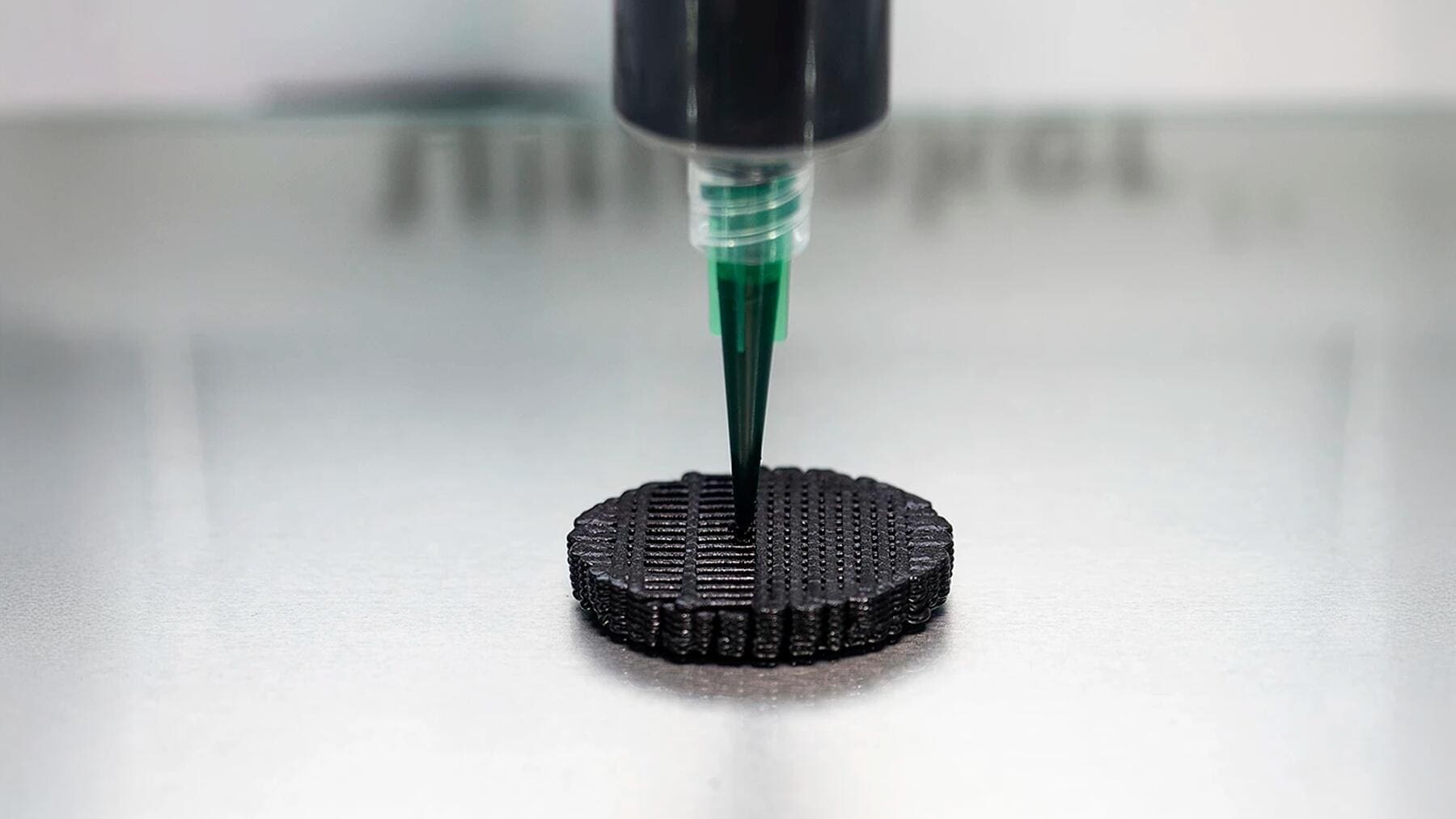
The EMPA team specifically sought inspiration from nature itself to create a 3D-printed “living battery.”
The battery is technically speaking a microbial fuel cell, and by keeping this cell’s sweet tooth satisfied, it ensures continued power.
Two fungi plus sugar make for a harmonious bio-battery
The cell consists of a white-rot fungus on the cathode and a yeast fungus on the anode. These fungi are embedded in a specialized, cellulose-based ink to easily add them to the cell.
When sugar is fed to the cell, the anode releases electrons. The cathode uses an enzyme to harvest electrons, completing the circuit.
3D-printing ensures the grid structure is precise, maximizing efficiency.
To wrap it all up, even the end of this cell’s life cycle is ingenious.
Once sugar supplies are depleted, the fungi begin to self-digest. This solves the transportation and safe recycling obstacles of conventional systems in remote regions.
By literally “consuming” its own footprint, this concept becomes a feasible, non-toxic, biodegradable alternative. Biological approaches thus have potential for the future.
But will advanced “living” renewable energy solutions truly be enough to meet future demands?
Anke Maree is a writer with a clear and engaging editorial style. Her work focuses on making complex topics accessible, informative, and relevant for readers across different areas of interest.
