
Standard Nuclear reaches construction and safety milestones at two TRISO fuel facilities in Tennessee and Idaho
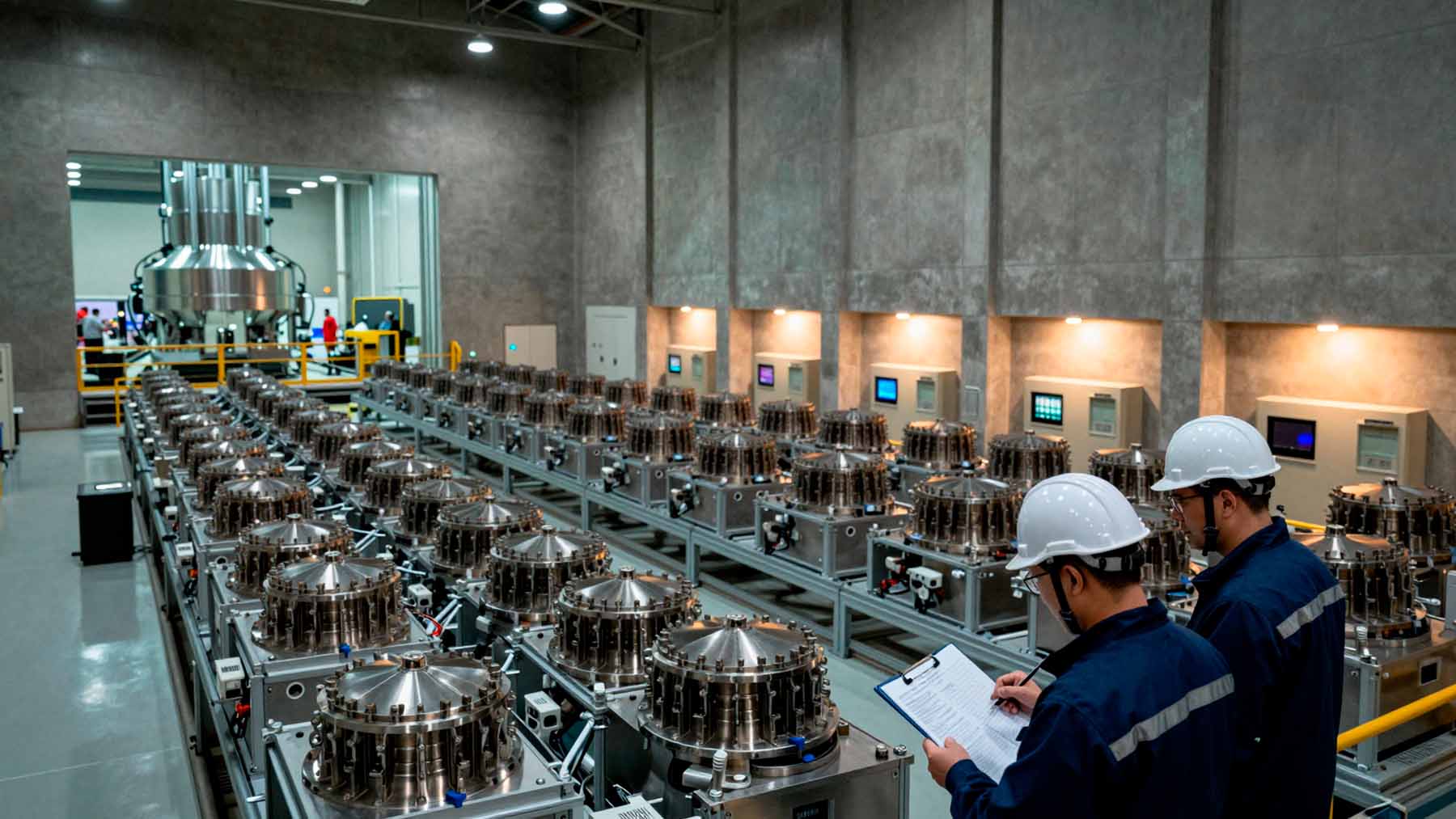 AI-made
Standard Nuclear just announced that construction is substantially complete at two new TRISO fuel production facilities—one in Tennessee and one in Idaho—and that the Department of Energy has approved the preliminary safety analyses for both sites. These back-to-back milestones, reached in 2026, mark a real step forward for domestic production of the specialized fuel that next-generation nuclear reactors depend on.
Construction and regulatory status at both sites
Standard Nuclear’s two facilities — SN-TN in Tennessee and SN-ID in Idaho — have both hit what the company calls “construction and regulatory approval milestones.” Construction is “substantially complete” at each site, and the DOE has signed off on the preliminary documented safety analyses, or PDSAs, for both locations.
Those PDSA approvals aren’t just paperwork. Before any nuclear facility can move toward active operations, the DOE has to review and approve these safety analyses. Getting that green light at two sites simultaneously puts Standard Nuclear in a strong position to push toward actual fuel production in the near term.
Commercial HALEU production is still ramping up, so the DOE has been supplying it directly to companies in qualifying programs while the private market develops.
The company hasn’t released a detailed operational timeline. But near-complete construction plus regulatory approval at both facilities? The path to production is clearly shorter than it was even a few months ago.
Why Standard Nuclear is building TRISO production capacity
Standard Nuclear isn’t doing this in isolation. The company is part of the DOE’s Fuel Line Pilot Program—a federal initiative built to support domestic nuclear fuel production infrastructure and a direct expression of the broader U.S. push to reduce reliance on foreign suppliers for next-generation reactor technology.
The company is also participating in the DOE’s Surplus Plutonium Utilization Program, which ties its fuel production work to wider nuclear material management goals—specifically, finding productive uses for surplus plutonium stockpiles. Standard Nuclear is among the companies receiving high-assay low-enriched uranium, or HALEU, directly from the DOE. HALEU is a specialized enriched uranium that many advanced reactor designs require, and commercial production of it remains limited. DOE supply agreements are currently one of the few reliable ways to access it.
Taken together, Standard Nuclear is deeply embedded in the federal government’s strategy for building an advanced nuclear fuel ecosystem—not just producing fuel independently, but doing so as part of a coordinated national effort.
Implications for domestic advanced nuclear fuel supply
Finishing construction at two facilities at roughly the same time is worth paying attention to. It signals that Standard Nuclear isn’t just testing a concept at a single pilot site—it’s scaling. Two simultaneous builds means two potential production lines coming online in the same window, which matters for an advanced reactor industry that has long faced constrained domestic TRISO supply.
The DOE safety analysis approvals add another layer of significance. These aren’t administrative checkboxes. Approving a PDSA means regulators reviewed the facility’s safety case and found it solid enough to move forward—a prerequisite for operational status that both Standard Nuclear sites have now cleared.
If both facilities reach production, the combined output could meaningfully expand the domestic TRISO supply chain at a moment when advanced reactor deployment is picking up speed.
Background: TRISO fuel and the DOE’s advanced reactor programs
TRISO stands for Tristructural Isotropic — a name that describes how the fuel is physically constructed. Each particle has a uranium kernel surrounded by multiple layers of carbon and ceramic materials, which act as a miniature containment system. That layered structure gives the fuel exceptional resistance to heat and radiation damage, making it well-suited for high-temperature gas-cooled reactors and microreactors where operating conditions exceed what conventional light-water designs typically see.
The DOE has been actively working to build out domestic supply chains for fuels like TRISO. The Fuel Line Pilot Program is one tool for doing that — supporting companies as they develop the infrastructure to produce advanced fuels at scale, with the goal of reducing U.S. dependence on foreign suppliers for specialized fuels not yet widely available commercially.
HALEU is a related piece of that puzzle. Many advanced reactor designs need uranium enriched above conventional fuel levels but below weapons-grade. Commercial HALEU production is still ramping up, so the DOE has been supplying it directly to companies in qualifying programs while the private market develops.
National goals around advanced nuclear fuel infrastructure
Standard Nuclear has hit two concrete milestones: substantially complete construction and DOE safety analysis approval at both its Tennessee and Idaho TRISO fuel facilities. Those achievements position the company to move toward operational fuel production—though no firm production start date has been publicly announced.
The company operates within a network of DOE programs — the Fuel Line Pilot Program, the Surplus Plutonium Utilization Program, and HALEU supply agreements — that tie its work to national goals around advanced nuclear fuel infrastructure. TRISO fuel stays central to deploying next-generation reactors, which makes expanded domestic production capacity a priority for the industry as a whole.

Kelly is an experienced writer with 15 years of experience exploring the big stories that shape our world, from tech breakthroughs and space exploration to climate, energy, and the fascinating quirks of science. She has a talent for turning complex ideas into sharp, memorable insights that stay with readers long after they’ve finished reading.
