
Statkraft to invest $49 million in control system upgrades at Norway’s Vikfalli hydropower complex
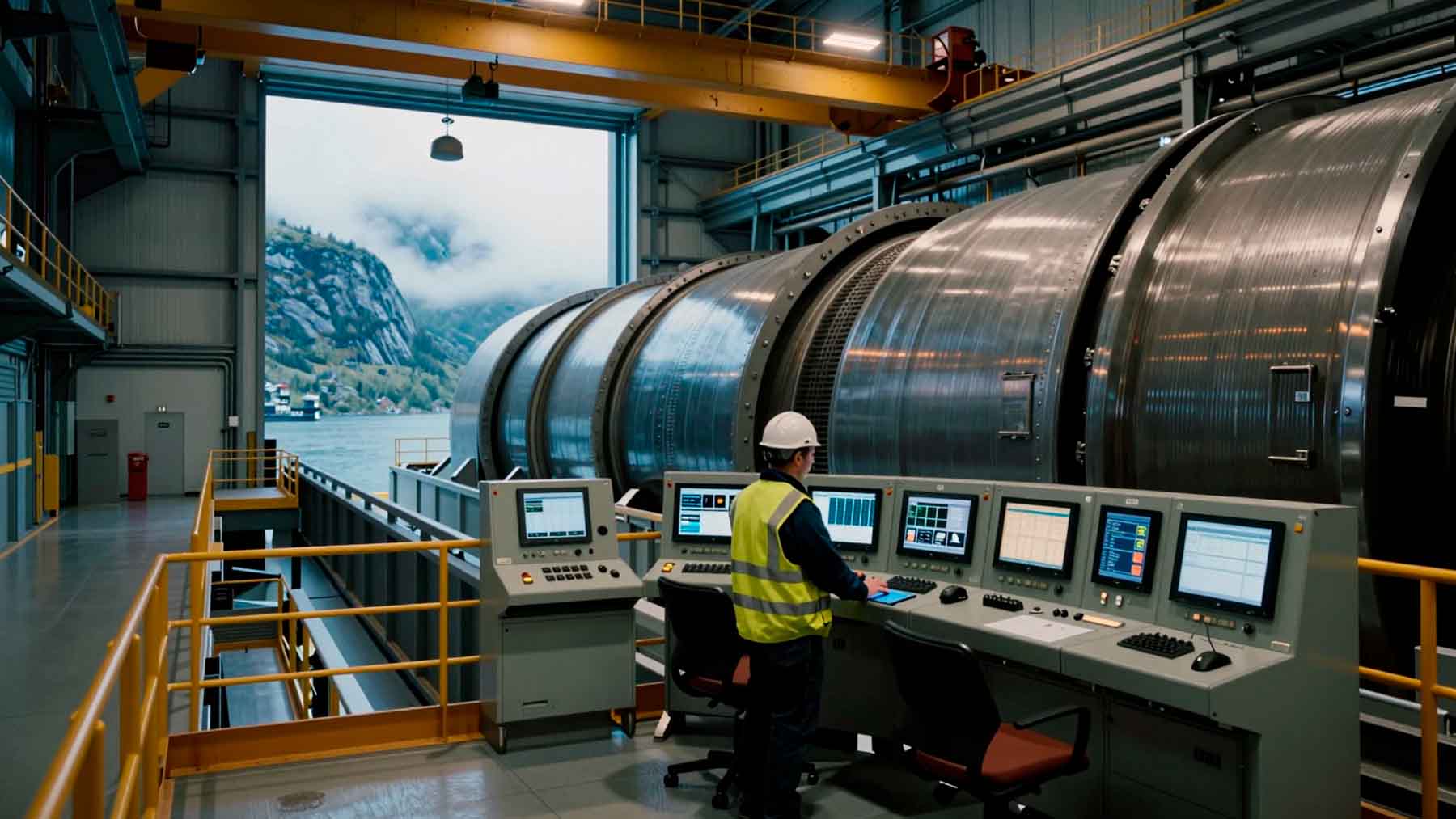 Image generated with artificial intelligence
Statkraft just announced it’s putting roughly $49 million (NOK 460 million) into a full control system overhaul at the three power plants that make up the Vikfalli hydropower complex in Vik municipality, Norway. The project kicks off now and covers the Målset, Refsdal, and Hove plants—which together push out around 860 GWh a year. ABB is the lead supplier on the new systems, and several local contractors will be joining in at different points along the way.
Statkraft launches $49 million (NOK 460 million) Vikfalli upgrade
That number makes more sense when you understand what Vikfalli actually does. At 860 GWh per year, the complex covers the electricity needs of around 50,000 Norwegian households. Reliable operation here isn’t just a technical checkbox—it’s a genuine regional necessity.
All three plants are getting the treatment: Målset, Refsdal, and Hove. The project also takes in upgrades to auxiliary and common systems at each facility, going well beyond the control systems themselves. ABB handles the new control systems as primary supplier, while local contractors plug in at various stages.
Keeping that infrastructure in shape has direct consequences for grid stability and energy security across the country, not just for the company’s bottom line.
Why the upgrade is needed now
Control systems are, as Statkraft puts it, the operational “brain” of a power plant—running everything from monitoring and regulation to day-to-day production management. When those systems age out, fault risk and unplanned outages climb. That’s exactly where Vikfalli stands right now.
“The time has come to replace these systems,” says Inge Hass, Statkraft’s power plant manager for the Sogn power plant group. “By modernising the control systems, we reduce the risk of faults and outages, while gaining improved capabilities for monitoring and troubleshooting.”
Timing matters here too. The upgrades need to be done before a separate, larger grid transition project gets going—one currently planned for around 2031. That gives Statkraft a fixed window to sort the control systems first, and waiting isn’t really an option.
Effects on reliability and regional grid development
Once the new systems are running, Statkraft expects a clear improvement in day-to-day plant management: better remote monitoring, faster troubleshooting, more efficient operations—all without needing staff physically on-site for every issue that comes up.
The benefits reach beyond the plants themselves. The control system renewal is a direct prerequisite for the broader grid upgrade being coordinated with Statnett and Sygnir, which involves moving both the transmission and regional grids in the area to 420 kV—a significant infrastructure shift planned for around 2031, pending the necessary approvals.
Statkraft sees the Vikfalli work as the opening move in a longer sequence. “We see this as the first step in a broader development of the facilities and the regional power system,” Hass says. “By carrying out this modernisation now, we are preparing for future developments.” Without finishing the control system upgrades first, the grid transition simply can’t move forward on schedule.
Context: Statkraft’s $8.5 billion (NOK 80 billion) national investment plan
The Vikfalli project doesn’t stand alone. It fits into a much larger strategy Statkraft recently made public: roughly $8.5 billion (NOK 80 billion) to be deployed across Norway over the next ten years, with around NOK 70 billion earmarked specifically for hydropower.
Most of that spending targets major maintenance of existing plants rather than new construction— swapping out aging technical equipment, strengthening dams, improving waterways. Work that keeps already-developed water resources productive for decades longer. Some older facilities will also be replaced with newer installations to make better use of available water.
Statkraft currently generates around one-third of Norway’s electricity, so the condition of its existing portfolio carries national weight. Keeping that infrastructure in shape has direct consequences for grid stability and energy security across the country, not just for the company’s bottom line.
The economic reach of the investment plan extends beyond Statkraft’s own operations. Large-scale maintenance and upgrade projects like this generate contracts for local and national contractors, drive activity in the supplier industry, and create value in the communities where the plants sit. The Vikfalli project—with ABB leading and local contractors woven throughout—is a live example of that dynamic.
860 GWh per year
Statkraft is putting approximately $49 million (NOK 460 million) into a full control system renewal at the Målset, Refsdal, and Hove plants in the Vikfalli complex. ABB is the primary supplier, with local contractors also in the mix. Together, the plants produce around 860 GWh per year—enough for roughly 50,000 households.
The upgrade tackles aging infrastructure carrying a growing fault risk, and sets the stage for a larger grid transition to 420 kV planned for around 2031 in cooperation with Statnett and Sygnir. Completing the control systems first is a stated prerequisite for that next phase—there’s no skipping the sequence.
Vikfalli is part of Statkraft‘s broader $8.5 billion (NOK 80 billion) national plan for the coming decade, with roughly $7.5 billion (NOK 70 billion) directed at hydropower. Most of that spending focuses on maintaining and extending the life of existing plants, a strategy that carries real economic benefits for contractors, suppliers, and local communities across Norway.
Kelly is an experienced writer with 15 years of experience exploring the big stories that shape our world, from tech breakthroughs and space exploration to climate, energy, and the fascinating quirks of science. She has a talent for turning complex ideas into sharp, memorable insights that stay with readers long after they’ve finished reading.
