
Norway’s mountain turbines have been humming since the 1920s and Statkraft just bet billions that they’ll still be running in 2100
Deep inside Norwegian mountains, turbines have been spinning quietly for nearly a century — carved into rock, fed by glacial rivers, largely invisible to the millions of homes they power. Plants like Nore in Buskerud have been generating electricity since 1928, followed by others in the 1940s and 1950s, with little public attention and even less fanfare.
Now, that quiet reliability is coming with a bill attached. Much of the equipment is reaching the end of its service life, tunnels excavated 60 to 80 years ago need upgrading, and the scale of what’s required to keep this infrastructure running is forcing Norway’s largest energy company into one of the biggest industrial commitments the country has seen in decades.
Decades of electricity, now facing a reckoning
Hydropower has a reputation for being nearly effortless — water falls, turbines spin, lights come on. That perception isn’t entirely wrong, but it obscures a harder reality: infrastructure built across the 1920s through the 1950s doesn’t last forever without serious attention. CEO Birgitte Ringstad Vartdal addressed this directly in a recent statement: “Hydropower is often portrayed as almost cost-free, but this is a reminder of the considerable investment required to sustain a robust energy system.”
About NOK40 billion goes to maintenance of existing assets — work designed to protect current generation capacity and prevent further deterioration.
Statkraft operates plants that have been running for 60 to 80 years. Tunnels excavated by hand through Norwegian bedrock are showing their age, waterways need upgrading, and key mechanical components are reaching the limits of their designed service life. For decades, the plants kept running reliably enough that large-scale reinvestment could be deferred. That window is closing.
Vartdal describes the current moment as a genuine inflection point — not a routine maintenance cycle, but a structural reckoning with what it takes to keep century-old infrastructure generating power for another century.
An $8.6 billion commitment — what the money covers
Statkraft’s response is a NOK80 billion investment plan, equivalent to roughly $8.6 billion, spread over the next ten years. The figure represents a substantial increase from the NOK44–67 billion range the company put forward as recently as January 2024. That earlier estimate, it turns out, wasn’t enough.
The investment is split roughly in half. About NOK40 billion goes to maintenance of existing assets — work designed to protect current generation capacity and prevent further deterioration. The remaining half targets upgrades, new capacity, and expanded output. At least five major upgrade projects are planned to begin by 2030, with the full program stretching well beyond that.
The scope reflects a strategic decision to concentrate investment in Statkraft’s core business rather than diversify into new markets.
Plants being ‘rebuilt’: the modernization projects
The plants named as modernization candidates read like a timeline of Norwegian industrial history. Nore in Buskerud opened in 1928. Mår in Telemark followed in 1948, and Aura in Møre og Romsdal came online in 1953. All three are now candidates for what Statkraft’s Executive Vice President for Nordics, Pål Eitrheim, describes as something well beyond routine renovation: “In practice, we are rebuilding major hydropower plants.”
In Alta, the plan goes further still. The existing facility will grow from two generating units to three, allowing the plant to capture water that currently bypasses it during flood season — energy that has been flowing past unused for decades.
Dam reinforcement is also part of the program, with several older structures needing to meet stricter modern safety standards and greater resilience to changing climate conditions. Eitrheim frames the overall effort as “one of the largest industrial programs in Norway for many decades,” with activity stretching from Finnmark in the north to Telemark in the south.
Wind power joins the renewal push
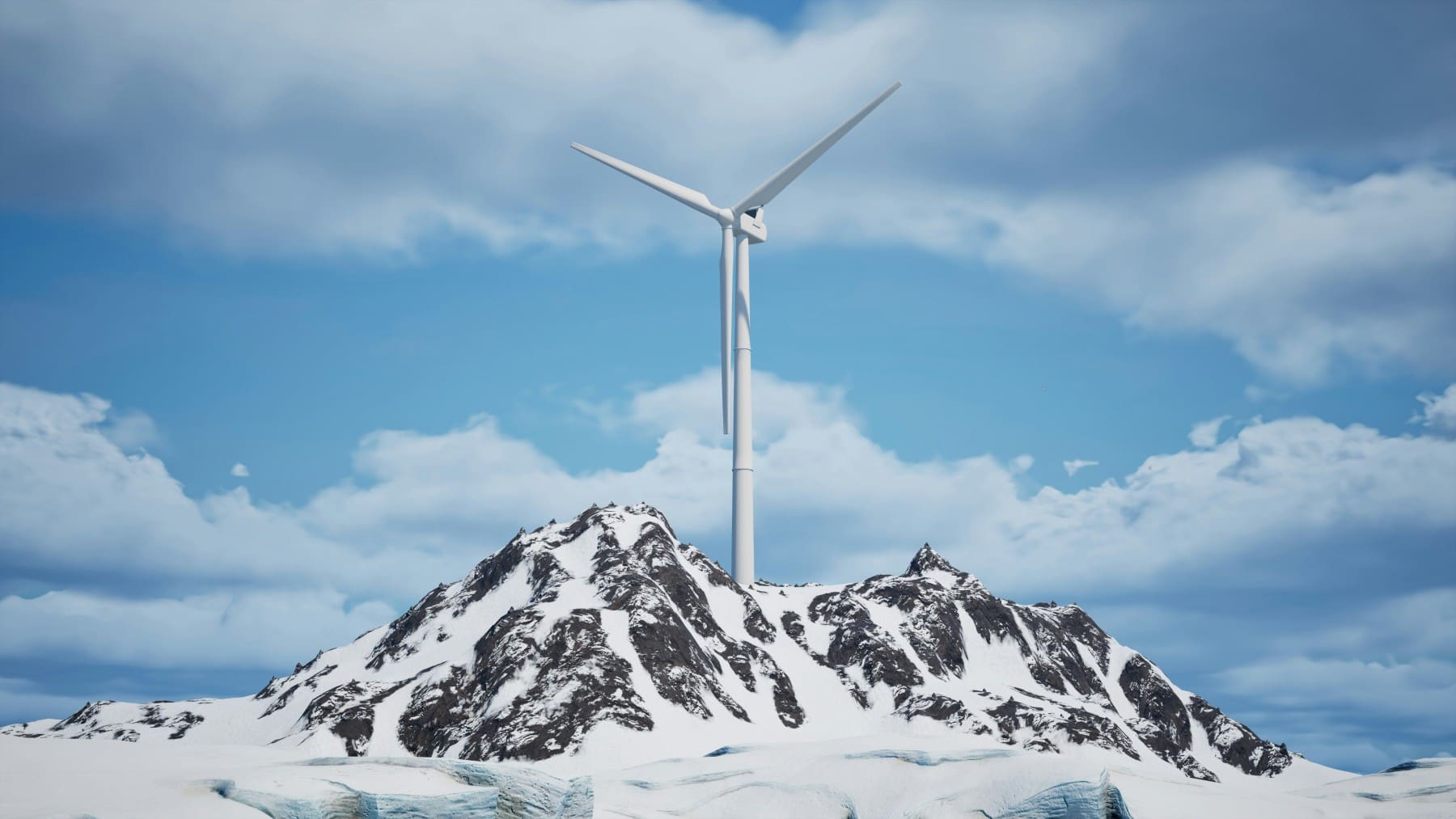
Hydropower dominates the investment plan, but aging wind infrastructure is also being addressed. Three wind farms are approaching the end of their operational lifetimes, and rather than decommissioning them, Statkraft plans to repower each one — replacing older turbines with fewer, more powerful machines that produce significantly more electricity on a smaller footprint.
The repowering strategy draws on experience from similar projects already completed in Spain. Eitrheim says the company’s estimates suggest wind power generation could more than double over the next ten years as a result. Fewer turbines with greater output means reduced land use and, the company argues, lower power prices over time — treating end-of-life infrastructure not as a liability to be retired, but as a chance to reset the baseline entirely.
What this means for Norway’s energy future
If the investment proceeds as planned, Statkraft’s hydropower plants could be generating electricity well into the next century — a substantial extension of infrastructure that was already aging when much of today’s energy industry was getting started. The upgraded facilities are also expected to play a more active role in grid balancing, filling gaps when wind generation drops and demand rises.
The economic reach of the program is deliberately broad. Eitrheim has pointed to job creation stretching from Finnmark to Telemark, from Innlandet to Vestland, a geographic spread that reflects the distributed nature of Norway’s hydropower network.
What to watch over the next several years is whether execution matches ambition. With at least five major projects to begin before 2030 and a total commitment nearly double what was estimated just eighteen months ago, disciplined prioritization will be essential. The turbines have been humming for a century. Keeping them running for another one is a more complicated proposition than it once appeared.

Carlos is an engineer with strong expertise in technical and industrial topics. He previously worked at international companies such as Siemens and is multilingual.
