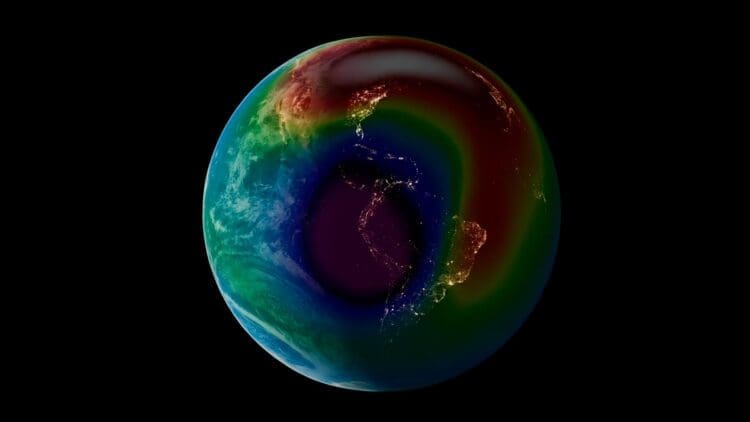

As the saying goes, “It’s not over until the fat lady sings.” In this case, the fat lady is the planet’s stratosphere layer. For those who hoped to see the first signs of spring soon, there may be some bad news, as winter is not ready to up and leave just yet. Some states could experience the effects of a stratospheric collapse, and the impact of this phenomenon will be felt in a matter of days. Some may find the upcoming events unusual, but it won’t be the first time this has happened.
The role of the planet’s atmospheric dynamics in life on Earth
As we continue our daily lives, several unusual yet highly crucial events are occurring in the environment that we may not even be aware of. However, without these events, our daily lives can become significantly disrupted. Take the Earth’s weather events, for example. Have you ever wondered why the weather can suddenly change from mild to extreme conditions?
In general, the weather is highly dependent on atmospheric dynamics. Seeing as we are still in winter, we will use winter weather as an example. In the polar regions of the planet, one can find low-pressure areas that consist of significantly cold air. Once a sudden change in the atmospheric layers occurs, this cold, low-pressure air can result in freezing weather.
This is where the stratosphere plays a key role. Recently, this atmospheric layer underwent a sudden change, which caused an unusual phenomenon. Some states felt its impact, and more is predicted to hit in a matter of days.
The impact of an unusual phenomenon: A stratospheric collapse
The cold low-pressure air in the polar regions is referred to as the Polar Vortex. As Severe Weather Europe explains, the Polar Vortex consists of the upper stratospheric vortex layer and the lower tropospheric vortex layer. North Americans recently felt the effects of a disturbed Polar Vortex, caused by an unusual phenomenon known as a stratospheric collapse.
This collapse is caused by increased stratosphere temperatures, or a “stratospheric warming” event. When this occurs, the Polar Vortex’s cold air escapes and creates severe weather conditions.
We know the stratosphere plays a key role in atmospheric circulation and the climate, and that there have been some radical ideas about “blanketing” the stratosphere, as seen in Chris Goodall’s book recommendations on energy transitions. But that’s all it remains, radical ideas, and it won’t stop the U.S. from experiencing the effects of a disturbed Polar Vortex once again.
These states will experience the effects of this unusual phenomenon
According to Severe Weather Europe, a developing major “Sudden Stratospheric Warming” (SSW) event is being closely monitored, as it could change North America’s and Europe’s February weather, lasting well into March. The impact of the first event was felt last weekend with the arrival of Winter Storm Fern. New York was one of the states affected by the event.
Chad Merril, AccuWeather meteorologist, warned that unchanged temperatures on Monday could result in the 12th consecutive day of freezing weather. Should this be the case, it will be the first time since 2003 that New York City has experienced this phenomenon. According to the New York Times, the following states should also take precautions:
- The Carolinas
- Virginia
- Florida
- New England
- New Jersey
- Georgia
- Pennsylvania
- Washington
Being prepared for a worst-case scenario would be best. A KPubs report advises clearing gutters, checking that backup heating systems are working properly, sealing any areas where drafts are felt, securing additional blankets and flashlight batteries, stocking up the pantry, etc. Even a back power system, such as the 2 kW green “pod” turbine could become lifesaving during snowfall. And while not everyone may experience snowfall, some coastal regions could be struck by significant flooding, so be safe!