
Yukon hydropower dam diverted water from turbines to form a protective ice cover and prevent winter slush blockages
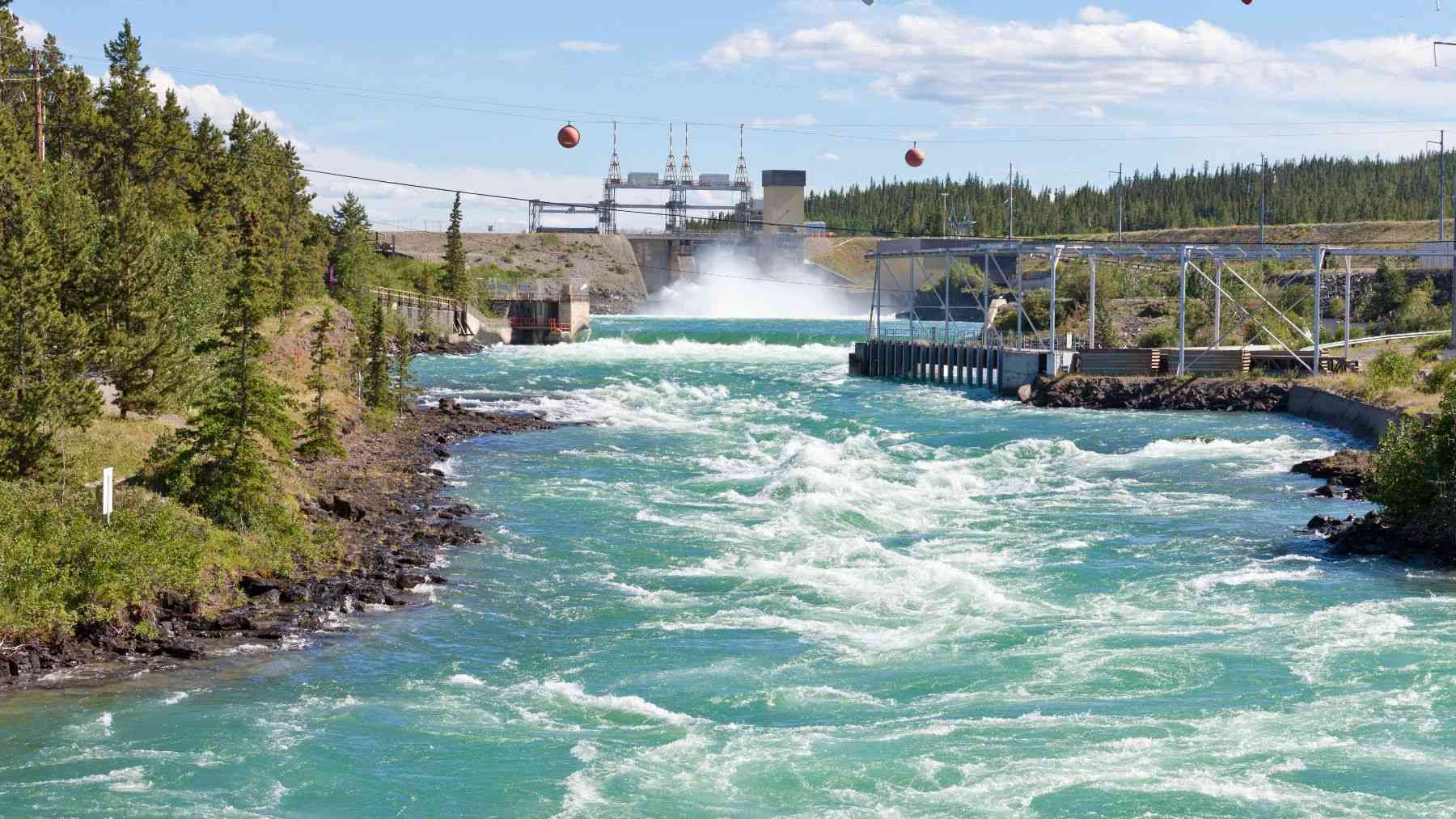
Canada operates an impressive fleet of hydropower dams that help balance variable renewables.
The power source generates over half of the country’s electricity, playing a vital role in achieving climate targets.
However, every winter, freezing rivers present operational challenges for northern hydroelectric stations.
Beyond domestic grid decarbonization and stabilization, Canada’s surplus clean hydroelectricity is also exported across North America.
Without proper preparation, hydropower turbines are affected, and power generation is halted.
What proven cold-weather management protocols do Canadian operators use to keep northern grids running reliably?
How the power of flowing water has become the backbone of Canada
Hydroelectricity has shaped many economies around the world.
In Canada, hydropower gave rise to the nation’s modern electrical grid.
Since the late 1800s, Canadian engineers have harnessed mighty rivers from coast to coast.
In those years, early stations such as Ontario’s DeCew Falls powered rapidly expanding cities, factories, and mines.
By the mid-1900s, 90% of the country’s electricity was generated by falling water.
Today, Canada is the world’s third-largest hydropower producer, trailing behind China and Brazil.
More than 550 hydroelectric dams generate about 60% of the country’s total electricity.
Together, these stations account for 82,000 MW of installed generating capacity.
The power source is also key to modern-day energy demand, which is projected to double.
Residential heat pumps, electric vehicles, and manufacturing are already driving a higher need for zero-emission electricity.
Canada targets net-zero emissions by 2050, and hydropower helps by providing reliable, low-cost energy to meet this surge sustainably.
Moreover, these massive dams also act as giant batteries.
Major hydropower dams are essential in balancing the grid
Canada has significantly diversified its energy portfolio by expanding solar and wind generation capacity.
While these clean energy sources help decarbonize the grid, their associated technologies depend entirely on the weather.
During calm, windless days, nighttime, or when clouds roll in, power generation drops.
Hydropower stabilizes this intermittency in real time.
As soon as generation declines or power demand spikes, stored water is released through turbines within seconds.
This prevents blackouts and maintains steady grid frequency without relying on fossil fuels.
Beyond domestic grid decarbonization and stabilization, Canada’s surplus clean hydroelectricity is also exported across North America.
Canadian hydropower supplies over 80% of all U.S. electricity imports each year.
This is essential in balancing neighboring North American states’ grids while reducing regional emissions.
However, Canada’s harsh climate presents severe seasonal operational challenges, especially in the far north.
Fortunately, Yukon Energy is very familiar with managing annual winter issues.
Keeping the lights on when winter strikes hardest
Each winter, northern hydropower dams face a hidden threat beneath the water surface called frazil ice.
When sub-zero temperatures strike, rivers become supercooled below freezing without forming solid surface sheets.
This supercooled water is churned by turbulence, forming millions of small, sticky underwater ice crystals.
Slushy frazil ice clings to metal intake grates, disrupting water flow and turbine operation right when winter heating demand peaks.
When frazil ice blocks intakes, commercial divers are usually needed to melt the buildup by hand using high-pressure steamers.
But Yukon Energy proved this bottleneck can be prevented.
Setting the ice to protect winter turbines
In late 2017, a strategy called “setting the ice” was used at the Whitehorse hydro dam.
Over one weekend, water was intentionally spilled through the dam’s main gates.
A slower canal flow enabled a smooth, solid ice roof to freeze across the water surface.
This insulated the canal from freezing air and calmed turbulent water, preventing frazil ice from forming.
Once the ice roof was in place, normal turbine operations resumed for the rest of the winter.
This approach serves as a proven framework for hydropower dams across Canada’s subarctic regions.
Ultimately, it enables operators to protect critical turbines without expensive emergency repairs while conserving reliable winter power.
Anke Maree is a writer with a clear and engaging editorial style. Her work focuses on making complex topics accessible, informative, and relevant for readers across different areas of interest.
