
Technip Energies wins FEED contract for 6 million tpy offshore LNG regasification terminal in Malaysia
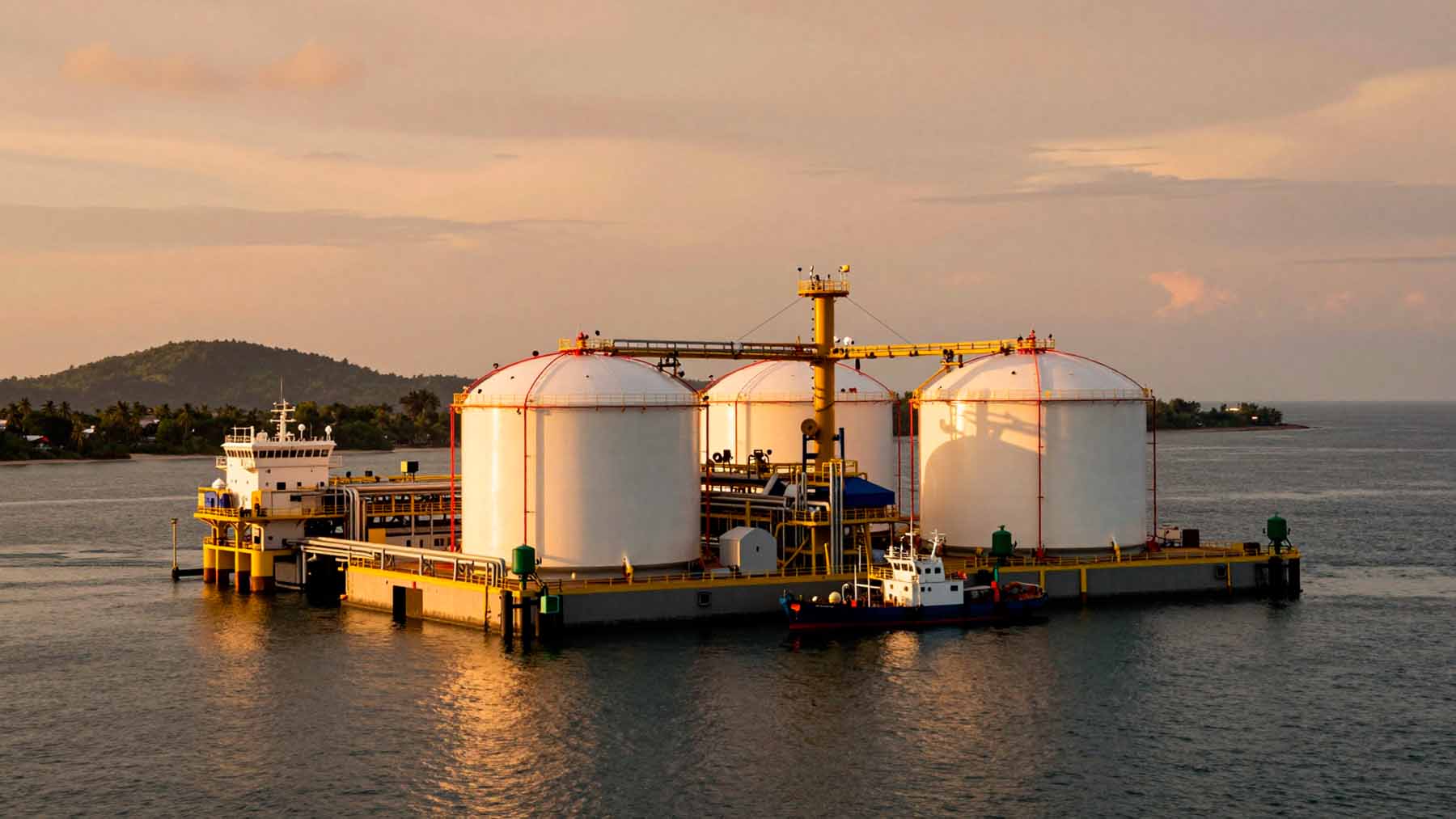 Image created with artificial intelligence
Technip Energies just picked up a front-end engineering and design (FEED) contract for the offshore Regasification Terminal Yan project in Kedah, northwest Malaysia. The terminal is a joint development between Gas Malaysia, Tokyo Gas Asia, and VTTI, and it’s planned to handle 6 million metric tons (approx. 6.6 million short tons) per year of LNG.
Technip Energies secures FEED contract for RGT Yan
Kedah sits in northwest Malaysia—not the first place you’d think of for major LNG infrastructure. That’s kind of the point. Technip Energies will lead the front-end engineering and design work for the Regasification Terminal Yan project, or RGT Yan, pulling together three partners with distinct but complementary roles in the energy sector.
Gas Malaysia, Tokyo Gas Asia Pte. Ltd, and VTTI are developing the terminal together. Gas Malaysia handles domestic natural gas distribution. Tokyo Gas Asia brings LNG trading and supply expertise, while VTTI operates terminals across the globe. Combined, they’re building a facility with a planned capacity of 6 million metric tons per year—a serious scale for an offshore regasification project anywhere in this part of the world.
At its core sits a Floating Storage and Regasification Unit—an FSRU—a vessel that stores liquefied natural gas and converts it back to gas before sending it ashore.
The contract award signals real confidence in Malaysia’s LNG import outlook and puts Technip Energies at the center of the project’s earliest and most consequential technical decisions.
Scope of the FEED contract
This isn’t a standard engineering assignment. Before Technip Energies even gets into full FEED work, it has to evaluate the best possible configurations for the regasification terminal—an assessment phase baked directly into the scope from day one.
From there, the work moves to establishing the project’s technical basis: the foundational engineering parameters that shape every decision that follows. Think of it as setting the ground rules before anything gets built.
The contract also includes supporting the project toward a final investment decision, or FID. Poorly scoped or technically weak FEED work can stall or kill an FID entirely, so this isn’t a minor add-on. By folding FID support into Technip Energies‘ mandate, the project partners are signaling that engineering readiness and investment readiness should develop in parallel—not sequentially.
Terminal design and infrastructure components
RGT Yan won’t be a straightforward onshore import facility. At its core sits a Floating Storage and Regasification Unit—an FSRU—a vessel that stores liquefied natural gas and converts it back to gas before sending it ashore.
FSRUs have become the default choice for new regasification projects worldwide. They deploy faster than land-based terminals and offer operational flexibility that fixed infrastructure simply can’t match. For a project introducing LNG import capacity to a region that currently has none, that flexibility matters considerably.
Supporting the FSRU will be marine facilities and a subsea gas pipeline connecting the offshore unit to land, with an onshore receiving facility taking over once the gas arrives. This configuration—offshore storage and regasification, subsea transmission, onshore reception—is well-proven for import terminals and suits the coastal geography of northwest Malaysia. The offshore positioning also lets the terminal accommodate large LNG carrier vessels without the constraints that shallow or confined port environments can create.
Energy security and regional context
Malaysia has LNG infrastructure, but it’s concentrated elsewhere on the peninsula. The northern region has never had a dedicated entry point for imported natural gas, and that gap carries real strategic weight.
RGT Yan is designed to close it. A new LNG import terminal in Kedah gives the northern region supply flexibility it simply doesn’t have right now. If existing supply routes get disrupted—or if demand climbs beyond what current infrastructure can handle—RGT Yan becomes an alternative pathway that didn’t previously exist.
The project is also built around supporting growing industrial and power demand. Malaysia’s manufacturing base has been expanding, and energy-intensive industries need reliable, high-volume gas supply. Industrial zones across the northern states, Kedah included, stand to benefit directly from improved gas access. At a broader level, the terminal is meant to strengthen the resilience of Malaysia’s natural gas supply system—adding redundancy the current network doesn’t offer and making it easier to absorb supply disruptions, price swings, or demand surges without major service failures.
Technip Energies holds the FEED contract
RGT Yan is a large-scale offshore LNG regasification project in northwest Malaysia, targeting a capacity of 6 million metric tons per year. Technip Energies holds the FEED contract, covering configuration evaluation, technical basis development, and FID support.
The terminal will be built around an FSRU, paired with marine facilities, a subsea pipeline, and an onshore receiving facility. Gas Malaysia, Tokyo Gas Asia, and VTTI bring domestic distribution, LNG supply, and terminal operations expertise, respectively, to the partnership.
Strategically, the project fills a clear gap in Malaysia’s natural gas infrastructure by adding a new import entry point in the north of Peninsular Malaysia—aimed at improving supply resilience and supporting industrial and power demand. The next milestone worth watching is the final investment decision, which the current FEED work is specifically designed to support.
Kelly is an experienced writer with 15 years of experience exploring the big stories that shape our world, from tech breakthroughs and space exploration to climate, energy, and the fascinating quirks of science. She has a talent for turning complex ideas into sharp, memorable insights that stay with readers long after they’ve finished reading.
