
RWE installs half of 72 turbines at Denmark’s 1.1-gigawatt Thor offshore wind farm, on track for 2027 completion
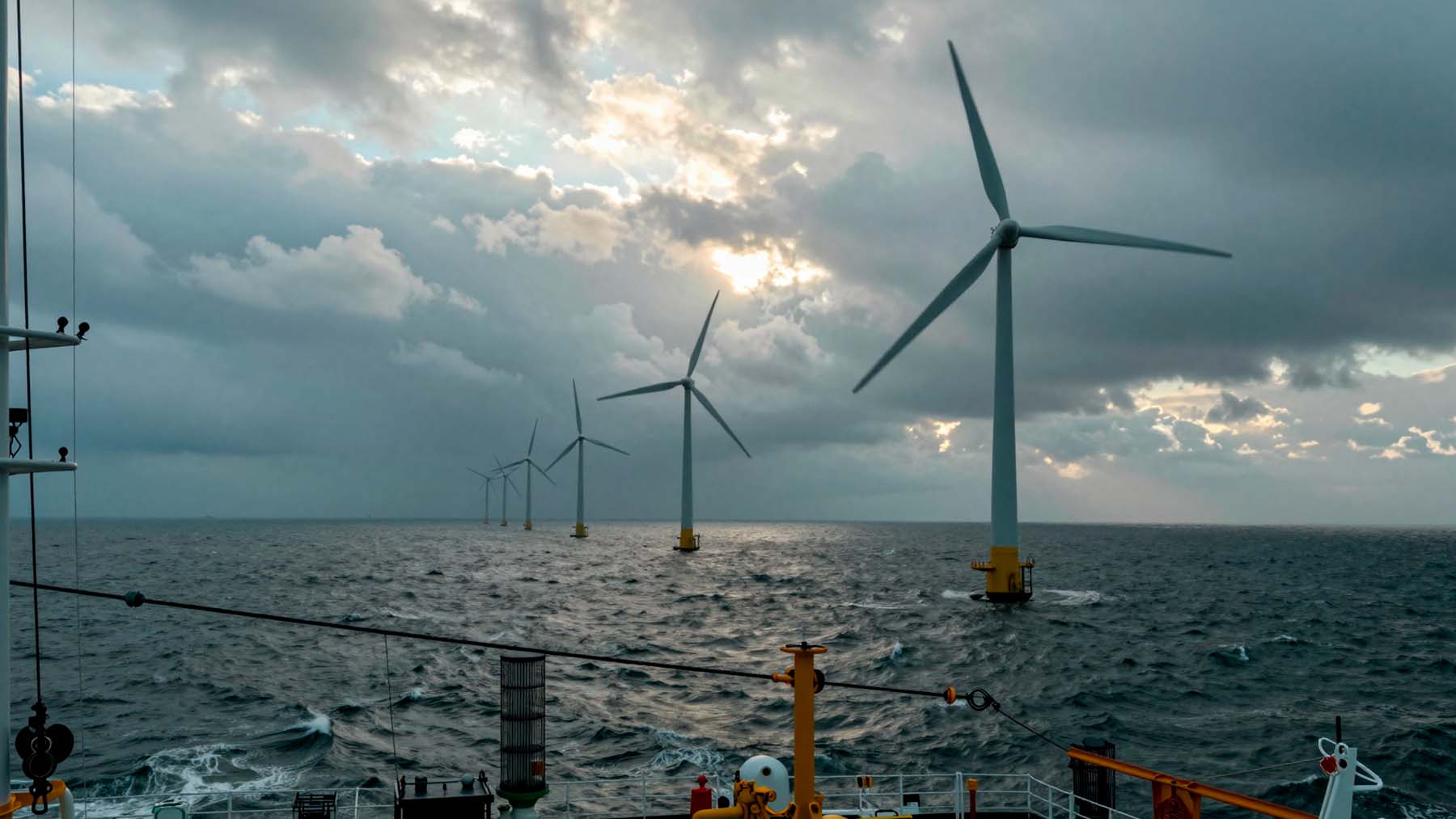 AI-made
RWE has installed 36 of the 72 turbines at the Thor offshore wind farm off Denmark’s west coast near Jutland, reaching the halfway point in construction of the 1.1-gigawatt project. The milestone, announced by the German energy company, keeps Thor on schedule for full commercial operation by spring 2027.
Half of Thor’s 72 turbines now installed off Denmark’s west coast
Thirty-six turbines are standing in the North Sea. Thirty-six more still need to go up. That’s where things stand at Thor, where RWE is methodically working through one of Europe’s most significant offshore wind builds.
Each turbine comes from Siemens Gamesa and packs a capacity of up to 15 megawatts, standing around 486 feet (148 meters) above sea level with rotor blades stretching 377 feet (115 meters) in length. These are massive machines. Getting them into position takes serious logistical coordination — the kind that doesn’t leave much room for error.
It’s also the first offshore wind farm worldwide to use carbon-reduced steel towers and will deploy 120 recyclable rotor blades across 40 of its turbines.
Installation runs out of the Port of Esbjerg on Denmark’s west coast, with the heavy lifting handled by the Brave Tern, a purpose-built turbine installation vessel operated by Fred. Olsen Windcarrier. It’s central to keeping the whole operation moving at pace.
The remaining 36 turbines are scheduled to go up by the end of 2026—leaving a buffer before the spring 2027 target for full commercial operation. In the demanding conditions of the North Sea, that breathing room matters.
Project timeline and commissioning schedule
Hitting the halfway mark isn’t just a numbers thing. At Thor, testing and commissioning of already installed turbines are running in parallel with ongoing installation work—a deliberate overlap that lets large offshore wind projects compress their timelines without cutting corners.
RWE’s Chief Technology Officer for Offshore Wind, Tobias Keitel, spoke to the milestone directly. “With every turbine we install, we move closer to delivering Denmark’s largest offshore wind farm,” he said, crediting the project team and supply chain partners for keeping Thor “firmly on track, even in challenging situations.”
Full commercial operation is expected by spring 2027, and nothing in the current progress report suggests that date is under any pressure.
Thor is structured as a joint venture. RWE holds a 51% stake, while Norges Bank Investment Management — the manager of Norway’s sovereign wealth fund — holds the remaining 49%. RWE handles both construction and long-term operations across the project’s full lifecycle.
Thor to supply electricity equivalent to over one million Danish households
Once all 72 turbines are running, Thor’s 1.1 gigawatts of capacity will generate enough clean electricity to power the equivalent of more than one million Danish homes — a meaningful share of Denmark’s total household energy demand.
That scale also earns Thor a specific distinction. When complete, it’ll become Denmark’s largest offshore wind farm, a title that carries real weight in a country that has long led on wind energy and keeps pushing toward ambitious renewable targets.
Denmark has set aggressive goals for expanding clean energy capacity, and projects like Thor are central to meeting them. The country has the resource — North Sea wind — in abundance. Thor is one of the more direct ways of putting it to use. The 1.1-gigawatt figure also places it among the more substantial offshore wind farms currently under development anywhere in Europe.
Thor introduces CO₂-reduced steel towers and recyclable rotor blades
Beyond its generating capacity, Thor is drawing attention for what actually goes into building it. It’ll be the first offshore wind farm in the world to use carbon-reduced steel turbine towers—36 of them, all supplied by Siemens Gamesa.
Steel production is one of the most carbon-intensive industrial processes out there. Lower-emission steel doesn’t eliminate that footprint, but at Thor’s scale, even a meaningful reduction adds up across dozens of towers.
The sustainability story extends further. Forty of Thor’s 72 turbines will be fitted with recyclable rotor blades—120 blades in total, again from Siemens Gamesa. End-of-life blade disposal has been a persistent headache for the wind industry, and recyclable blade technology is one of the more credible responses to that problem so far.
RWE describes these features as a pioneering step toward life cycle sustainability in offshore wind. The framing is measured, but the underlying point holds: Thor is field-testing materials and approaches that, if they prove out, could shape how future offshore wind farms get designed and built.
Supplying electricity equivalent to more than one million households
Thor is a 1.1-gigawatt offshore wind farm under construction off Denmark’s west coast near Jutland. RWE has now installed 36 of the project’s 72 Siemens Gamesa turbines, reaching the halfway point in construction.
The remaining turbines are scheduled for installation by the end of 2026, with testing and commissioning already running alongside that work. Full commercial operation is targeted for spring 2027.
When complete, Thor will be Denmark’s largest offshore wind farm, capable of supplying electricity equivalent to more than one million Danish households. It’s also the first offshore wind farm worldwide to use carbon-reduced steel towers and will deploy 120 recyclable rotor blades across 40 of its turbines.
RWE holds a 51% stake in the project. Norges Bank Investment Management holds the remaining 49%.
Kelly is an experienced writer with 15 years of experience exploring the big stories that shape our world, from tech breakthroughs and space exploration to climate, energy, and the fascinating quirks of science. She has a talent for turning complex ideas into sharp, memorable insights that stay with readers long after they’ve finished reading.
