
After ultrasound halved bat deaths in a two-year trial, 255 Texas wind turbines are slated for protection
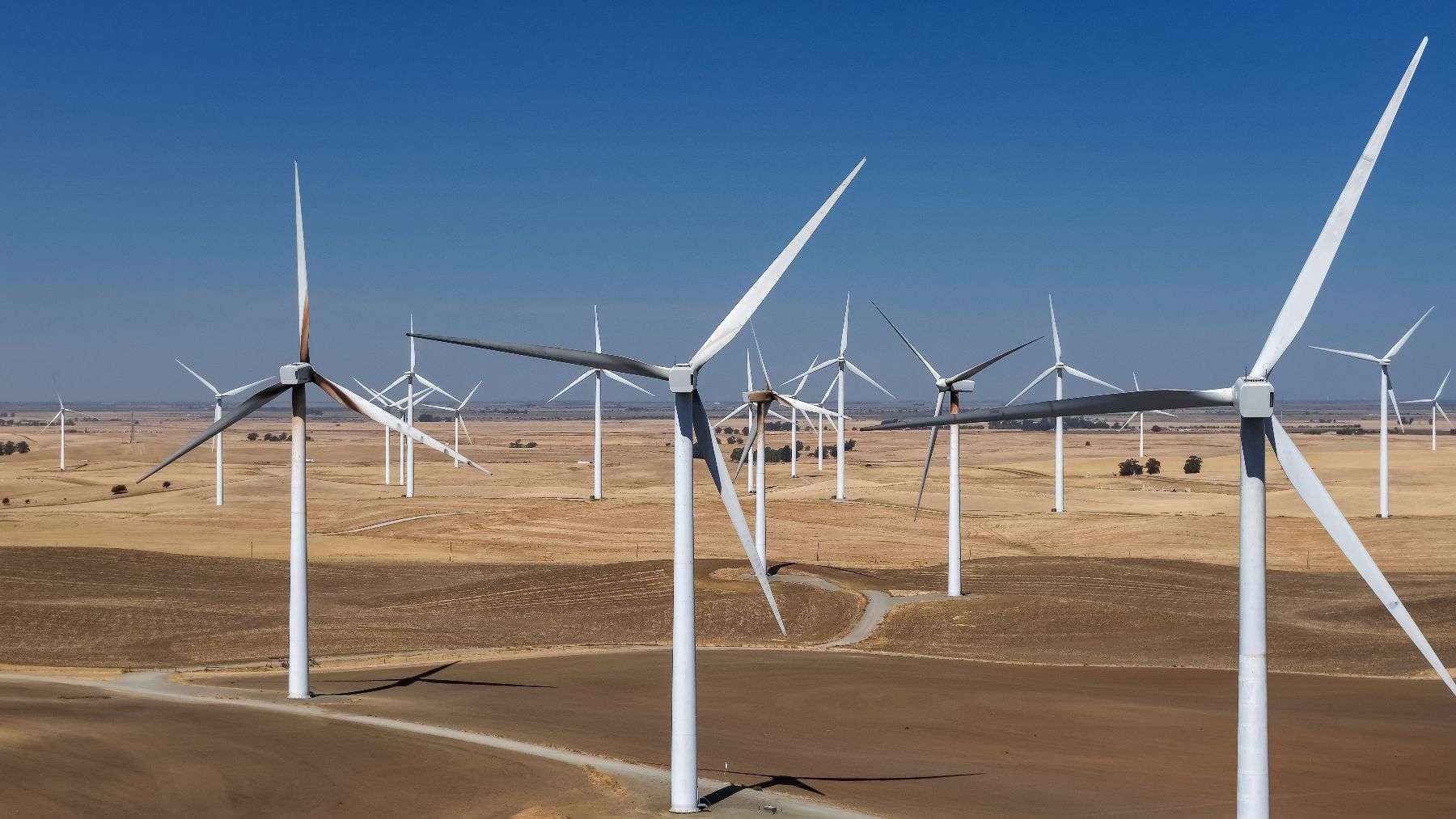
An innovative technology will soon protect native wildlife from colliding with 255 wind turbines.
Across the United States, rising electricity consumption requires high-capacity clean power generation to bridge the growing supply gap.
Wind infrastructure is key to powering millions of homes across the country, but poses a hidden threat to flying animals.
With the state’s supply gap widening, high-capacity clean electricity generation is crucial in bridging it while meeting statutory climate frameworks.
A two-year trial has identified a promising deterrent solution to save native bat species.
How will this ultrasonic technology help protect local populations?
How large-scale wind production must scale to meet rising power demand
For years, the United States experienced stagnant growth in electricity demand.
As society began embracing digital and electrical infrastructure, an unprecedented shift in energy consumption occurred.
Industrial growth, electric vehicles, generative AI, and data center expansion are primary drivers of this surge.
Texas exemplifies this ongoing rise in energy demand.
The Electric Reliability Council of Texas (ERCOT) predicts peak consumption will increase by tens of gigawatts within five years.
This is because the state is emerging as a top data center and AI computing hub in the U.S.
However, with AI and cloud computing rapidly expanding, Texas has had to freeze new data center grid connections and permits.
An unexpected influx of power requests has been straining ERCOT, leading to this decision.
With the state’s supply gap widening, high-capacity clean electricity generation is crucial in bridging it while meeting statutory climate frameworks.
Wind power is especially vital to this strategy.
The hidden ecological risks of wind power
Texas currently leads the nation in wind power generation, featuring over 40 gigawatts of installed capacity.
The green source produces over a quarter of the state’s electricity.
By producing zero-emission, scalable power, it offers the most sustainable approach to meeting rising demands.
This is also vital to meeting the voluntary “Comprehensive Roadmap to Reduce Emissions in Texas.”
The initiative was developed under the Climate Pollution Reduction Grant (CPRG) program.
Instead of enforcing mandatory emission caps for the transportation, energy, and industry sectors, it outlines voluntary actions.
However, as the infrastructure expands across the state, serious hidden ecological risks are introduced to Texas’ flying wildlife.
Across the U.S., turbines cause tens to hundreds of thousands of annual bat deaths due to blade collisions and barotrauma.
To address this environmental conflict, a groundbreaking trial was conducted to establish the best method for protecting bats.
Duke Energy, Global Ecology and Conservation, NRG Systems, and Texas State University collaborated on the trial.
Exploring ultrasound acoustics as a bat deterrent
Wind turbines are affecting the survival of bats in their natural habitats.
Duke Energy conducted a two-year trial at Los Vientos III, IV, and V to address this issue.
The facilities are in Starr County, Texas.
Sixteen 2-megawatt turbines were retrofitted with nacelle-mounted acoustic deterrent devices, featuring solid-state speakers.
Continuous ultrasonic signals between 20 kHz and 50 kHz were emitted.
The effect of the acoustic deterrent devices
High-frequency sounds jam the biosonar used by bats to hunt and navigate.
This forces them away from the spinning blades.
Total bat fatalities were lowered by 50%.
Hoary bats experienced a 78% reduction, while Brazilian free-tailed bats experienced 54%.
These promising results encouraged Duke Energy to deploy the deterrent technology across 255 turbines at its Los Vientos site.
It will be the technology’s first commercial deployment in the U.S.
The successful trial proves that large-scale wind projects can expand without harming local wildlife.
Acoustic deterrents offer a scalable model for other facilities across Texas and the U.S. to protect native ecosystems.
Innovative methods that help reduce or prevent fatalities are key to securing the nation’s clean energy future.
Ultimately, wind turbines can only be truly sustainable when they do not disrupt the local environment.
Anke Maree is a writer with a clear and engaging editorial style. Her work focuses on making complex topics accessible, informative, and relevant for readers across different areas of interest.
