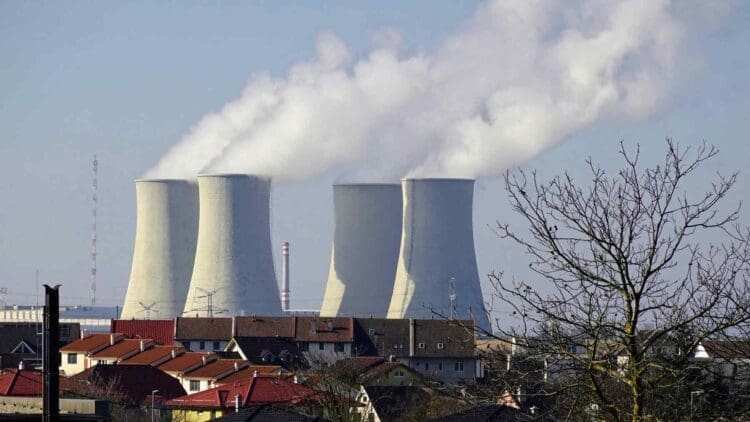

Meeting growing electricity demand will increasingly be about using the resources you have. As the U.S. energy system continues to face increasing demands for dependable, low-carbon power, there is a growing interest in ways that existing nuclear reactor infrastructure can be upgraded and modified to meet short-term demands.
Why nuclear capacity is moving up the policy agenda
The future of electrical demand in the U.S. is expected to continue to grow, driven by industrial activity, expanding manufacturing, and the increasing energy required for data centers that support artificial intelligence. At the same time, the need for continued energy security and reduced greenhouse gas emissions is placing pressure on elected officials to pursue policies that do not undermine the reliability of the electric grid.
Nuclear energy already provides a substantial share of U.S. electricity generation and supplies a significant amount of firm, carbon‑free power. Rather than focusing exclusively on new construction, current policy discussions are increasingly centered on approaches that could deliver capacity increases much sooner.


Lengthening reactor lifetimes, boosting output from existing reactors, and restarting decommissioned or mothballed facilities are now viewed as among the least expensive and fastest alternatives available. This perspective reflects a broader idea: expanding nuclear capacity does not require brand‑new infrastructure, but overcoming regulatory, technological, and economic obstacles that limit greater use of existing assets.
Obstacles to more rapid nuclear capacity growth
Although potential exists, scaling nuclear power generation has traditionally faced delays due to lengthy regulatory approvals, supply‑chain shortages, and the financial complexities of large‑scale modifications. Even when technology is proven, increasing capacity relies on coordinating reactor operators, regulators, equipment providers, and investors around shared timetables and risk assumptions.
Modernizing operating units often involves developing advanced fuels; updating equipment and software tools; and ensuring that safety margins remain adequate at higher power outputs. The process must occur within existing licensing frameworks, which were established primarily with incremental changes rather than planned expansions in mind.
Therefore, attention from policymakers is focused on creating formalized pathways to assist utilities in reducing uncertainty and evaluating whether upgrades and restarts are feasible, both technologically and financially. These pathways are intended to provide clearer signals around risk, timing, and regulatory expectations before major investments are made.
UPRISE was structured to support the establishment of a viable business model for capacity enhancements, while implementing physical upgrades. The initial steps include identifying readiness for supply chains, evaluating plant equipment for possible upgrades, and verifying economic models capable of supporting decision-making related to investments.
UPRISE: A federal effort to utilize existing nuclear capacity
In response to these challenges, the U.S. Department of Energy’s Office of Nuclear Energy has initiated a new initiative designed specifically to address them. Entitled Utility Power Reactor Incremental Scaling Effort (UPRISE), this initiative plans to increase nuclear power generation through enhanced utilization of the country’s existing fleet of nuclear reactors.
UPRISE has identified multiple near-term strategies: increasing power output through reactor uprate approvals; restarting nuclear facilities that are idle; increasing the operational lives of reactors through license extensions; and completing prior abandoned projects. Through the application of well-proven technologies and streamlined regulatory procedures, UPRISE aims to provide more rapid progress than that resulting from long-duration new-build projects.
According to the DOE, UPRISE intends to add 2.5 gigawatts (GW) of nuclear capacity by 2027 and 5 GW of additional capacity by 2029. UPRISE will, additionally, contribute toward the administration’s overall objective of substantially increasing U.S. nuclear capacity over subsequent decades.
Increased support for advanced reactors from the federal government illustrates a practical approach to U.S. nuclear energy policy. Programs such as UPRISE emphasize obtaining maximum benefit from existing infrastructure to provide near-term capacity while providing long-term growth.