
Vanzetti Engineering launches ESK-IMO cryogenic pump series targeting small-scale LNG terminals and marine bunkering applications
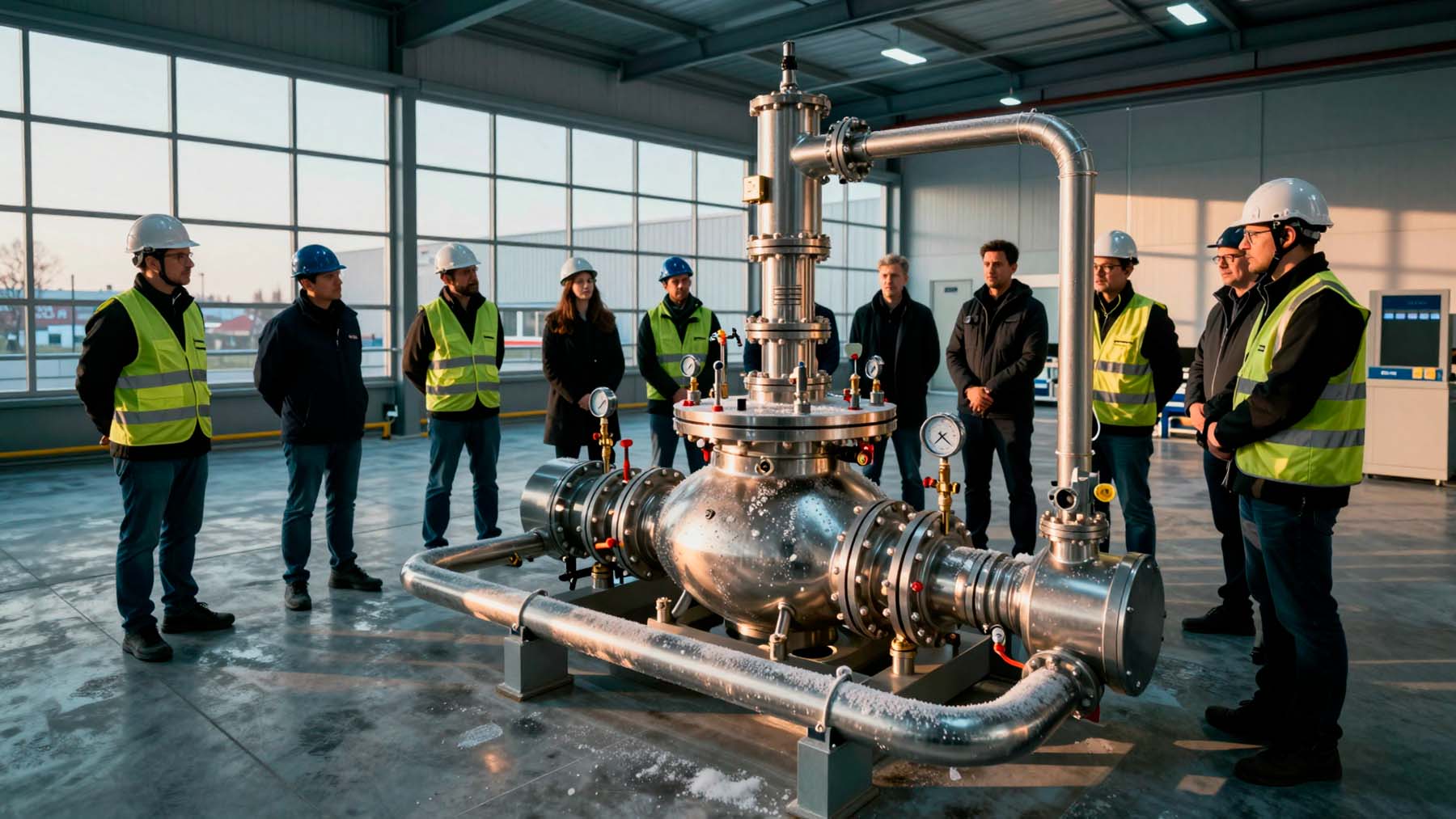 AI-made
At its Cavallerleone headquarters in northern Italy, Vanzetti Engineering brought together industrial partners, LNG associations, and maritime analysts on June 8–9, 2026, for a two-day event focused on the future of small-scale LNG infrastructure. The occasion marked the live debut of the ESK-IMO—a new series of removable submerged cryogenic pumps built for small-scale LNG terminals and marine bunkering applications.
Vanzetti Engineering debuts ESK-IMO pump at June 2026 industry event
The two-day gathering opened in Italy’s Langhe region before moving to the Cavallerleone facility on June 9, where attendees watched the ESK-IMO run in a live demonstration. This wasn’t a closed internal review. The audience included industrial partners, customers, and representatives from major LNG associations — Assogasliquidi, the International Gas Union (IGU), and EPRINC — alongside maritime analysts from Clarksons Research.
That live test gave the launch something trade announcements often lack: a concrete, verifiable quality. People could see the pump operate rather than simply reading about its specs, and for a product targeting demanding cryogenic environments, that distinction carries real weight.
The series draws directly on Vanzetti’s ARTIKA submerged cryogenic pump, which has accumulated more than 1,500 installed units in marine applications globally.
Valeria Vanzetti Ghio, sole director of Vanzetti Engineering, framed it in broader terms. “The industry is undergoing profound transformation and requires technologies that are increasingly efficient, reliable, and sustainability-oriented,” she said, describing the ESK-IMO as playing “a strategic role in supporting the next generation of LNG infrastructure worldwide.”
Why the ESK-IMO was developed: Growing demand for flexible LNG infrastructure
The timing of this launch isn’t coincidental. Global LNG trade has roughly doubled over the past decade — climbing from around 264 million tons in 2015 to more than 485 million tons in 2024 — putting sustained pressure on supporting infrastructure, including the pumps that move LNG through terminals and vessels.
One key data point shared at the event by the IGU: around 40% of liquefaction plants currently under construction worldwide fall into the small-scale category, defined as capacities up to 3 million tons per year. These smaller facilities offer shorter permitting timelines and lower capital requirements, making them attractive for emerging markets in India, Indonesia, and parts of Africa.
Marine bunkering adds another layer of demand. More than 1,500 vessels are already LNG-fuel-capable today, and that fleet is projected to exceed 3,500 by 2030. The dedicated LNG bunkering fleet could reach around 80 vessels by 2028. Every one of those ships needs reliable cargo and stripping pump solutions.
FSRUs are part of the picture too. In Europe especially, floating storage and regasification units have taken on a more prominent role in energy security since the reduction in Russian gas imports—a shift that raises the stakes for the submerged pump technology keeping these units operational.
ESK-IMO series: Specifications and key design features
The ESK-IMO 230 handles flow rates up to 374 gallons per minute, the ESK-IMO 300 reaches 1,320 gallons per minute, and the ESK-IMO 400 tops out at 2,420 gallons per minute. Together, they’re designed to cover the main emerging LNG applications without forcing operators to source separate solutions for different scales of operation.
In marine settings, the pump serves specifically as a cargo and stripping pump—handling tank emptying when the main cargo pumps go offline due to malfunction or scheduled maintenance. That’s a critical backup function. Reliability in cryogenic conditions isn’t optional.
The series draws directly on Vanzetti’s ARTIKA submerged cryogenic pump, which has accumulated more than 1,500 installed units in marine applications globally. That installed base gives the ESK-IMO a credible performance lineage rather than a clean-sheet starting point. Each unit is also tested on a dedicated bench designed specifically for the ESK-IMO range, producing certified, consistent performance data — not figures extrapolated from a different product family.
Broader LNG market context discussed at the event
Presentations at the event sketched out a detailed picture of where the global LNG market is heading. US export capacity, currently around 150 million tons per year, could reach 250–270 million tpy by 2031—a potential expansion that would significantly reshape global supply dynamics and trade routes.
A newer demand driver also came up: artificial intelligence. The rapid buildout of data centers is generating unprecedented electricity consumption, and tech companies are increasingly looking to natural gas as a dedicated, reliable energy source. Speakers framed this as a meaningful new vector for LNG demand growth.
Bio-LNG emerged as the decarbonization pathway with the most near-term traction for freight transport. Germany’s regulatory model — which includes targeted incentives for bio-LNG-powered vehicles — was cited as a benchmark other European countries could follow, though a more harmonized EU framework is still needed to unlock the full potential of that transition.
Risks weren’t ignored. Geopolitical tensions around the Strait of Hormuz were flagged as a live concern for LNG shipping routes and costs, and uncertainty around global carbon pricing policy adds another variable the industry will need to navigate.
Applications for terminal and marine cargo
The ESK-IMO launch is Vanzetti Engineering’s direct response to a converging set of market pressures: rapid growth in small-scale LNG terminals, expanding marine bunkering fleets, and the increasing strategic role of FSRUs. The range — covering flow rates from 374 to 2,420 gallons per minute across three models — is designed to serve both terminal and marine cargo applications.
The product builds on an established cryogenic pump platform with over 1,500 marine installations, and a dedicated test bench ensures each unit ships with certified performance data. The June 2026 event, attended by major LNG associations and maritime analysts, served as both the public debut and the first live demonstration of the series in operation.
Kelly is an experienced writer with 15 years of experience exploring the big stories that shape our world, from tech breakthroughs and space exploration to climate, energy, and the fascinating quirks of science. She has a talent for turning complex ideas into sharp, memorable insights that stay with readers long after they’ve finished reading.
