
Wind farms have been quietly losing power to two atmospheric forces that engineers rarely account for
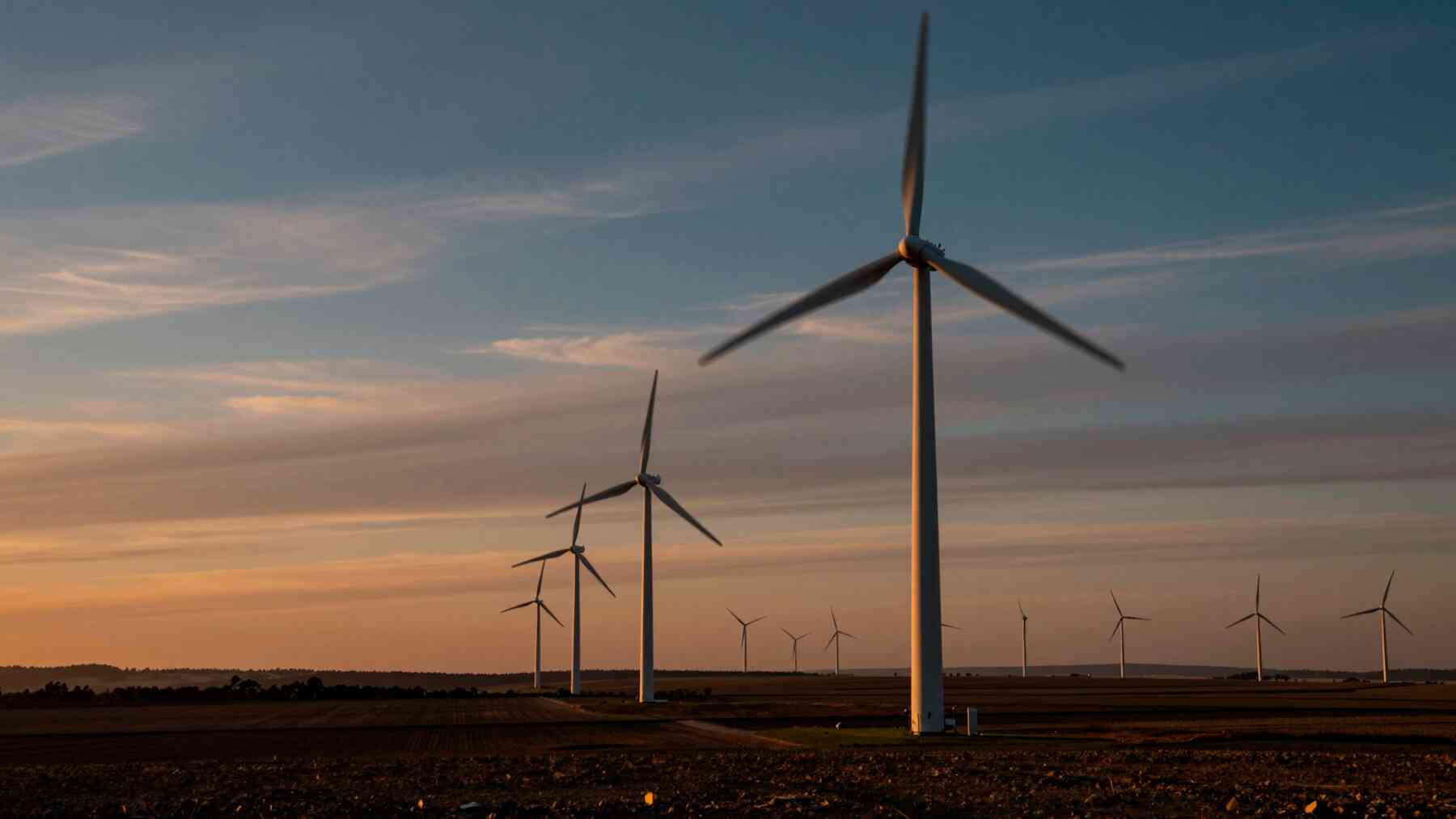 AI-made
Think about a wind farm. You probably picture massive structures spinning in perfect harmony.
But there is a hidden struggle happening out there.
In a wind farm, no turbine operates alone. Each machine spins inside a messy environment.
She has a talent for turning complex ideas into sharp, memorable insights that stay with readers long after they’ve finished reading.
When wind passes through a turbine, it leaves behind a chaotic trail. Engineers call this trail a “wake.” It is a pocket of slow, turbulent air.
This wake behaves like an invisible shadow. It quietly steals energy from the next machine downwind, eroding how much power it can generate.
For years, standard models treated this like a simple problem. They assumed the wind was completely uniform. But nature is rarely that simple.
Researchers have now begun to untangle a much deeper mystery. They are looking at how the atmosphere itself reshapes these wakes.
A new study combining real field measurements with advanced computer simulations suggests that accounting for these hidden movements could transform how wind farms are designed and controlled.
Turbines don’t operate in isolation
Let’s look closer at the physics.
Wind turbines in a modern farm are aerodynamically coupled. They are linked by the very air they share.
The wake left behind by a front turbine is a wide cone of slower, highly chaotic air. This turbulent cone flows straight into the next machine downwind.
Because of this, waked turbines routinely generate significantly less power than free-standing machines.
Atmospheric stability adds another layer of frustration.
Depending on weather conditions, the atmosphere can stretch, compress, or redirect wakes entirely. This constant shifting happens hour by hour.
It makes accurate prediction incredibly difficult and widens the gap between computer models and real-world performance.
What wind shear and veer actually do
To fix this, we have to look at how the air moves at different heights.
This brings us to two major environmental factors. One is wind shear, which describes how wind speed changes with altitude.
Closer to the ground, friction slows the air down. Higher up, it moves much faster.
The other factor is wind veer. This describes how the wind direction gradually rotates as you climb higher.
Both phenomena are common at real wind farm sites, especially under certain weather conditions.
Recently, researchers collected field measurements from two massive turbines aligned with the prevailing wind. The data proved that shear and veer completely alter the shape, intensity, and trajectory of the wake.
A wake does not just grow or shrink. It can tilt, deflect, or distort.
Separating these forces from field data alone is almost impossible because they usually act simultaneously.
This limitation motivated a dedicated modeling effort.
CFD simulations confirm what the field data suggested
The researchers needed a controlled environment, so they turned to computational fluid dynamics, or CFD simulations.
Think of CFD as a virtual wind tunnel inside a computer. It allows scientists to control conditions perfectly. They can switch one force on while keeping the other flat.
This level of precision is something a field experiment could never replicate.
The simulations confirmed that both forces independently change how a wake develops and where it travels. Specific wake behaviors could finally be attributed to each force with confidence.
The results exposed a massive gap in standard engineering practice.
Traditional wake models usually treat incoming wind as totally uniform. That simplification causes them to miss critical physics.
Better models, better predictions
With the CFD results in hand, the team benchmarked several existing wake models against their field measurements.
Models that explicitly included shear and veer easily beat the standard approaches.
This improvement matters well beyond academic labs. More accurate wake models mean better decisions when designing farm layouts. They also improve energy yield forecasting, which affects how projects are financed and operated.
In real-time settings, accurate predictions allow for smarter farm control. Current models leave accuracy on the table by ignoring forces routinely present at operating sites.
Steering wakes with atmospheric awareness
One of the most exciting applications is a strategy called wake-steering control.
Imagine intentionally misaligning an upstream turbine. You rotate it slightly away from the oncoming wind direction.
By turning slightly, the front turbine deflects its messy wake away from the machine directly behind it.
The front turbine sacrifices a tiny bit of power, but the downstream turbine gains a massive boost. Net farm output goes up. The team applied their upgraded models to this steering strategy.
Simulations showed that incorporating these wind gradients boosts power capture across the farm.
Doing this in real time requires knowing exact conditions at any given second.
Standard sensors cannot measure this, so the team used blade load measurements as a wind-sensing tool, estimating forces by tracking blade flex during normal operation.
As wind energy matures and farms grow larger, strategies like this will become standard practice.
They treat the atmosphere as a dynamic input rather than a fixed background. We can no longer ignore what is happening in the skies.
Kelly is an experienced writer with 15 years of experience exploring the big stories that shape our world, from tech breakthroughs and space exploration to climate, energy, and the fascinating quirks of science. She has a talent for turning complex ideas into sharp, memorable insights that stay with readers long after they’ve finished reading.
