
Wind turbines were meant to follow the wind, but they can actually slow it down and steal energy from each other
 Credits: Energies Media Internal edition
As the ocean becomes more crowded, wind turbine performance is challenged by slower and “stolen” wind.
Offshore wind is rapidly expanding as global power needs and fast-approaching climate targets are driving change.
However, as the physical footprint of wind turbines above the sea grows, so do their economic and ecological consequences.
The light suspension is decreased, and phytoplankton is affected, making offshore installation one of the contributors to “ocean darkening.”
Will insights into the latest impacts of offshore installations on one another and their surroundings help researchers address the issue?
How Earth’s oceans are becoming overcrowded
For years, wind power has made a significant contribution to the green energy transition.
But its popularity almost fell as quickly as it rose.
Some argued that it was, and still is, the most cost-effective way to decarbonize the grid while ensuring utility-scale electricity.
Nonetheless, the visual, auditory, and environmental impacts of wind farms were almost enough to send the industry packing.
Fortunately, it found the “easy” way out by moving to the ocean and its high-speed winds, far away from criticism.
Engineering breakthroughs led to turbine heights that rival skyscrapers. The “Levelized Cost of Energy” (LCOE) plummeted, making the source highly competitive globally.
Governments’ response was to seize the opportunity by “carving” the ocean into leasing blocks.
Now, as the once-empty horizon is being replaced by increasingly densely packed industrial infrastructure, experts are noticing changes.
The footprints on the seafloor to the skies
As the industry’s infrastructure moved from the drawing board to the ocean, impact studies mostly focused on visible changes.
The most profound impact was during construction. The excessive noise and traffic of pile-driving altered the migration behavior of marine mammals, especially whales.
The installation of these turbines also has a significant effect on the seafloor.
The giant foundations disrupt the benthic habitats, creating localized sediment streaks. The light suspension is decreased, and phytoplankton is affected, making offshore installation one of the contributors to “ocean darkening.”
Environmental impact is not limited to the ocean depths. Offshore wind farms in avian migratory paths become detrimental to the survival of these species.
However, there is also an invisible phenomenon in the skies that has caught the attention of experts. A recent study has revealed that this phenomenon has economic and ecological ramifications.
The invisible “theft” and slowdown of wind turbines
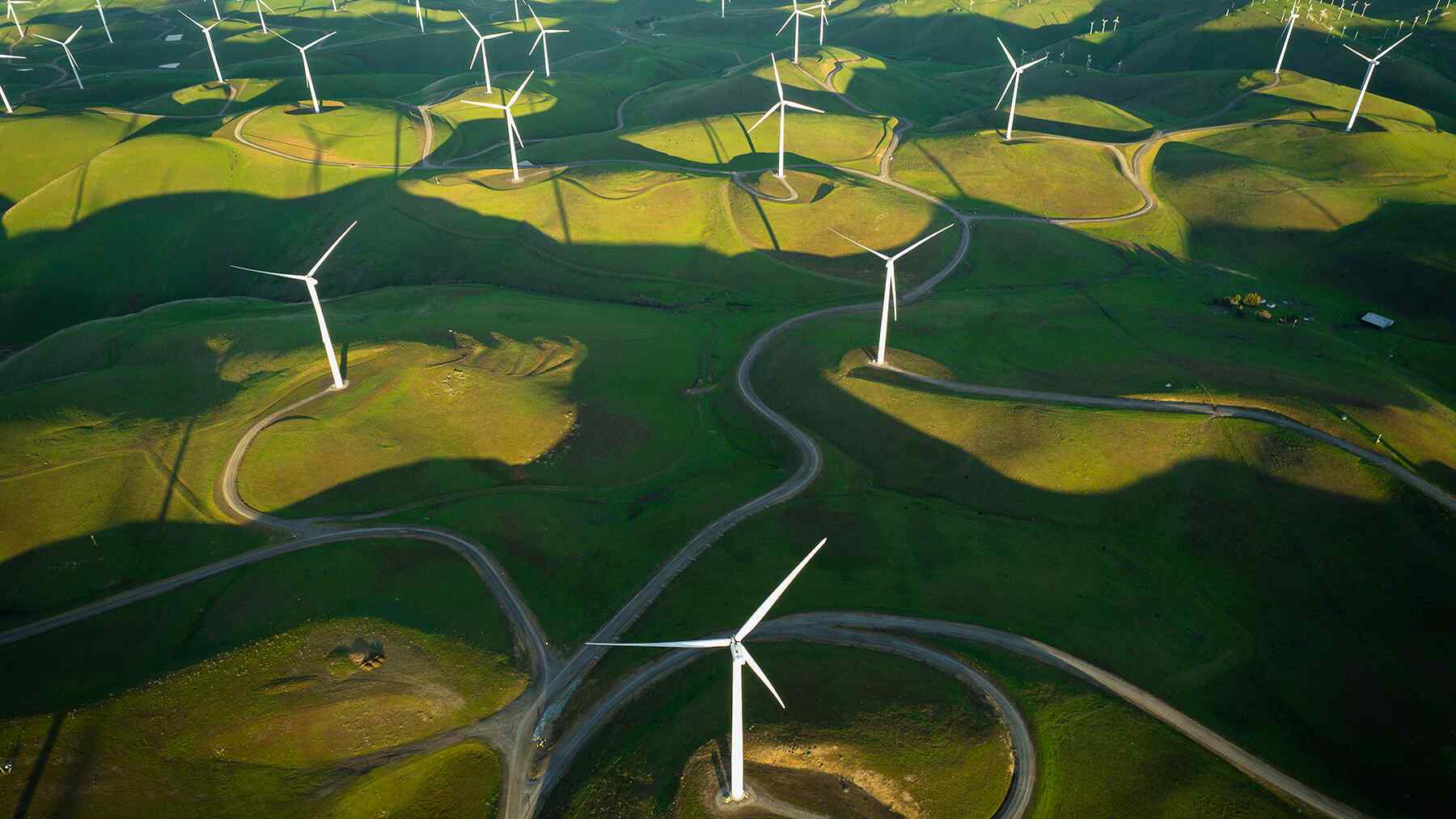
This unexpected phenomenon of wind turbines is called the “wake effect.”
As wind is harvested, a “shadow” is created when air passes through the massive rotors. This decreases the kinetic energy and results in slower, more turbulent air in the wake.
New insights from the Synapse Energy analysis revealed that this effect is now happening between different wind projects.
This is because the wake can persist for 12 to 30 miles over the ocean due to very little friction. This is why upwind farms can “steal” the wind before it reaches the downwind farm.
Researchers from Cornell University elaborate on this in the study “Long-distance and high-impact wind farm wake effects revealed by SAR: a global-scale study,” published in arXiv.
Slower wind speeds and a stilled water column
Synthetic Aperture Radar (SAR) analysis of over 7,000 satellite images revealed that “wind shadows” occur globally.
Under certain conditions, these wakes could even travel over 60 miles and lower downstream wind speeds by 12%.
Baltic Sea-based modeling revealed that “atmospheric stilling” decreases the water column’s vertical mixing. The ocean’s natural oxygen and nutrient circulation is then disrupted.
As offshore wind continues to expand its physical footprint on the ocean, the “invisible” costs can no longer be ignored.
“Wake Steering” is a possible solution by strategically tilting turbines to redirect shadows. Utilizing data-driven leasing will also help mitigate “wind theft.”
Researchers are suggesting that integrated spatial planning is necessary to strike a balance between energy yields and ecological health. Nations must remember that green ambitions should never trump true sustainability.
Anke Maree is a writer with a clear and engaging editorial style. Her work focuses on making complex topics accessible, informative, and relevant for readers across different areas of interest.
