
Wind farms can run longer and earn more by deliberately producing less power at the right moments
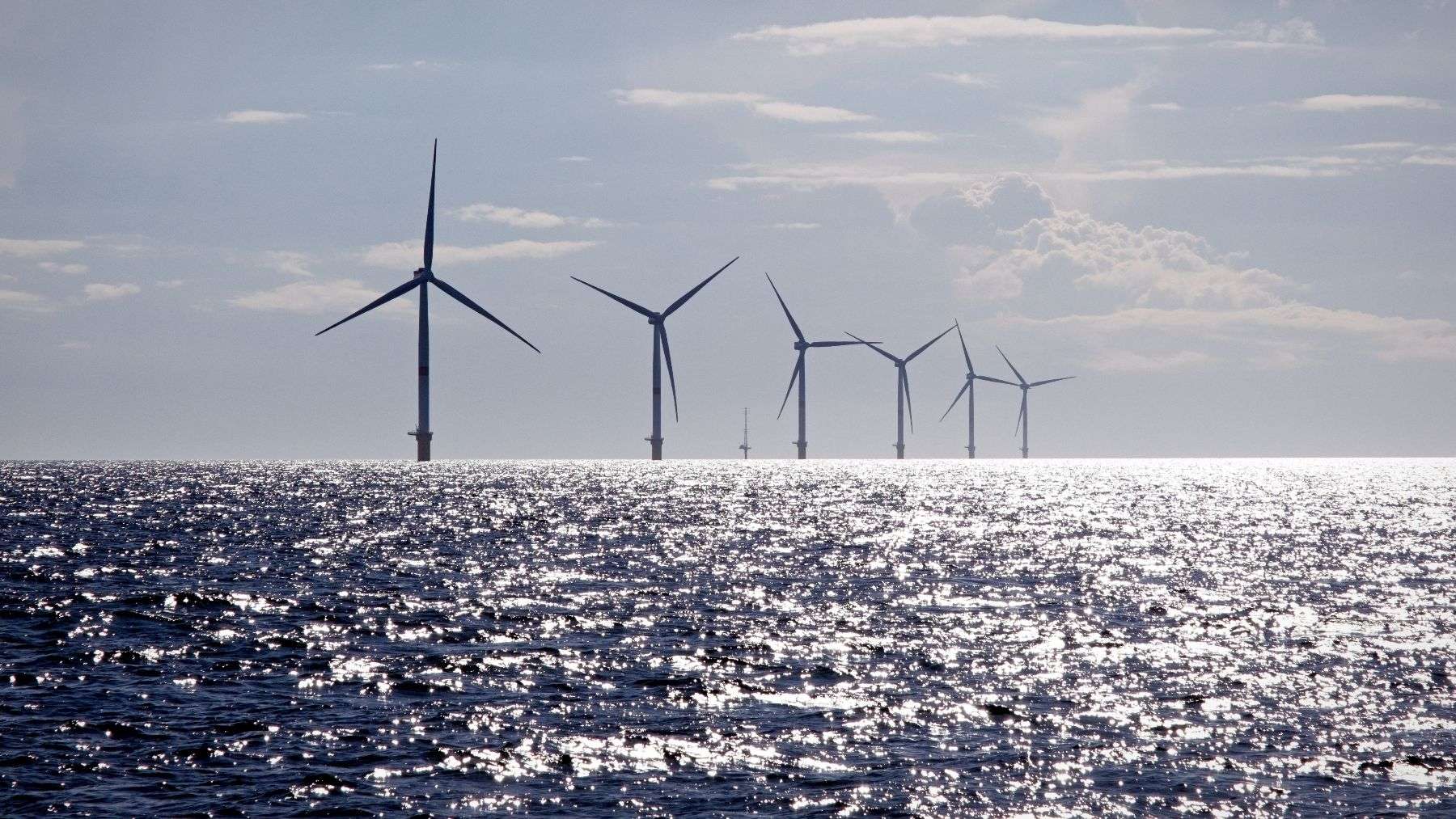
Wind farm operators already accept a counterintuitive tradeoff: when turbines stand in each other’s wind shadow, the turbulence they create accelerates wear on their neighbors. The standard fix is sector management — shutting turbines down entirely in certain wind directions to stay within their fatigue limits. It works, but it costs real energy revenue every time the wind blows from the wrong angle.
A new optimization framework suggests there may be a more precise lever available — one that dials power back selectively, only where and when the damage-to-energy tradeoff makes it worthwhile.
The hidden cost of wind shadows
When one turbine sits directly in another’s wake, it faces a double penalty: slower wind speeds reduce output while higher turbulence accelerates structural wear. That turbulence steadily chips away at a turbine’s fatigue budget — the finite structural allowance set by engineering standards — faster than turbines operating in clean air.
Future extensions could incorporate real-time electricity prices, enabling turbines to participate in balancing markets using the energy reserve created by derating.
Once that budget runs low, operators face hard choices. Sector management is the most common response: shutting turbines down when wind blows from directions that put them in a neighbor’s wake. It protects the structure but sacrifices real energy every time those directions appear.
Fatigue load management has no single clean optimization target. Unlike power maximization, it requires balancing damage across multiple turbines, several failure modes, and thousands of operating conditions simultaneously.
Derating as a precision tool
Derating — reducing a turbine’s power output by a set percentage — is already standard practice for grid power tracking. What’s new here is using it as a condition-specific tool for lifetime management, applied turbine-by-turbine across thousands of combinations of wind speed and direction.
The framework, developed by researchers at Fraunhofer IWES, trains surrogate models on aeroelastic simulations. These models predict how each derating level affects both fatigue damage and power output under wake conditions. The relationship is nonlinear: a 10% power reduction doesn’t translate to a simple 10% damage reduction, and the tradeoff shifts depending on local turbulence intensity.
The optimization solves for the best derating set point at each wind condition for each turbine, then compiles results into a look-up table. Wind farm control systems can follow that table automatically — no real-time computation needed during operation.
What the numbers show
On a nine-turbine test farm, the results are notable. Onshore, extending tower lifetime by 2–5 years costs only 1–4% of annual energy production, while raising net present value by up to 10%. For the most heavily loaded turbine, a 20% lifetime extension came at only a 5% energy penalty.
Offshore, where lower ambient turbulence makes wake effects more distinct, the gains sharpen. Less than 0.2% energy loss can yield NPV increases exceeding 50%. The math works because operating longer — even at slightly reduced annual output — compounds favorably once financing costs and maintenance schedules enter the picture.
There is a clear economic limit, though. Pushing for larger extensions — around 40% more lifetime — requires steeper energy sacrifices and can reduce net present value compared to nominal operation. Rather than obscuring that boundary, the framework identifies it directly.
Two optimization strategies, one practical answer
Researchers tested two approaches: a full-farm simultaneous optimization that solves for all turbines at once, and a faster per-turbine iterative method that optimizes each turbine separately while updating wake conditions between iterations.
For most scenarios, both methods produce nearly identical results — within 0.2% of each other on energy and NPV. The full-farm approach holds a meaningful edge offshore, where reducing upstream turbine thrust more effectively cuts wake-induced turbulence reaching downstream machines. The per-turbine method can miss that benefit entirely.
The per-turbine approach scales easily to large farms and runs in parallel, making it the more practical choice for real-world deployment. A hybrid workflow — using the full-farm method to validate results on a subset of turbines, then relying on the iterative method at scale — appears viable.
Where the limits lie
Not every failure mode responds equally well. Blade edgewise loads are driven primarily by rotational speed rather than turbulence, so they’re harder to address through wake-aware derating alone. Reaching a 28-year lifetime for edgewise loads requires roughly 6% energy loss and reduces NPV by around 60% in the study’s analysis.
The results also rest on steady-state wake models and design-style damage estimates. Dynamic wake effects, material nonlinearities, and controller-specific behaviors introduce uncertainties the current models don’t fully capture. Electricity prices, discount rates, and maintenance costs all shift the NPV picture in ways that long-term projections struggle to pin down. Practical deployment requires integration with turbine certification requirements and, particularly offshore, safeguards against risks like negative damping in support structures.
A new operating philosophy for aging wind fleets
The framework can be re-run periodically using updated fatigue consumption data and revised economic assumptions, functioning as a slow model-predictive control scheme — reassessing the remaining structural budget and re-optimizing strategy for the years ahead.
Future extensions could incorporate real-time electricity prices, enabling turbines to participate in balancing markets using the energy reserve created by derating. Wake steering could be added as an additional control channel, and the approach could help operators adapt turbines to sites that have proved more demanding than original design assumptions.
Wind fleets around the world are aging. Many turbines are approaching or passing their original design lifetimes, and repowering economics aren’t always favorable. Tools that extract more lifetime and revenue from existing hardware — without new capital investment — will only grow in strategic value. Whether this framework moves from research to routine practice depends on how well the underlying models can be validated against real fatigue measurements in the field.
More information is available here: Requate, N., Vollmer, L., and Hofmann, R.: Beyond wind-sector management: optimal wind farm operational planning for balancing fatigue damage and extending lifetime, Wind Energ. Sci., 11, 3863–3885, https://doi.org/10.5194/wes-11-3863-2026, 2026.
Daniel García is an Editor-in-Chief with strong expertise in structural work and engineering principles. He combines this technical foundation with deep knowledge of energy, spatial design, and emerging technologies, bringing a forward-thinking and analytical approach to editorial leadership.
