
Wind turbines were built to harness clean air, but the tiny creatures sharing that sky are rewriting the rules of how much power gets made
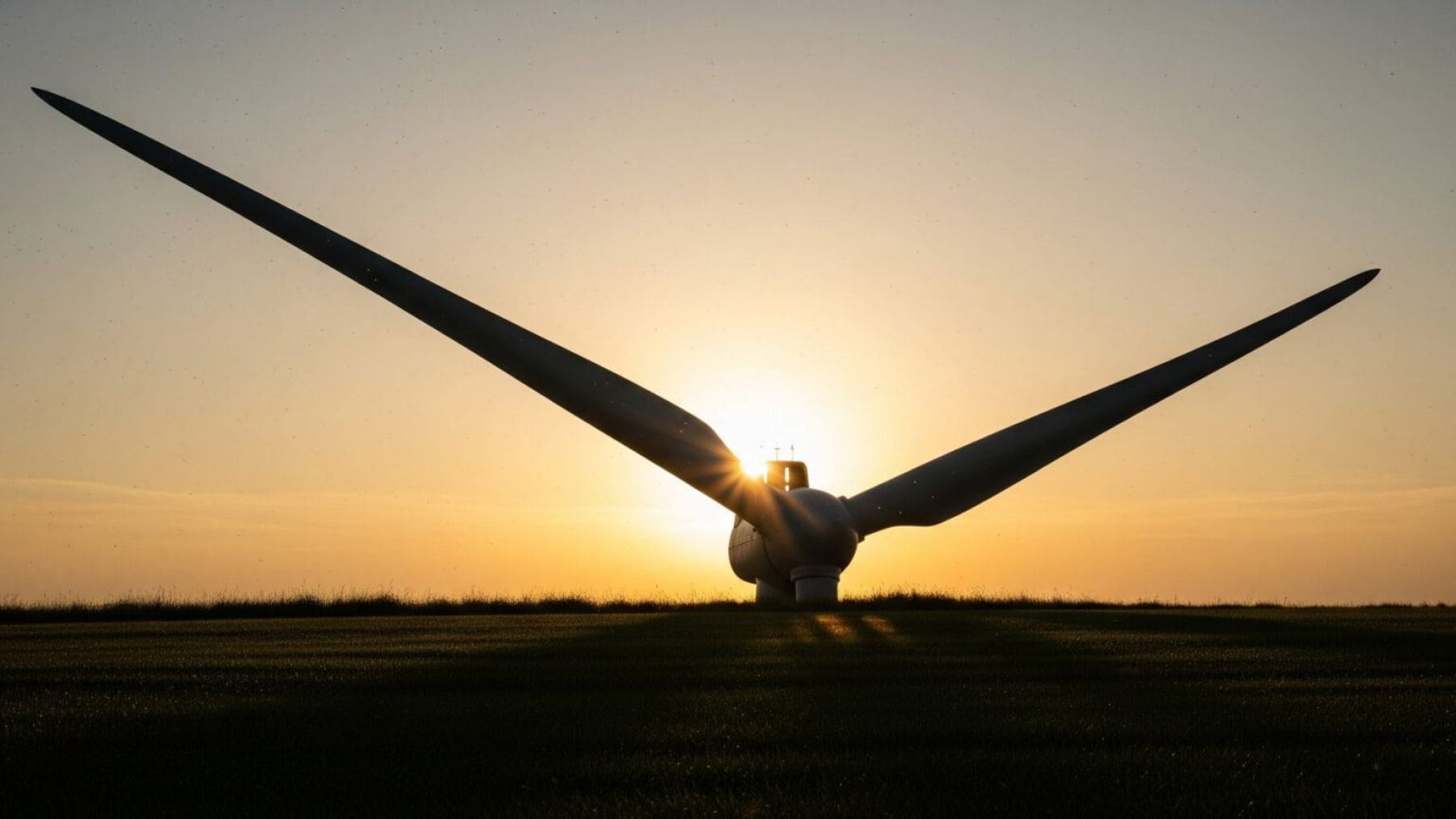
Picture a warm summer evening somewhere in the American heartland, the air thick and humming with life. Millions of insects are on the move, riding the same rising currents that push tall grasses into waves. A little further above them, something vast is turning.
Something has been building on those blades for decades
Wind turbines are, by now, a familiar piece of the landscape across the Great Plains, the Midwest, and the coasts. Most people think of them as simple machines: the wind blows, the blades turn, the lights stay on.
But engineers who maintain them know a different story. The leading edge of each blade, the forward-facing rim that slices through the air first, tells the truth of what really happens up there.
Regular cleaning restores blade performance, though downtime and labor costs add up fast across a large wind farm, making scheduling a real economic puzzle.
Every night, every season, and especially during the warm insect-rich months, those edges collect something unexpected. Over days and weeks, a rough uneven crust builds up, almost invisible from the ground, and it does not stop growing.
On a single overnight shift in midsummer, a technician rappelling down a blade in Kansas found the leading edge so thoroughly coated it felt more like sandpaper than polished fiberglass, the residue packed tightly into every small surface irregularity the manufacturer had worked hard to eliminate.
The air itself starts to behave differently
A wind turbine blade is not just a spinning stick. It is a carefully shaped wing, engineered so that air flows over it in a smooth, predictable sheet called laminar flow.
When that sheet of air runs clean over a polished surface, the blade generates lift, and that lift drives the rotor with maximum efficiency. Disrupt the surface even slightly, and the smooth sheet breaks apart into messy, turbulent eddies.
Turbulence on a blade means drag instead of lift. Drag means the rotor fights the wind instead of riding it. The turbine still turns, but it is working far harder for far less reward, and nobody on the ground can see why.
Think of it like running your palm along a freshly waxed car hood versus dragging it across coarse gravel. The air around a contaminated blade experiences that same sudden friction, and the rotor feels every bit of the difference in real time.
The crust gets thicker, and the losses grow
What causes the disruption is something almost no one standing below a turbine would guess. The blades are moving fast, often faster than 100 miles per hour at their tips, and at those speeds almost nothing in their path survives the encounter.
Insects flying at altitude collide with the blade surface, and the impact is violent. Their exoskeletons shatter and release bodily fluids that thicken on contact with oxygen, cementing the remains firmly to the surface.
Layer by layer, night after night, the crust compounds. Surface roughness climbs, lift falls away, and the turbine begins losing ground to the very wind it was built to use.
Wind turbines and insects: a hidden brake on clean power
Here is the wonder that engineers and ecologists have been sitting with for years. Insect remains that accumulate during low-wind periods can halve power generation when strong winds finally arrive, the precise moments a turbine should be performing at its peak.
Research published in IOP Science confirms that insect contamination can cause a 25% reduction in power output, and in documented cases the losses climb higher still. The problem grew serious enough to spawn an entire service industry dedicated to removing insect debris from blades.
There is also a two-way cost. Evidence is accumulating that operating turbines kill insects at a scale scientists are still measuring, raising questions about whether fatalities ripple through the wider insect assemblages sharing those sky corridors. Monarch butterflies have been recorded flying between 2 meters and 3,350 meters above ground, placing their migration routes squarely within blade height on the same nights contamination peaks.
The fix is as humble as the problem
The good news is that the solution is not exotic. Regular cleaning restores blade performance, though downtime and labor costs add up fast across a large wind farm, making scheduling a real economic puzzle.
Researchers are now developing blade coatings that resist adhesion, surfaces engineered to shed insect residue the way a rain jacket sheds water. Sensors that detect contamination early, before it compounds, are already entering commercial use.
One coating tested at a wind facility in Denmark reduced insect buildup by more than 40% over a full migration season, meaning the turbines spent far less time underperforming during the high-demand summer months when both insects and energy consumption peak together.
The broader picture carries its own urgency. The same insects grounding turbine output are the pollinators and food-chain foundations that healthy landscapes depend on, and any clean-energy buildout that ignores their flight paths is missing a piece of the picture.
It turns out that the smallest things in the sky hold an outsized grip on the future of clean energy, and the answer to making wind power work better may start with paying attention to what most of us never even notice is there.
Hugo is an engineer with strong technical expertise. Multilingual from an early age, his writing combines technical clarity with a strong interest in science and energy.
