
Canadian Utilities begins construction of $2.9 billion Yellowhead Pipeline to deliver natural gas across Alberta
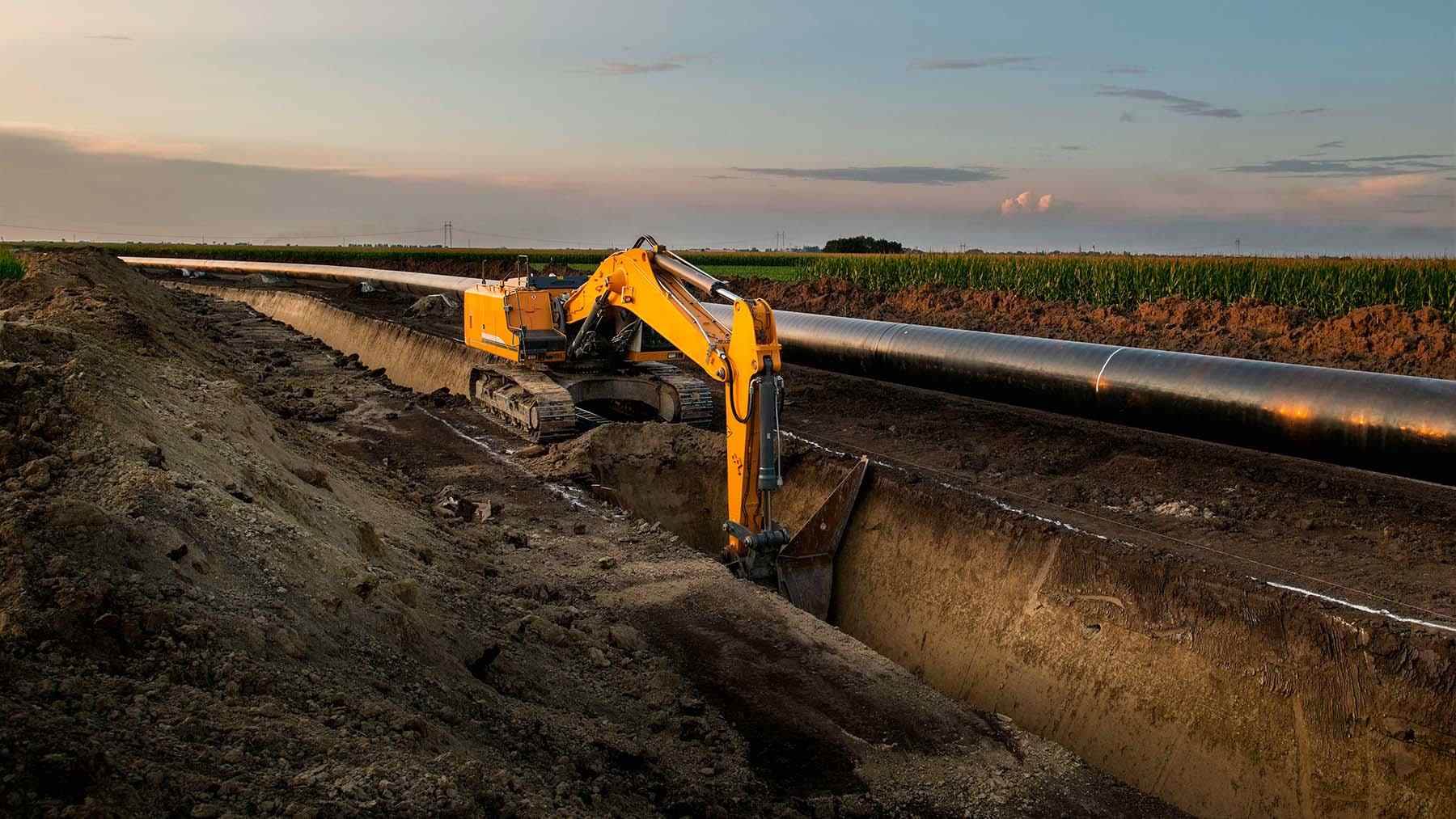
Canadian Utilities broke ground on the Yellowhead Pipeline on October 13, 2026, kicking off what the company calls the largest project in its history. The ceremony in Alberta brought together company leadership, government officials, Indigenous leaders, and industry representatives to mark the start of construction on a natural gas pipeline with a $2.9 billion CAD ($2.04 billion USD) price tag.
Groundbreaking ceremony marks construction start
The October 13 ceremony was more than a ribbon-cutting. It pulled in a wide mix of stakeholders — company leadership, government officials, Indigenous leaders, and industry representatives — making clear just how much is riding on this project. CEO Bob Myles set the tone. “It is a great day for Canadian Utilities and our partners, a great day for Alberta, and a particularly proud day for the team that has worked tirelessly to bring the Yellowhead project from concept to construction,” he said.
Jason Sharpe, Chief Operating Officer of ATCO Energy Systems, framed it as something bigger than a pipe in the ground. “Yellowhead represents more than a pipeline,” Sharpe said. “It’s an opportunity to create jobs, strengthen communities, enable economic growth and build lasting value for future generations.”
The Alberta Utilities Commission approved the Yellowhead Pipeline in July 2026, clearing the way for pre-construction activities that got underway shortly after.
Pipeline designed to meet Alberta’s growing energy demand
The Yellowhead Pipeline runs from Peers, Alberta (approx. 100 miles west of Edmonton) to Fort Saskatchewan, Alberta (just northeast of Edmonton) — cutting straight through Alberta’s industrial heartland, a region packed with energy-intensive operations.
At full capacity, it’ll deliver 1.1 billion cubic feet of natural gas per day. That’s a serious volume, and demand for it was already locked in before regulators signed off.
Capacity was fully subscribed before the Alberta Utilities Commission wrapped up its regulatory review. Shippers had already committed — they weren’t waiting around to see how the approval went. The demand drivers aren’t hard to identify: population growth, expanding industrial activity, rising power generation needs. Alberta’s existing natural gas transmission system is described as constrained, and Yellowhead is built to relieve that pressure.
Project expected to generate thousands of jobs and billions in economic output
The direct employment numbers are already substantial — Canadian Utilities projects roughly 2,000 direct construction jobs during the build phase. The downstream figures push things considerably higher.
The company estimates the pipeline will catalyze around 12,000 additional downstream construction jobs. Once associated downstream investments are operational, they’re projected to support 20,000 permanent jobs annually.
On top of that, downstream investments enabled by Yellowhead are projected to add $3.9 billion CAD ($2.74 billion USD) annually to Alberta’s GDP once the pipeline is running. That figure reflects not just the pipeline itself, but all the industrial activity it unlocks by opening up natural gas supply. These are forward-looking projections, and Canadian Utilities is upfront that market conditions, execution challenges, and factors outside the company’s control could all shift the numbers. Even so, the scale of those estimates explains the broad support the project has attracted.
Regulatory approval and project timeline
The Alberta Utilities Commission approved the Yellowhead Pipeline in July 2026, clearing the way for pre-construction activities that got underway shortly after.
Full construction is now officially underway following the October 13 groundbreaking. Canadian Utilities is targeting a late 2027 in-service date — meaning the pipeline could be moving natural gas within roughly a year of breaking ground.
At $2.9 billion, this is the largest single investment in Canadian Utilities’ history. Pre-subscribing capacity before regulatory approval adds another layer to that confidence. It signals that the company’s customers share the same long-term view of Alberta’s natural gas demand.
Canadian Utilities and ATCO’s role in Alberta’s energy infrastructure
Canadian Utilities is an ATCO company with around 8,600 employees and approximately $25 billion CAD ($17.6 billion USD) in assets, operating as a diversified energy infrastructure corporation. ATCO Energy Systems handles electricity and natural gas transmission and distribution — the segment directly responsible for the Yellowhead Pipeline.
The project fits squarely within that mandate. Alberta’s natural gas transmission system has been under strain, and Canadian Utilities is positioning Yellowhead as a direct response. Fort Saskatchewan, the pipeline’s eastern terminus, sits at the center of Alberta’s industrial heartland — a hub for petrochemical, refining, and other energy-intensive industries that depend on reliable gas supply.
What the Yellowhead Pipeline means for Alberta
The Yellowhead Pipeline is a $2.9 billion bet on Alberta’s energy future. Canadian Utilities broke ground on October 13, 2026, launching the largest project in its history — a natural gas line running from Peers to Fort Saskatchewan.
Designed to deliver 1.1 billion cubic feet of natural gas per day, the pipeline targets a transmission system that’s already stretched thin. Capacity was fully subscribed before regulators approved it. Construction is expected to support thousands of jobs, and downstream activity could add $3.9 billion annually to Alberta’s GDP once operations begin.
With AUC approval secured and construction now underway, the next milestone is a late 2027 in-service date. If the timeline holds, Alberta’s industrial heartland will have significantly more natural gas capacity within the next year.
Kelly is an experienced writer with 15 years of experience exploring the big stories that shape our world, from tech breakthroughs and space exploration to climate, energy, and the fascinating quirks of science. She has a talent for turning complex ideas into sharp, memorable insights that stay with readers long after they’ve finished reading.
