
This California wind farm attracted eagles from more than 520 miles away, and scientists still don’t know why
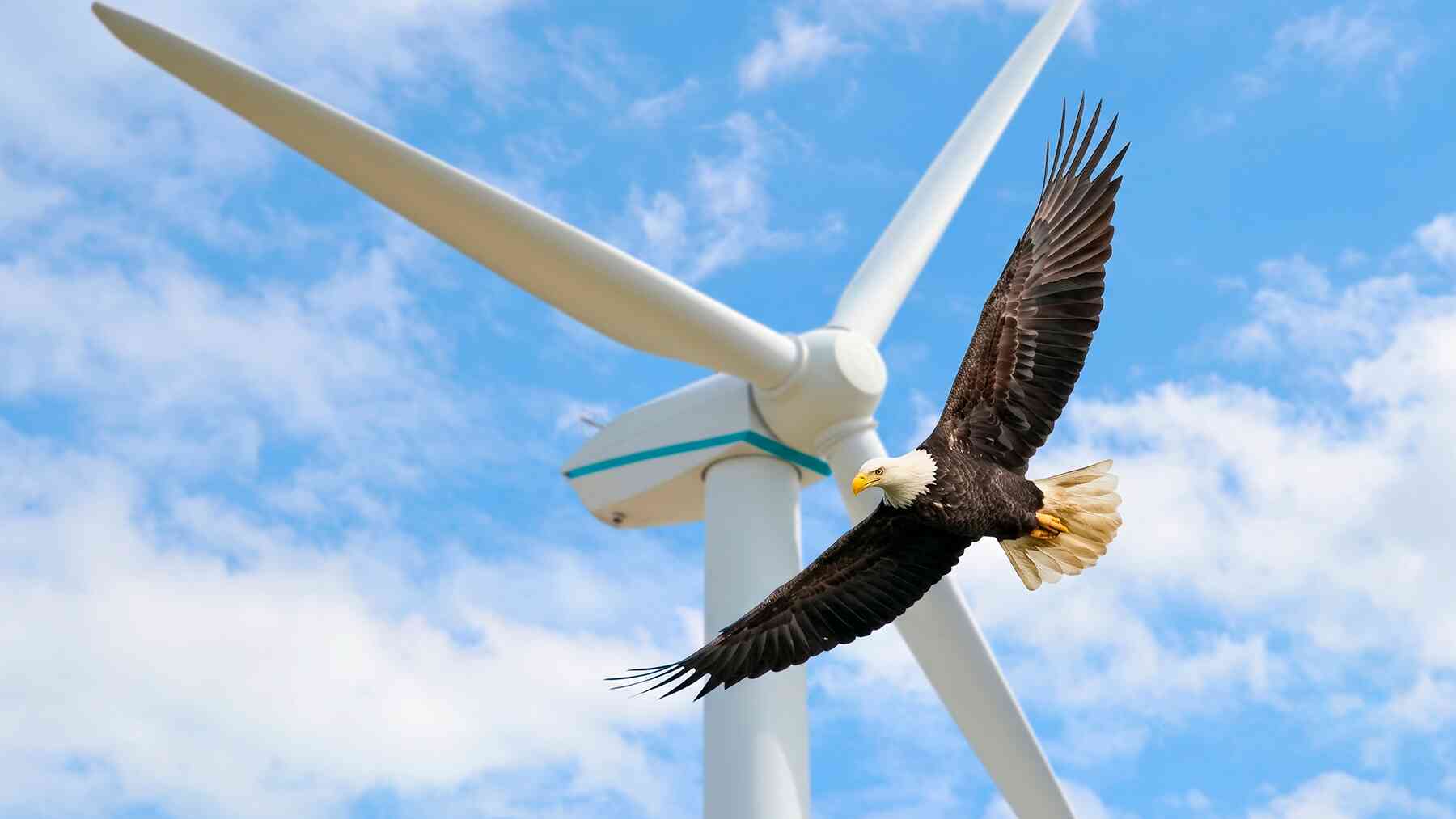 Credits: Edited, representative image
Wind farms pose significant threats to birds from hundreds of miles away, such as eagles.
Global energy demand and climate goals are in direct conflict.
To balance the two, large-scale wind infrastructure must rapidly expand.
Concerns about the impact of turbines on the planet’s flying wildlife and the higher risk of continental-scale displacement are rising.
Concerns about the impact of turbines on the planet’s flying wildlife and the higher risk of continental-scale displacement are rising.
Why are certain bird species attracted to wind infrastructure, and what can be done to save them?
How climate targets become less likely as electricity consumption rises
International climate mandates have been adopted by several nations worldwide.
The key is to mitigate the effects of climate change by lowering greenhouse gas emissions and increasing renewable energy capacity.
This will also keep annual rises in the average global temperature within a set threshold.
These goals, while meant to boost sustainability, have also become essential to other national strategies.
Geopolitical conflicts have provided more encouragement to achieve energy resilience.
Hence, green infrastructure is rapidly expanding globally.
However, electricity demand is increasing at an unprecedented rate.
The International Energy Agency predicts this trend will accelerate by 3.6% annually over the coming five years.
Widespread digitization is the primary driver of this surge.
Global data center energy consumption is set to reach 565 TWh this year.
Existing infrastructure cannot keep pace. This is why fossil fuels continue to play a role in electricity generation.
As a result, the need to decarbonize directly conflicts with the urgency for grid stability.
Rapid utility-scale wind deployment as a solution
Global investment is being pushed toward electrification ever since the Iranian energy shock.
Widespread adoption is set to strain grids further, unless large-scale wind energy is deployed quickly.
The technology itself has achieved substantial commercial maturity.
In 2025, 169 GW of new wind capacity was added worldwide.
It was a 35% increase over the prior year, bringing the total global installation to 1,346 GW.
Wind energy has also become extremely affordable. Its average cost is $0.034 per kWh, beating new fossil fuel alternatives.
Furthermore, wind farms have scaled significantly, ensuring an immense generation capacity.
This means that stressed grids can be relieved by high-capacity clean power.
Despite the clear benefits of wind infrastructure, these giant turbines remain hazardous to avian wildlife.
Researchers from Purdue University found that turbines even threaten non-local bird species.
While highly concerning, the MIT Climate Portal placed these findings within a broader context.
A Californian wind farm attracted eagles from afar
Bird mortality due to collisions with wind turbine blades has been thought to be a localized problem. In the U.S., between 140,000 and 679,000 bird deaths occur annually.
New evidence suggests wind infrastructure has wider impacts on avian populations.
At California’s Altamont Pass Wind Resource Area, golden eagle carcasses were analyzed.
Genetic material and feather samples from 67 deceased birds were collected.
Hydrogen isotope analysis traced the geographic origins of the eagles.
The unexpected migratory patterns revealed
75% of the fatalities were of local California eagles, but 25% were non-local migrants.
The migratory birds traveled over 520 miles before colliding with the turbine blades.
Golden eagles were particularly vulnerable to collisions.
The windy terrain near the wind farm allows them to soar and hunt effortlessly.
As they soar, they often look straight down to seek prey and fail to see the moving blades.
These new findings are concerning, but the MIT Climate Portal provides an essential perspective on a global scale.
Yes, there are severe, localized risks for migratory birds. Nonetheless, macro data show that wind farms account for less than 0.01% of avian mortality.
Accelerated climate change remains the greatest threat to the world’s biodiversity. However, developers should still implement smart, automated deterrents to ensure wind energy’s ecological footprint remains small.
Anke Maree is a writer with a clear and engaging editorial style. Her work focuses on making complex topics accessible, informative, and relevant for readers across different areas of interest.
