
Fugro awarded marine survey contract for UK’s first offshore CO2 storage pipeline project under the North Sea
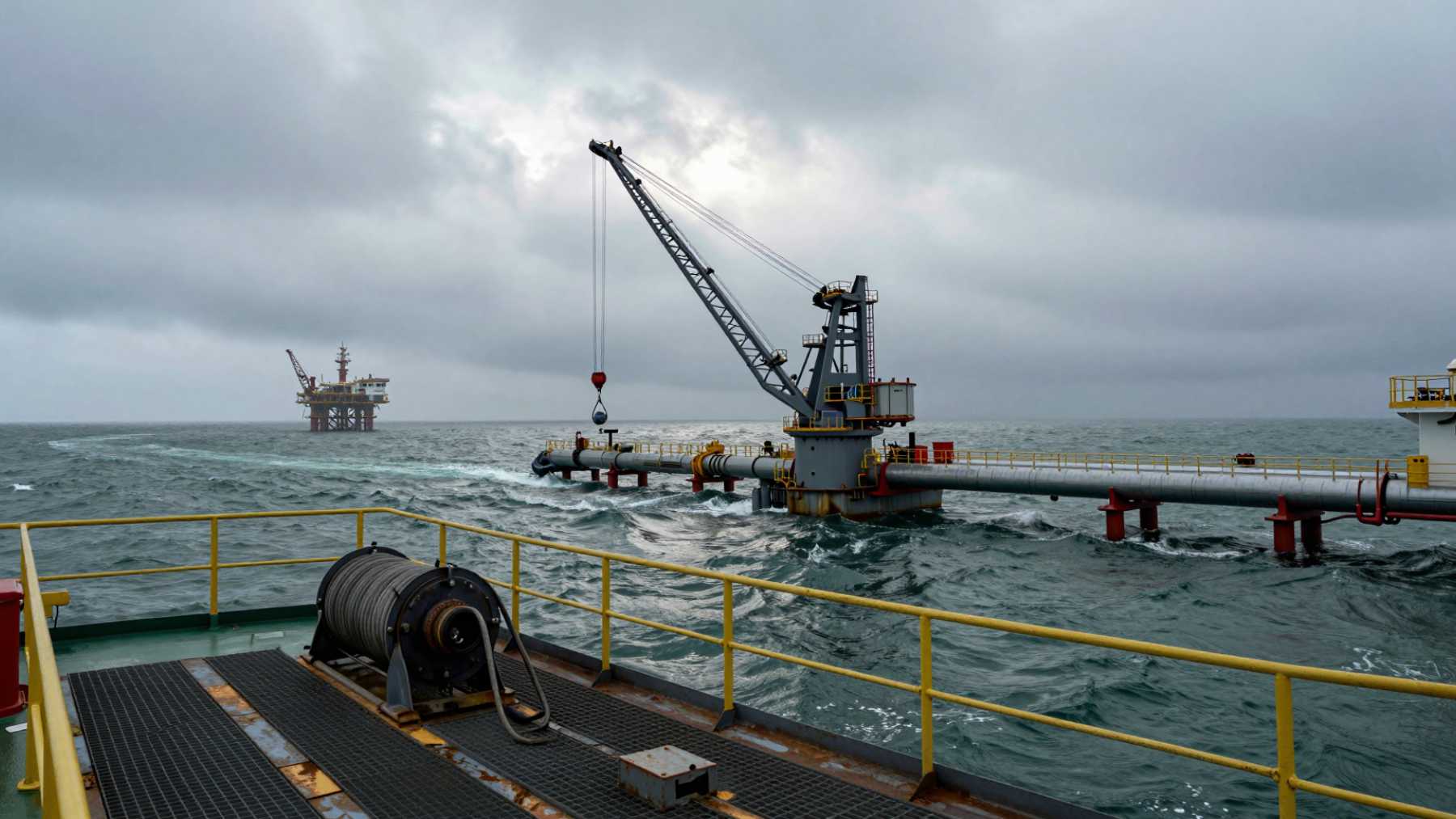 AI-made
Fugro has been contracted by Saipem to provide integrated marine survey and inspection services for the Northern Endurance Partnership—the UK’s first CO₂ transportation and storage infrastructure project beneath the North Sea. The partnership, a joint venture between BP, Equinor, and TotalEnergies, is developing pipeline infrastructure with access to up to one billion metric tons of CO₂ storage capacity.
Fugro contracted to support the UK’s first CO₂ pipeline project
Fugro’s role comes through a direct contract with Saipem—the company leading engineering, procurement, construction, and installation of the offshore pipeline and associated infrastructure. Saipem is building the physical backbone of the Northern Endurance Partnership beneath the North Sea, and to do that safely and accurately, they’ve brought Fugro in for marine survey and inspection expertise.
The Northern Endurance Partnership is a joint venture between BP, Equinor, and TotalEnergies. Together, they’re developing what will become the UK’s first operational CO₂ transportation and storage infrastructure—not a minor distinction. It places NEP at the center of the country’s early carbon capture ambitions, and the pressure to get it right is considerable.
Mike Duncan, Fugro’s Director of Marine Asset Integrity in Europe and Africa, framed the company’s contribution in terms of decision support.
Why the project is being built: decarbonizing industrial regions
The North Sea isn’t just an oil and gas basin. It sits above geological formations capable of storing up to one billion metric tons of CO2, making it one of the most significant potential carbon sinks in the region. NEP is designed to tap into that capacity as a practical response to industrial emissions — not a theoretical one.
The project’s primary goal is to decarbonize some of the UK’s most carbon-intensive industrial regions, where cutting emissions through electrification or fuel switching alone isn’t realistic. For these sectors, carbon capture and storage may be one of the few viable paths to meaningful reductions.
The infrastructure isn’t designed to shut industry down — it’s designed to let it keep running while cutting its carbon footprint. That balance is central to the project’s rationale. Strengthening regional energy security is also part of the picture, giving NEP relevance well beyond its environmental goals.
Scope of Fugro’s survey and inspection work
Fugro’s work spans the full pipeline route, from where it exits a landfall tunnel to where it connects with existing offshore infrastructure. That’s a technically demanding scope, covering both nearshore and open-water environments, each with its own conditions and constraints.
In the nearshore zone, Fugro will carry out pre-lay surveys starting from the tunnel exit and extending several miles out to sea. These surveys map the seabed before the pipeline goes in, giving the installation team a clear picture of what they’re working with. Once the pipeline is being pulled out, Fugro monitors the installation in real time—confirming it’s being laid as designed and flagging unexpected seabed changes before they become problems.
Further offshore, the scope shifts to surveys, installation support, and verification work along the pipeline route. A specific focus is third-party pipeline and cable crossings—points where NEP’s infrastructure intersects with existing subsea assets, requiring precise verification to avoid interference or damage.
Fugro describes its overall methodology as a “source-to-seabed” approach: consistent, reliable geo-data delivered along the entire route rather than patchwork coverage from different providers. That continuity, according to Fugro, helps reduce installation risk and supports more efficient project delivery for Saipem.
Mike Duncan, Fugro’s Director of Marine Asset Integrity in Europe and Africa, framed the company’s contribution in terms of decision support. “By working closely with Saipem across nearshore and offshore environments, from early surveys through to installation, we support informed decision-making that helps Saipem manage risk across a technically complex route,” he said.
Context: the UK’s carbon capture and storage ambitions
NEP’s significance goes beyond its technical specs. It represents a milestone in the UK’s broader push toward carbon capture and storage as a tool for meeting net-zero targets. CCS infrastructure—which captures CO₂ at the source, transports it, and stores it underground—is widely seen as a necessary component of decarbonization strategies, particularly for heavy industry.
This project connects onshore industrial sources directly to subsea storage beneath the North Sea, creating an end-to-end chain that doesn’t yet exist at scale in the UK. Getting that chain operational would mark a genuine first for British energy infrastructure.
Fugro’s involvement also reflects a wider trend. Specialist geo-data and survey companies are playing an increasingly active role in energy transition projects, and as offshore wind, carbon storage, and hydrogen infrastructure expand, demand for precise subsea knowledge is growing right alongside them.
a joint venture between BP, Equinor, and TotalEnergies
Fugro has been awarded a contract by Saipem to deliver marine survey and inspection services for the Northern Endurance Partnership — the UK’s first CO2 transportation and storage infrastructure project. NEP is a joint venture between BP, Equinor, and TotalEnergies, targeting up to one billion metric tons of CO₂ storage capacity beneath the North Sea.
Fugro’s scope covers nearshore pre-lay surveys, real-time installation monitoring, and offshore verification work, all delivered through a source-to-seabed approach that provides consistent geo-data across the full pipeline route. The project is designed to decarbonize carbon-intensive UK industries while keeping them operational—and it represents a meaningful step forward in the country’s carbon capture ambitions.
Kelly is an experienced writer with 15 years of experience exploring the big stories that shape our world, from tech breakthroughs and space exploration to climate, energy, and the fascinating quirks of science. She has a talent for turning complex ideas into sharp, memorable insights that stay with readers long after they’ve finished reading.
