
A giant underwater ‘lung’ could generate electricity by breathing with the waves, inflating flexible membranes that push air through a turbine with every swell
 Credits: Bombora
An innovative dual-design concept has demonstrated how to generate clean electricity with both waves and wind.
Global energy demand is rising at an unforeseen rate, urging nations to scale up renewable infrastructure.
Offshore wind has become pivotal in addressing conventional constraints, but still experiences intermittency.
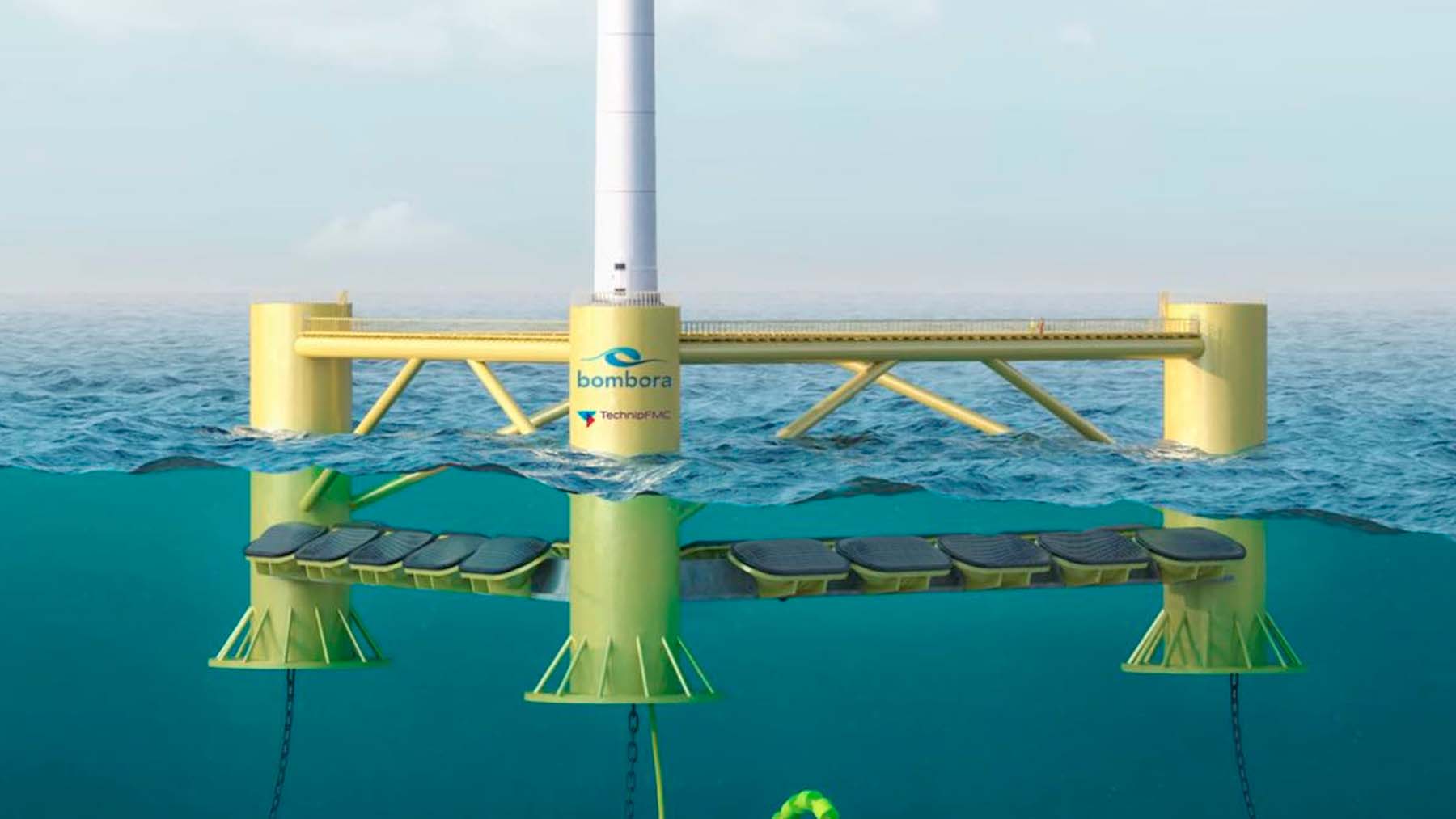
Bombora’s subsea technology mWave is directly integrated with TechnipFMC’s semi-submersible floating wind turbines.
Power grids cannot manage sudden generation dips, which is why alternative solutions are needed.
Will deploying a combination of multiple marine resources help the world achieve its goals?
How digitization has accelerated the race toward zero emissions
The major rise in generative AI, cloud computing, and digital networks has shifted energy needs.
These advancements have been beneficial in several ways, such as improving convenience and streamlining operations.
However, the adoption of digital technologies also comes with high costs.
A major consequence is the rapid acceleration of global electricity consumption.
Data from the IEA predicts that power demand will grow by an average of 3.6% per year.
This means that over 1,100 TWh more electricity will be required annually.
In 2025, data center power consumption grew by 17% worldwide.
At this rate, these facilities are on track to use roughly 950 TWh each year by 2030.
By continuing to rely on fossil fuels to maintain this 24/7 digital expansion, global warming and grid instability worsen.
Now, governments and technology firms are pressured to scale up carbon-free energy infrastructure.
But major bottlenecks have been slowing progress.
Traditional offshore systems are no longer enough
Wind capacity has immense potential to meet rising electricity demand and clean energy targets.
The Global Wind Energy Council stipulates that global wind capacity surpassed 1.1 TW.
Despite this achievement, onshore wind growth faces immense geographic and social conflicts.
Local community pushback, competition with farmers, and complex zoning laws have made securing land difficult.
These challenges encouraged the sector to shift toward offshore locations.
Offshore wind is more consistent and concentrated, enabling larger turbine deployment with higher yields.
Global offshore wind potential is estimated at 71,000 GW, which can meet the world’s power needs several times over.
However, sole reliance on it is no longer enough.
Wind power continues to struggle with intermittency, triggering sudden generation dips that strain electrical grids.
Furthermore, the best wind resources are in deeper waters.
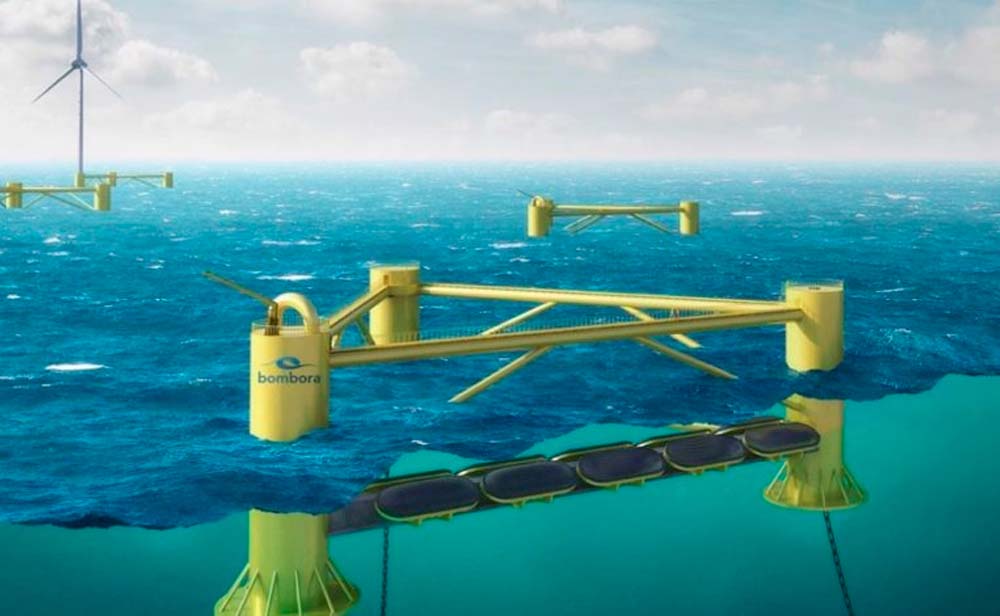
To tap this highly unused resource, Bombora designed an innovative hybrid technology.
Now, waves and wind can be harnessed simultaneously.
Generating clean power with waves and offshore wind
Hybrid offshore platforms that combine green energies are rising in popularity.
Bombora partnered with TechnipFMC on Project InSPIRE to demonstrate the reliability of these platforms.
Bombora’s subsea technology mWave is directly integrated with TechnipFMC’s semi-submersible floating wind turbines.
The technologies share one floating foundation, export cables, mooring lines, and grid connections.
mWave is located beneath the ocean surface to withstand extreme storm conditions. It operates like an underwater lung.
Converting wave pressure into clean power
Rubber, air-filled membranes are integrated into floating foundations or installed along recessed structures on the seafloor.
Overhead passing waves compress the membranes.
Air is forced out of the membrane chambers via one-way valves into a sealed, high-pressure duct.
The air spins an onboard turbine, driving a generator to produce electricity.
As the waves pass, the air automatically recirculates through a low-pressure path back to the membranes, reinflating them.
This way, wave power balances drops in the turbine’s wind generation.
The InSPIRE hybrid platform drastically lowers energy costs while boosting yield per square mile.
By combining wave and wind generation on one platform, the power supply can be stabilized for coastal electrical grids.
Tank testing and open-ocean validation have been successful. Bombora and TechnipFMC are now advancing toward multi-megawatt commercial deployment.
Ultimately, the technology proves that deep-sea ocean energy can deliver reliable, consistent clean electricity worldwide.
Anke Maree is a writer with a clear and engaging editorial style. Her work focuses on making complex topics accessible, informative, and relevant for readers across different areas of interest.
