
Two proposed desert reservoirs would feed a buried 1,000-MW Nevada power station, but federal review now extends into 2028
 File image
A proposed project is targeting two reservoirs in Nevada to strengthen grid reliability.
The state is experiencing a rapid rise in electricity consumption and facing immense strain.
To sustain vital operations across the region, large-scale renewable energy capacity must bridge the growing power supply gap.
This transformation included advanced manufacturing, industrial parks, and major technology expansions, establishing operations across the region.
However, intermittency remains a critical issue for grid stability, requiring clean energy storage infrastructure.
Will executing pumped storage projects help the state overcome peak demand challenges?
How a semi-arid region has grown into a demanding modern hub
Years ago, Nevada was mainly defined by its extensive, arid desert landscape.
However, over the past few decades, the state underwent major industrialization and commercial transformation.
This transformation included advanced manufacturing, industrial parks, and major technology expansions, establishing operations across the region.
Nevada also became a primary national hotspot for power-intensive data centers.
These facilities currently operate more than 700 megawatts of capacity and will require thousands of additional megawatts for future expansion.
This rapid economic expansion, combined with significant population growth, has driven the state’s electricity usage to record highs.
Utility predictions even expect upcoming industrial and data center projects to consume tens of thousands of gigawatt-hours each year.
This will be more than half of the state’s total net generation.
Power consumption is further intensified by accelerated electrification and extreme summer heat as cooling systems continuously run.
Consequently, the state’s transmission and power infrastructure is under immense strain.
The rise of regional grid vulnerability
As consumer demand continues to spike, and heatwaves intensify as climate change accelerates, increasing immediate power supply deficits.
Electricity supply becomes unstable, and blackout risks increase.
To avoid this, grid operators often turn to fossil fuel power plants for rapid backup generation.
This conflicts with statutory climate mandates.
Under state law, utilities must meet a 50% Renewable Portfolio Standard by 2030.
This will help achieve the long-term goal of 100% carbon-free power by 2050.
To meet rising clean energy requirements, renewable energy capacity has expanded rapidly.
Major solar farms with millions of panels have driven the state’s shift to green energy.
But these facilities, along with wind farms, face inherent intermittency issues.
While battery storage systems offer a solution, they only store energy for limited periods.
Fortunately, federal interventions such as the White Pine Pumped Storage project can address the issues.
The proposed project is under review by the Federal Permitting Dashboard – White Pine.
Two reservoirs for a pumped storage project
Pumped storage’s potential to meet rising electricity demand is becoming widely recognized.
The proposed White Pine Pumped Storage Project will be located in White Pine County, Nevada.
The $2.8 billion project near Ely will primarily rest on federal land managed by the Bureau of Land Management.
It will function as a massive, rechargeable clean energy battery.
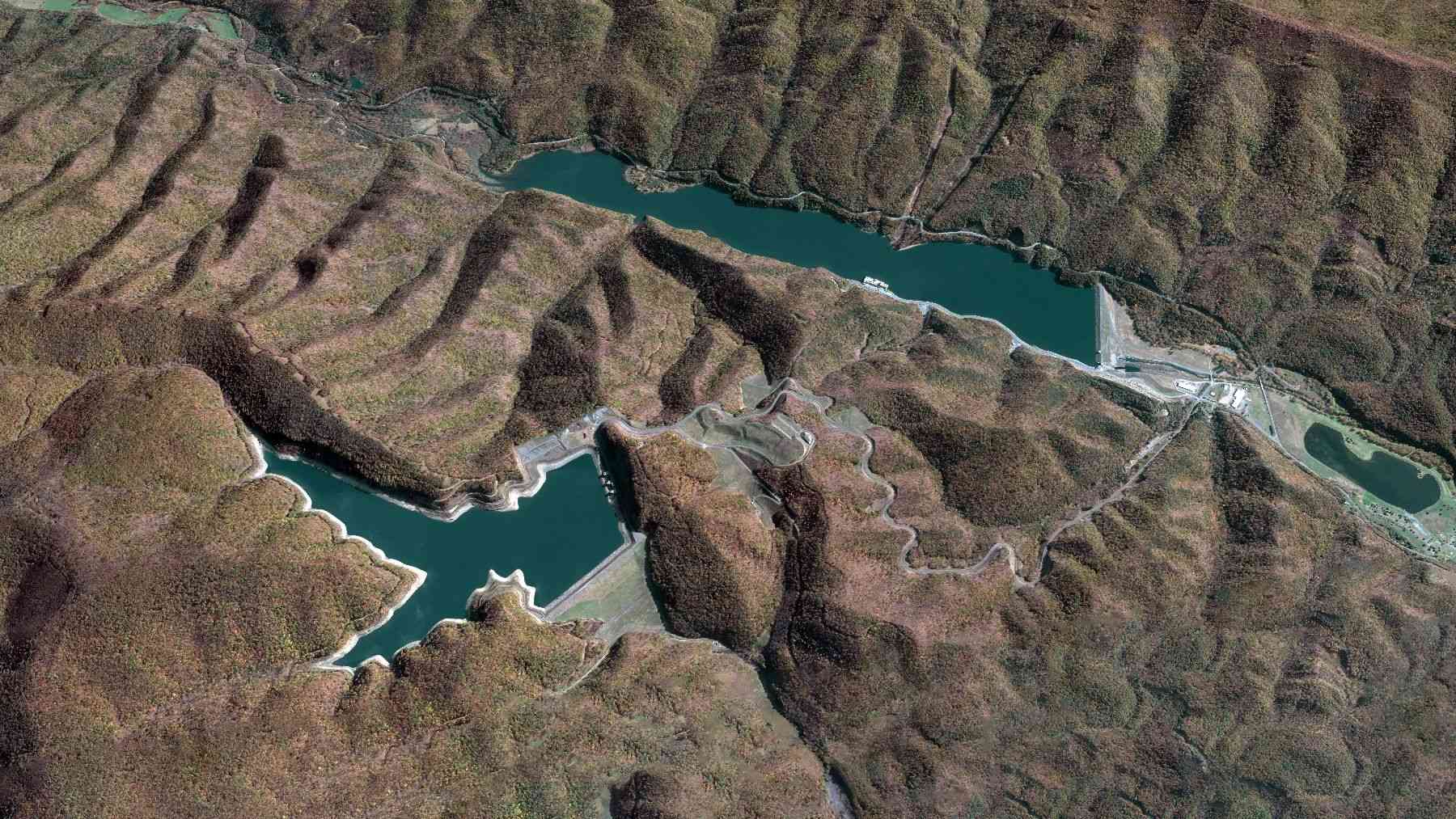
As a closed-loop system, it will feature two artificial desert reservoirs constructed at different elevations.
The two reservoirs will be connected by an underground conveyance system and a buried powerhouse.
This reduces surface impact on the surrounding desert terrain.
Balancing the grid according to different demand hours
During off-peak hours when intermittent production exceeds demand, excess power enables pumping water to the upper reservoir.
When demand peaks, stored water is released through underground turbines to the lower reservoir.
This generates up to 1,000 megawatts of power, supplying continuous electricity for up to eight hours.
The project’s federal review under the FAST-41 Permitting Dashboard is projected to be completed by October 2028. This is led by the Federal Energy Regulatory Commission.
Once the facility is operational, long-duration storage for excess solar energy will be vital in stabilizing the regional power grid.
Ultimately, clean energy pumped storage solutions are key to meeting both climate goals and rising electricity needs.
Anke Maree is a writer with a clear and engaging editorial style. Her work focuses on making complex topics accessible, informative, and relevant for readers across different areas of interest.
