
DOE awards $500 million to seven projects to expand U.S. critical mineral and battery supply chains
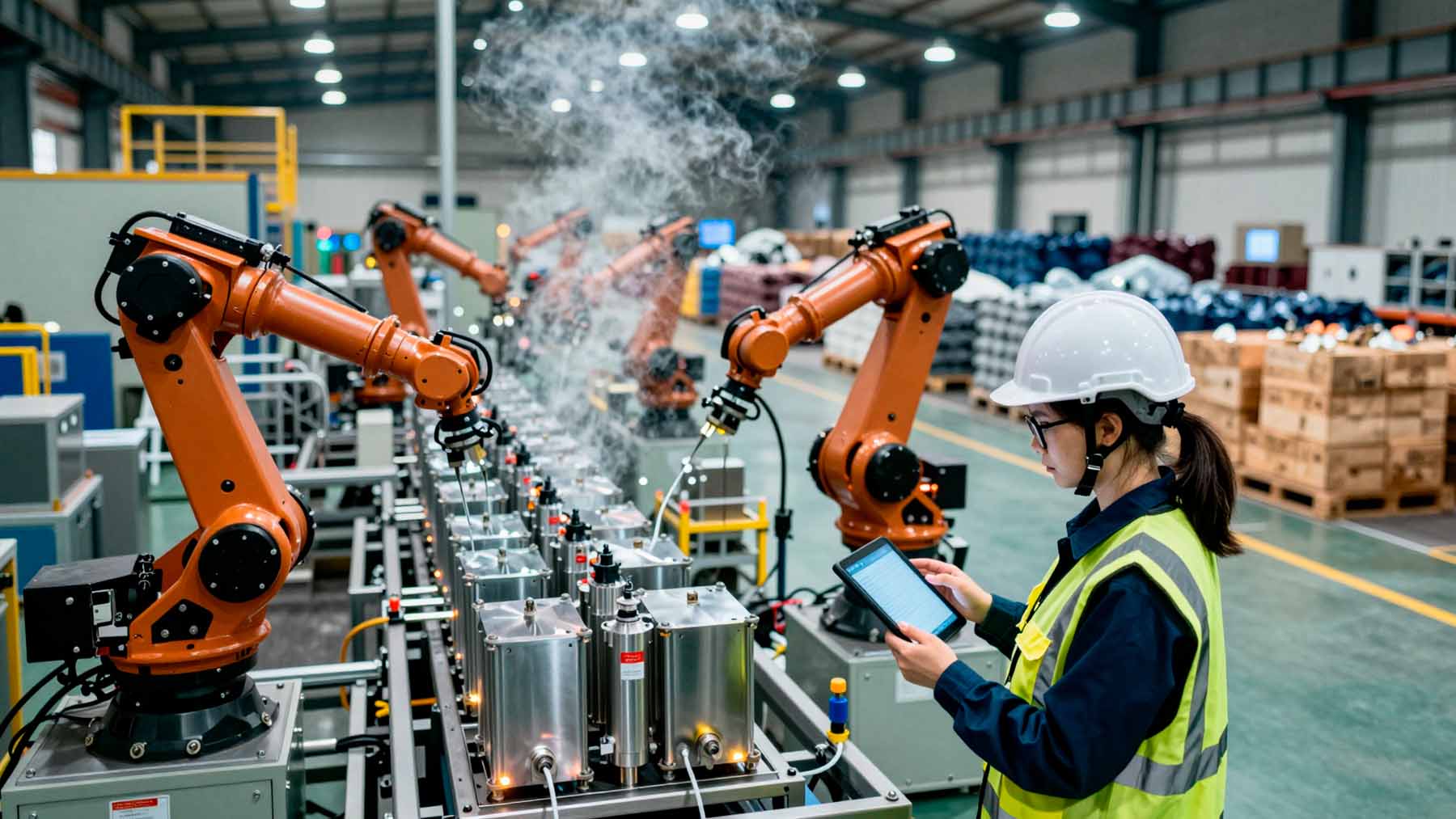 Image generated with artificial intelligence
The U.S. Department of Energy announced $500 million in funding for seven projects on August 20, targeting critical mineral and material processing, battery manufacturing, and recycling capacity. The awards mark the third round of funding under DOE’s Battery Materials Processing and Battery Manufacturing and Recycling programs, which support projects ranging from demonstration-scale facilities to full commercial construction and retrofit operations.
DOE selects seven projects for $500 million in critical minerals funding
The announcement came from DOE’s Office of Critical Minerals and Energy Innovation (CMEI) on August 20, 2026. Seven projects were selected to share the $500 million pool, each focused on one or more of the priority areas: critical mineral and material processing, battery manufacturing, and recycling capacity.
This is the third round of funding under DOE’s Battery Materials Processing and Battery Manufacturing and Recycling programs—and that continuity matters. Three competitive rounds in, the programs are progressively building out the domestic supply chain infrastructure the U.S. has long lacked. This isn’t a one-off investment.
DOE’s selection of these seven projects is explicitly positioned as a direct implementation of that directive—moving from executive policy to funded action.
Eligible projects span a wide range of development stages, from demonstration projects and new commercial-scale construction to retrofitting and retooling existing facilities. That flexibility lets the funding meet the supply chain where it actually is, not just where policymakers wish it were.
Why the funding was issued: Reducing foreign dependence on critical materials
The core driver is pretty straightforward: the U.S. has historically relied on foreign sources for critical minerals, and that dependence has become harder to ignore. These materials underpin modern industry, energy production, and national security—and for years, a significant share have been sourced, processed, or refined abroad.
Secretary of Energy Chris Wright put it directly. “For too long, America has depended on foreign actors for critical materials essential to modern life that underpin our economy, energy security, and national security,” he said in the announcement. That framing positions the funding not as an expansion of existing capacity, but as a fix for a long-standing structural vulnerability.
The funding ties directly to President Trump’s Executive Order “Unleashing American Energy,” which directs federal agencies to strengthen domestic critical minerals and materials supply chains. DOE’s selection of these seven projects is explicitly positioned as a direct implementation of that directive—moving from executive policy to funded action.
Reversing decades of offshoring in mineral processing takes more than money. It takes facilities, workforce capacity, and technical know-how. These projects are meant to start closing that gap.
Expected outcomes: Domestic capacity, security, and energy dominance
DOE framed the expected outcomes around bolstering U.S. economic security, strengthening national security, and advancing what the agency calls “American energy dominance.” Those aren’t just rhetorical markers—they reflect the strategic logic behind prioritizing domestic processing over continued import reliance.
Assistant Secretary of Energy Audrey Robertson emphasized the innovation angle. “These projects underscore DOE’s commitment to driving innovation, reducing reliance on foreign sources, and promoting American energy dominance,” she said. The language points to a dual objective: not just replacing foreign supply with domestic supply, but doing so in ways that build U.S. technical capabilities.
The eligible project types reflect that ambition. Demonstration projects test new approaches at scale before full commercial deployment. Retrofitting existing facilities allows faster deployment by building on infrastructure that’s already in place. Commercial-scale construction, meanwhile, creates new permanent capacity from the ground up. Together, these pathways give the program room to fund solutions at different stages of readiness.
Expanding domestic capacity means the resources America needs—for batteries, manufacturing, energy systems—get processed, built, and recycled within U.S. borders, reducing exposure to foreign supply disruptions and geopolitical risk.
Background: The role of critical minerals in the U.S. economy and security
Critical minerals and materials are foundational to a wide range of industries—energy production, defense systems, consumer electronics, and the battery technologies powering electric vehicles and grid storage. Despite their importance, the U.S. has historically processed very little of what it needs domestically.
That gap has drawn increasing attention. Global supply chain disruptions made the risks more visible, and a growing consensus has formed around a basic point: relying on foreign sources for strategically important materials is a structural problem, not just an economic inconvenience.
The Battery Materials Processing and Battery Manufacturing and Recycling programs have now completed three funding rounds, each targeting projects across the full supply chain—from raw material processing through to end-of-life recycling. That full-chain approach is deliberate. A gap at any single point can undermine the entire system, regardless of how well the other stages function.
Domestic processing and recycling capacity remains limited relative to current and projected demand. That makes these investments strategically significant, even if $500 million represents only a portion of what a full buildout would ultimately require.
The Department of Energy awarded $500 million to seven projects on August 20, 2026, through its CMEI office. The funding targets critical mineral processing, battery manufacturing, and recycling. It’s the third round under two established DOE programs. The investment ties to President Trump’s “Unleashing American Energy” executive order and is explicitly aimed at reducing U.S. dependence on foreign sources for materials central to the economy and national security.
Kelly is an experienced writer with 15 years of experience exploring the big stories that shape our world, from tech breakthroughs and space exploration to climate, energy, and the fascinating quirks of science. She has a talent for turning complex ideas into sharp, memorable insights that stay with readers long after they’ve finished reading.
