
Antarctica gained nearly 700 billion tons of ice and the cause was hiding in a distant tropical ocean that quietly rewires polar weather once every decade by sending invisible atmospheric rivers thousands of miles south
Antarctica gained 700 billion tons of ice — and a distant tropical ocean drove it
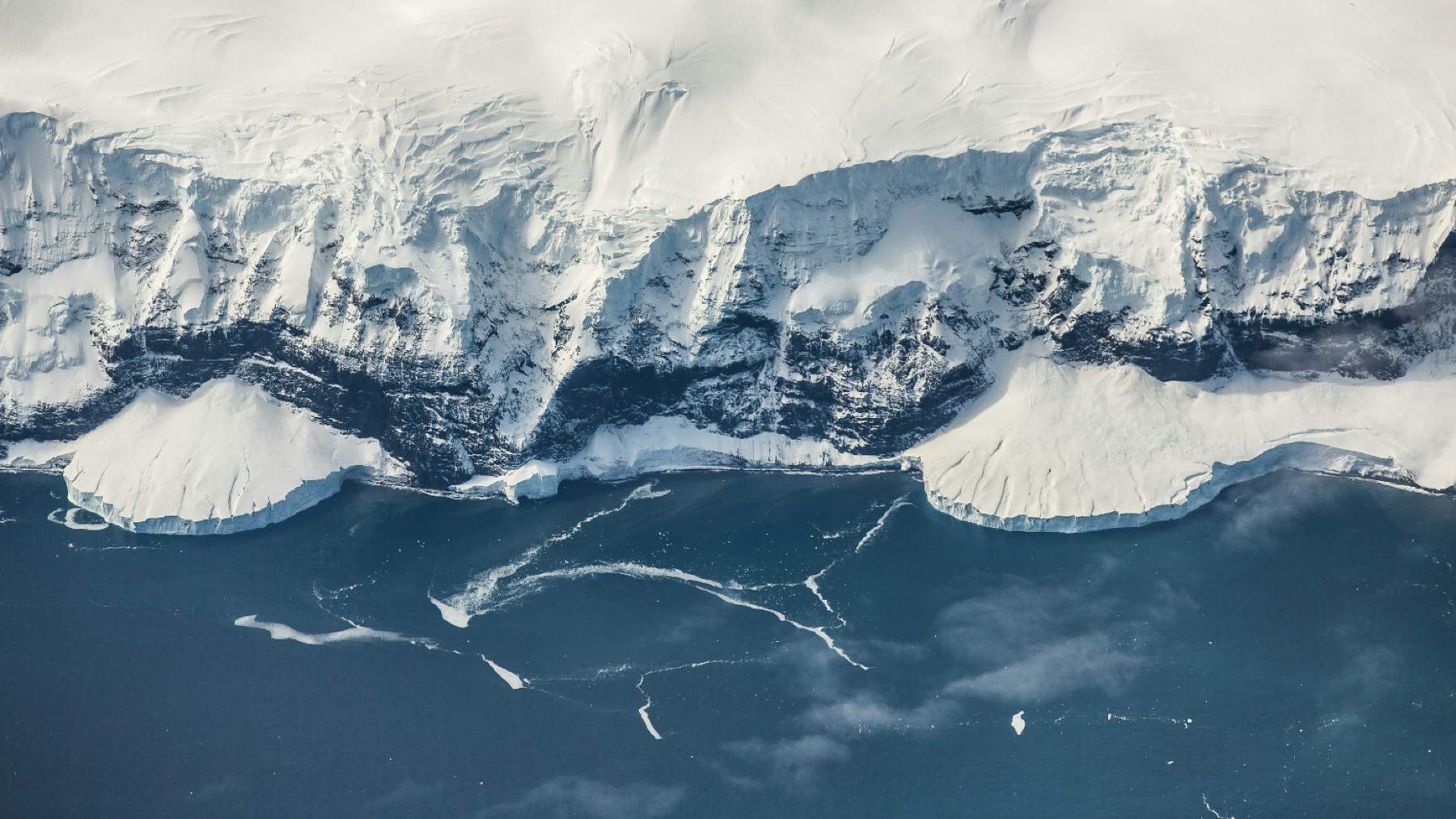
For two decades, Antarctica has been losing ice at a rate of roughly 140 billion tons a year — a slow, steady drain that scientists had come to expect. Then, between 2021 and 2023, something happened that no satellite had ever recorded: the continent gained nearly 700 billion tons of ice.
The scale of that reversal is hard to place. In just two years, Antarctica added back more mass than it typically sheds in five. What caused it wasn’t obvious — and the answer was hiding thousands of miles away.
Steig. Multiyear tropical warm pool warming drives slowdown in Antarctic mass loss. Nature, 2026; 656 (8129): 897 DOI: 10.1038/s41586-026-10912-x
A record that rewrote expectations
Between 2021 and 2023, the Antarctic Ice Sheet gained approximately 695 billion tons of mass. That figure represents the largest ice gain ever recorded by the GRACE satellite missions — instruments built to detect subtle shifts in Earth’s gravitational field caused by changes in ice mass. For context: Antarctica had been losing an average of about 140.5 billion tons of ice per year for the previous two decades. In two years, it clawed back what would normally take five years of losses to accumulate.
The gain wasn’t spread evenly. It concentrated in East Antarctica, particularly the Queen Mary Land–Wilkes Land region. Researchers led by the Institute of Oceanology of the Chinese Academy of Sciences pieced together the explanation using gravity satellite measurements, snow accumulation records from ice cores, and atmospheric circulation simulations — and their findings pointed somewhere almost no one expected.
A climate signal born in the tropics
The trail led to the tropical warm pool — the stretch of ocean where the western Pacific meets the eastern Indian Ocean, home to some of the warmest surface waters on Earth. During 2021–23, that region experienced a sustained period of unusual warming, which the team found triggered a Rossby wave train: a large-scale pattern of atmospheric disturbance capable of transmitting circulation changes across thousands of miles.
The wave train traveled toward the high southern latitudes and reorganized atmospheric conditions around Antarctica. What it produced was a north-south dipole — unusual low pressure south of Australia paired with unusual high pressure along the East Antarctic coast. Eddy mean flow feedbacks then amplified and prolonged this pattern well beyond what a typical weather event would sustain. A single storm doesn’t reshape a continent’s ice sheet. A multi-year shift in atmospheric circulation can.
Atmospheric rivers as the delivery system
The pressure dipole did something specific: it redirected moisture-laden air from the midlatitude Indian Ocean toward East Antarctica. The vehicle for that transport was atmospheric rivers — narrow, high-capacity corridors of water vapor that can carry enormous quantities of moisture over vast distances.
More of these rivers reached Antarctica than usual during this period, and when they arrived over the cold continent, that moisture fell as exceptionally heavy snow across the Queen Mary Land–Wilkes Land region. Water vapor tracking simulations confirmed the midlatitude Indian Ocean as the dominant moisture source for the anomalous snowfall. The chain from tropical ocean warming to polar snowfall, while indirect, was coherent and traceable at each step.
How much did human-caused warming contribute?
This is the question that matters most for interpretation. A warmer atmosphere holds more moisture, and global warming has been increasing atmospheric water vapor for decades. Could that general trend explain the 2021–23 snowfall surge?
The researchers tested this directly. Their analysis found that anthropogenic forcing accounted for only about 9% of the observed snowfall anomaly — the dominant driver was natural variability in tropical sea-surface temperatures, not the long-term greenhouse-gas signal. That distinction has real consequences for how scientists model Antarctica’s future. Natural tropical variability can temporarily mask or amplify the underlying trend of ice loss, making short-term satellite records genuinely difficult to interpret without accounting for the tropical connection.
A ‘regulator’ that resets roughly once a decade
The researchers didn’t stop at explaining one event. Additional simulations suggest that comparable multi-year warming episodes in the tropical warm pool occur approximately once every ten years — a regularity that gives the finding much broader significance.
The team describes the tropical warm pool as a remote “regulator”: a distant but recurring influence capable of driving multi-year swings in East Antarctic snowfall and ice mass. Their study identifies what they call a “tropical warm pool–East Antarctic Ice Sheet” teleconnection pathway, a previously underrecognized climate link connecting tropical ocean temperatures directly to polar ice-sheet behavior. Sharpening our understanding of this pathway could improve projections of sea-level rise, which remain deeply uncertain partly because Antarctic ice behavior is so hard to model accurately.
A temporary pause, not a reversal
The researchers are clear on this point: the 695-billion-ton gain was temporary. It doesn’t reverse Antarctica’s long-term ice loss trajectory. The West Antarctic Ice Sheet continued losing mass throughout the same period, and some East Antarctic outlet glaciers remain vulnerable to warm ocean water melting ice shelves from below — a process that drives ice toward the sea regardless of how much snow accumulates on the surface above.
What the event does show is how powerfully natural climate variability can produce short-term fluctuations that complicate the picture. A satellite record showing ice gain could be mistaken for recovery. It isn’t — it’s a pause, driven by a distant ocean, delivered by rivers in the sky, and likely to reverse as tropical conditions shift again. The deeper question the study leaves open is how these natural swings will interact with accelerating long-term warming. That interaction, not any single record-breaking year, is what will ultimately determine how much ice Antarctica loses — and how fast the oceans rise.
The complete study is available here: Yunhe Wang, Qinghua Ding, Xiaofeng Li, Thomas J. Ballinger, Yoshihiro Nakayama, Dániel Topál, Eric J. Steig. Multiyear tropical warm pool warming drives slowdown in Antarctic mass loss. Nature, 2026; 656 (8129): 897 DOI: 10.1038/s41586-026-10912-x
Daniel García is an Editor-in-Chief with strong expertise in structural work and engineering principles. He combines this technical foundation with deep knowledge of energy, spatial design, and emerging technologies, bringing a forward-thinking and analytical approach to editorial leadership.
