
At Jordan’s Tafila wind farm, buried cables reduce bird electrocution risks while spotters can stop turbines for approaching migrants

Jordan’s green energy developers are implementing crucial avifauna protection measures as wind capacity grows.
The country’s renewable energy sector is rapidly expanding to diversify the national power grid and secure sustainable electricity.
However, this green infrastructure often overlaps with local ecosystems and fragile migratory species’ corridors.
Global developers can use these proactive mitigation protocols to navigate sensitive migration corridors and adhere to national conservation mandates.
As conservation is a critical national priority, the Tafila project is used as a vital framework.
Will Jordan’s green transition balance clean power generation with wildlife conservation?
How Jordan’s need for clean energy security is finally becoming a reality
More than 90% of Jordan’s energy supplies are imported fossil fuels.
This historic reliance is driven by a lack of major domestic oil and gas reserves.
As a result, these imports routinely account for up to 20% of the nation’s total gross domestic product (GDP).
This creates a massive financial strain, as the economy is exposed to international market shocks and significant supply disruptions.
While fossil fuel imports remain high, continuing to overlook them is no longer viable under Jordan’s updated climate targets.
Under its Nationally Determined Contribution, a 31% greenhouse gas emission reduction must be achieved by 2030.
Furthermore, its renewable electricity must scale toward half of its total generation.
This green shift is especially vital in meeting the country’s steadily rising energy demand.
The most recent trends indicate that Jordan’s power consumption has reached 21.11 terawatt-hours.
To achieve clean energy resilience, renewable sources such as wind power must rapidly expand.
The ecological risks tied to accelerated wind deployment
With ongoing global political tensions, Jordan seeks to provide relief, approving a natural gas supply to Lebanon via Syrian territory.
But this is not the ultimate path to securing energy security, especially in Jordan.
The country has high average wind speeds and abundant land, making rapid wind power expansion more feasible.
Tapping into this source will cut fossil fuel imports, lower carbon emissions, and boost national power independence.
However, despite these distinct advantages, expanding large-scale wind installations across rural terrain presents clear environmental issues.
Major projects often overlap with vulnerable ecosystems and wildlife migration routes.
Jordan is situated along the Rift Valley flyway, which over 1.5 million migratory birds use twice each year.
This raises collision and electrocution risks for native and passage populations.
That is why the Jordan Wind Project Company developed the Tafila Wind Farm.
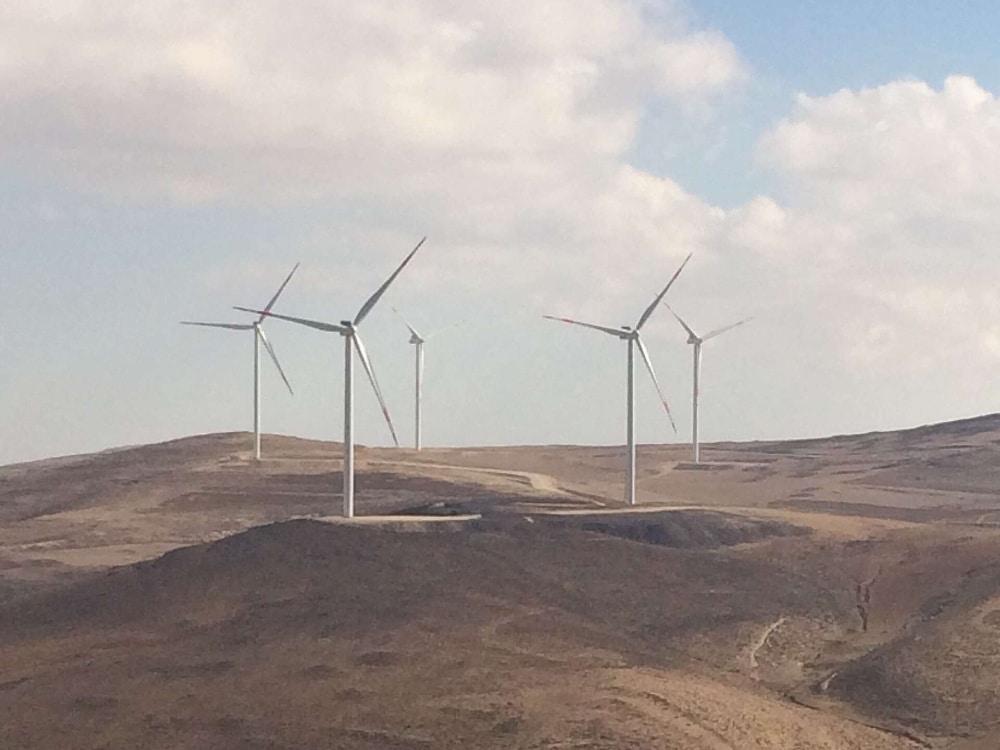
Lenders led by the International Finance Corporation provided the project funding and enforced strict environmental standards.
Mitigation efforts at the Tafila project
Developers are working on making wind projects more bird-friendly, implementing targeted mitigation efforts on site.
The Tafila Wind Farm, located in the Tafila Governorate in southern Jordan, has been operational since late 2015.
The facility has 38 Vestas turbines that provide 117 megawatts of clean power capacity.
It uses comprehensive data and active mitigation efforts to protect local and migratory avifauna.
Efforts in boosting bird conservation at the Tafila Wind Farm
Internal power lines are buried underground.
This entirely eliminates high-voltage electrocution dangers.
Observation posts are also continuously monitored by local spotters.
This is to record flight paths, bird species, and weather conditions.
Observation times increase to 12 man-days weekly during peak spring and autumn migration seasons.
As soon as the birds near spinning rotor blades, spotters trigger an immediate shutdown of specific turbines.
The plant remains fully operational today, producing 400 gigawatt-hours of clean power each year.
Most importantly, it serves as a benchmark for bird-friendly wind energy generation.
The project proves that renewable energy expansion does not have to compromise local biodiversity.
Global developers can use these proactive mitigation protocols to navigate sensitive migration corridors and adhere to national conservation mandates.
Ultimately, targeted bird protection measures at wind farms are key to accelerating the green energy shift.
Anke Maree is a writer with a clear and engaging editorial style. Her work focuses on making complex topics accessible, informative, and relevant for readers across different areas of interest.
