
ERCOT releases October 2026 resource adequacy outlook assessing fall grid risks and emergency condition scenarios
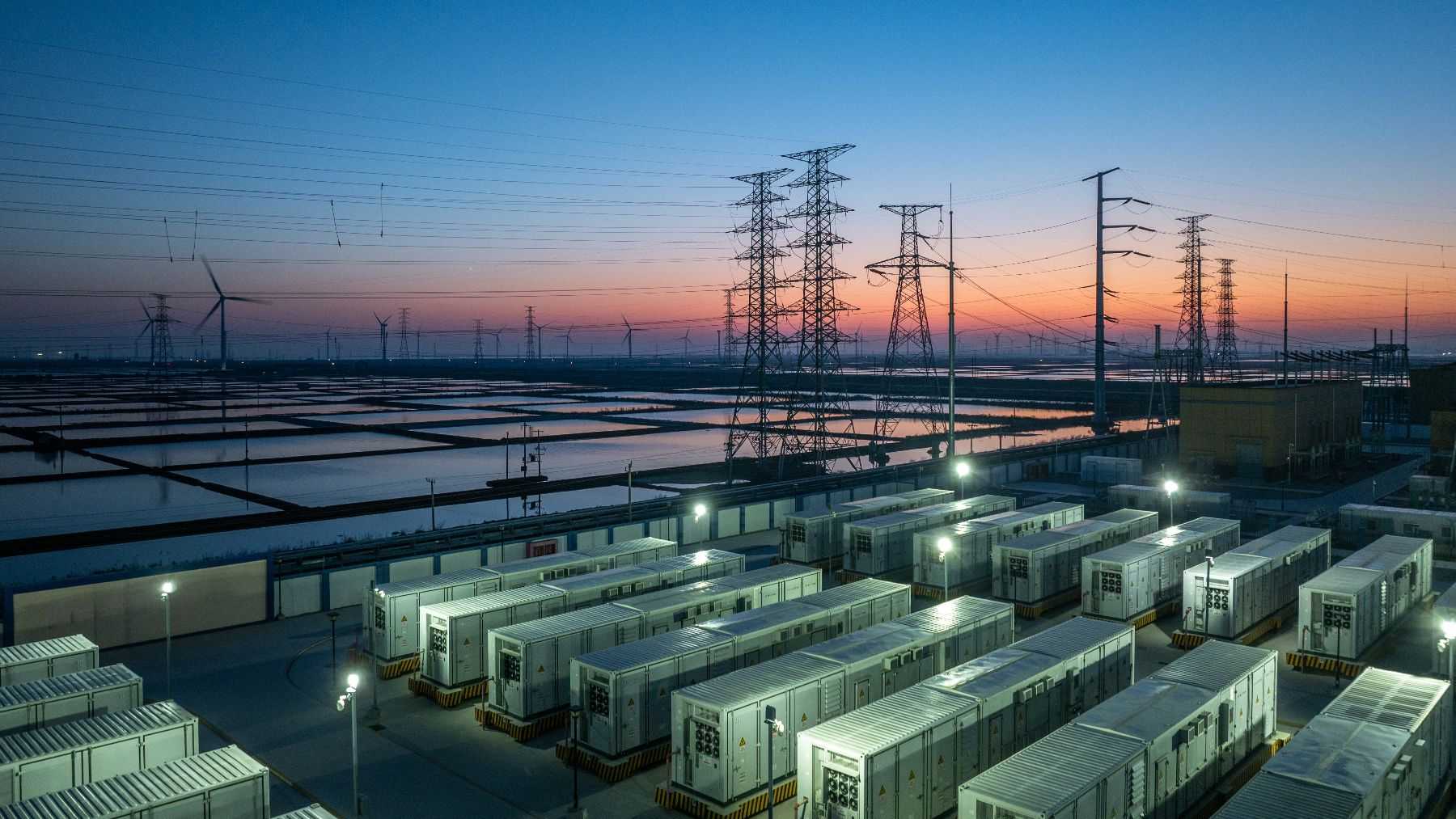
ERCOT just dropped its Monthly Outlook for Resource Adequacy (MORA) for October 2026. It’s a forward-looking report built around one core question: does Texas have enough generation capacity to handle whatever demand October throws at it? To answer that, ERCOT runs probabilistic models and stress-test scenarios to check where operating reserves might get thin — and where emergency conditions could actually become a real problem.
ERCOT publishes October 2026 resource adequacy report
The October 2026 MORA is the latest in a series of monthly planning documents ERCOT puts out on a regular basis. Each one zeroes in on a single question: can the grid reliably serve demand in the coming month? For October, that means navigating fall-specific dynamics — cooling loads fading out, heating loads not yet ramping up, renewable output shifting as days get shorter.
Rather than relying on simple peak-demand estimates, the report leans on probabilistic modeling. ERCOT runs multiple scenarios to capture a realistic range of grid conditions, so operators understand not just what’s likely but what’s plausible when things don’t go perfectly.
MORA reports are a regular part of how ERCOT communicates potential reliability risks to grid operators and energy market participants ahead of each month.
Defined operating scenarios run alongside that probabilistic work. These structured cases let ERCOT stress-test the grid against combinations of conditions that could, in theory, hit simultaneously — and the point is to find where reserves might thin out before emergency conditions stop being hypothetical.
Key variables factored into the grid analysis
No single variable determines grid reliability on its own. ERCOT pulls several interacting factors together to build a fuller picture of what October could look like.
Hourly electricity demand projections form the baseline. Demand shifts hour by hour depending on weather, time of day, and economic activity — and modeling at that granularity lets ERCOT pinpoint the specific windows when the grid faces the most pressure. Daily or weekly averages can mask short-term stress pretty easily.
Solar and wind generation get treated as variable inputs, not fixed quantities. Both depend on weather that can’t be predicted with certainty weeks out, so modeling a range of output levels lets ERCOT assess how grid conditions shift when renewables underperform. Unplanned thermal-generator outages add yet another layer of uncertainty — power plants can trip offline without warning, and the October analysis accounts for the probability that some portion of thermal capacity simply won’t be available when it’s needed.
Battery storage availability rounds out the variable set. Batteries can provide short-duration support during tight moments, but their contribution depends on charge levels and how much capacity is actually online at any given hour.
Hypothetical 8 p.m. scenario models compounded grid stress
One of the more specific pieces of analysis in the October MORA is a hypothetical scenario set at 8 p.m. — the window when solar generation has already dropped to near zero as the sun sets while evening electricity demand is still elevated.
In this modeled case, ERCOT layered in low wind output alongside limited battery availability. Neither condition alone would necessarily push the grid toward emergency territory, but when they occur together, compounding constraints can meaningfully increase the modeled risk of emergency conditions.
This kind of scenario is useful precisely because it isn’t a prediction. ERCOT was explicit on that point: the 8 p.m. case is a planning tool, not a forecast of what will actually happen in October 2026. These scenarios are designed to pressure-test grid readiness. Grid operators and market participants use results like these to think through contingency plans — what demand response could be called on, what the reserve margin looks like at that hour, what levers are actually available if conditions tighten.
Context: ERCOT’s role and the purpose of MORA reports
ERCOT manages the electric grid for most of Texas, operating one of the largest interconnected power systems in the United States. Unlike most of the country, Texas runs its own standalone grid, which means ERCOT has limited ability to import power from neighboring states when conditions get tight. Internal resource adequacy planning is especially critical as a result.
MORA reports are a regular part of how ERCOT communicates potential reliability risks to grid operators and energy market participants ahead of each month. Publishing them in advance gives the market time to respond — generators can adjust maintenance schedules, and operators can prepare for the scenarios the analysis flags.
Fall months bring their own grid challenges. Solar output declines as days shorten, and the timing of evening demand peaks starts to align less favorably with renewable generation availability. October sits in a transitional window, moving away from summer’s high-demand, high-solar profile but not yet settled into winter’s more predictable patterns.
What the October 2026 MORA tells us
The October 2026 MORA gives grid operators and market participants a structured look at the reliability picture in fall. ERCOT’s analysis draws on hourly demand projections, variable renewable output, the probability of unplanned thermal outages, and battery storage availability — combining those inputs through probabilistic modeling and defined scenarios.
The hypothetical 8 p.m. case illustrates how simultaneous constraints can compound grid stress even when no single factor would trigger emergency conditions on its own. As ERCOT emphasized, that scenario is a planning tool, not a prediction. The report’s broader purpose is to surface potential risks early enough for operators and market participants to factor them into their planning.

Kelly is an experienced writer with 15 years of experience exploring the big stories that shape our world, from tech breakthroughs and space exploration to climate, energy, and the fascinating quirks of science. She has a talent for turning complex ideas into sharp, memorable insights that stay with readers long after they’ve finished reading.
