
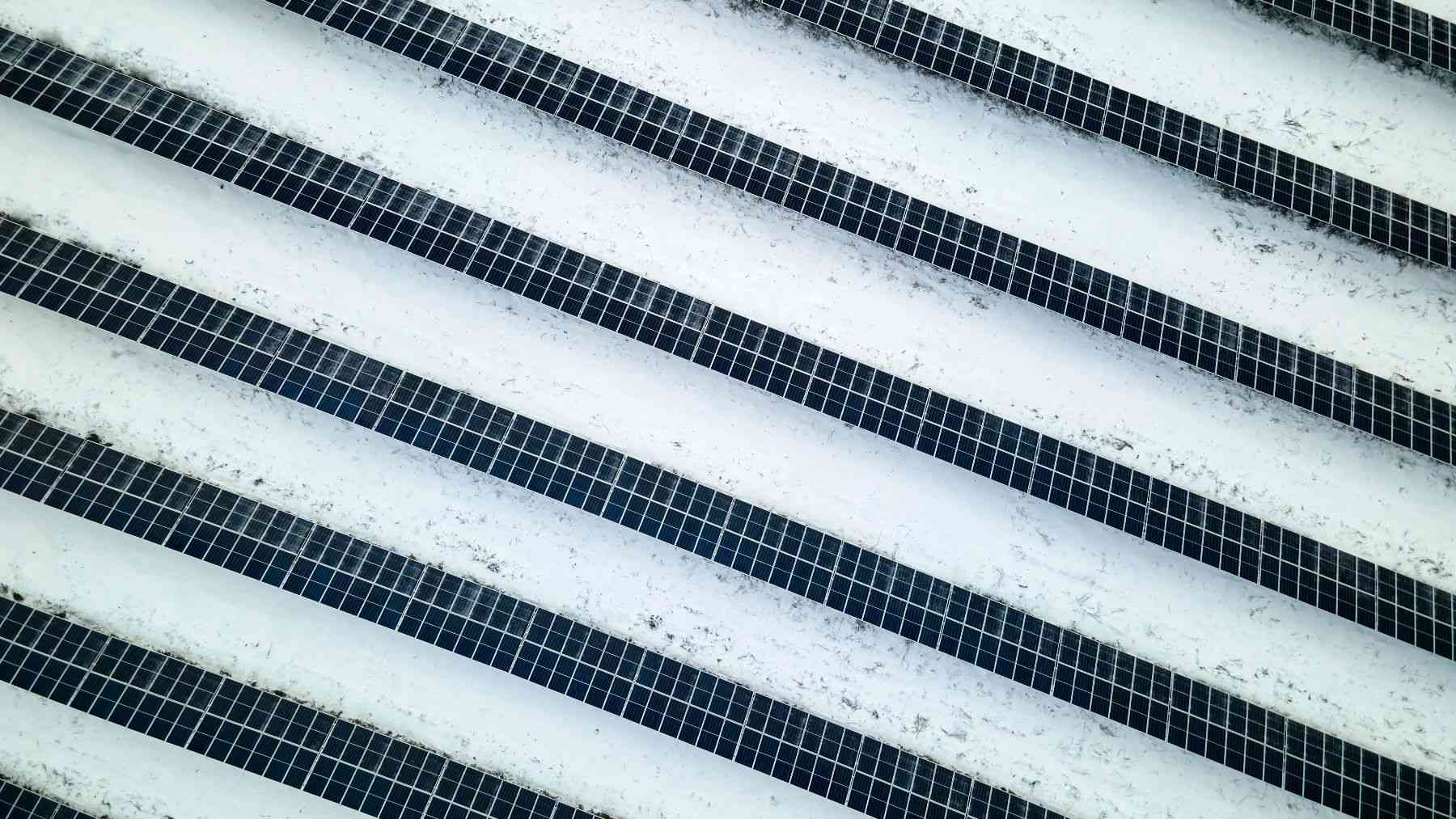
Alberta’s Saddlebrook solar farm uses 185,000 double-sided panels to capture sunlight reflected off winter snow
 File image
Alberta’s Saddlebrook Solar facility demonstrates how to overcome winter operational challenges using double-sided panels.
Canadian provinces are developing massive photovoltaic farms to diversify and decarbonize their power grids.
Each year, however, northern regions face winter conditions that present unique challenges for clean energy generation.
The flow-battery storage partnership ultimately terminated without installation due to development barriers extending past the project timeline.
Shorter, colder, and much snowier days affect panel operations, which significantly reduces power output.
How do innovative panel designs transform winter weather into an unexpected advantage?
How solar energy is essential in diversifying the Canadian grid
Canada is under pressure to diversify its electrical grid.
Hydropower remains a dominant clean energy source across the nation, but several provinces still heavily rely on fossil fuels.
This reliance on carbon-intensive power is growing due to rapidly climbing national electricity demand.
Meeting this surge sustainably requires clean energy sources that can be quickly deployed.
Accelerated new zero-emission capacity is vital to power industrial and transport electrification, as well as residential heat pumps.
Solar power has become a cornerstone in clean energy generation across the country.
Canada currently boasts over 8,000 megawatts of installed solar capacity.
Provinces like Alberta are leading this major commercial development boom.
Large-scale photovoltaic facilities are faster and more affordable to build than nuclear reactors or massive hydro dams.
This is because average installation prices have dropped to between $2.40 and $3.00 per watt in competitive markets like Alberta.
Despite these advantages, traditional solar generation faces operational bottlenecks, especially during northern winters.
The northern winter challenges complicating meeting national climate targets
Heating demand inevitably peaks during sudden cold snaps and cold winter months.
During brutal winter conditions, power grids become significantly strained.
Across Canada, traditional solar farms often encounter severe performance drops during freezing, snowy weather.
This reduced output is driven by overcast skies, shorter daylight hours, and heavy snow accumulation.
Consequently, clean energy generation then falls precisely when heating demand peaks.
These winter bottlenecks trigger severe problems for local and regional power grids.
A sudden drop in solar generation during sub-zero cold snaps usually increases fossil fuel peaker plant operation.
Other provinces are forced to import expensive electricity to prevent local blackouts.
Canada must overcome these seasonal bottlenecks to meet its ambitious 2030 renewable targets and net-zero goals.
Innovative engineering and strategic industry partnerships will solve this challenge.
Emissions Reduction Alberta (ERA) provides crucial funding for such cutting-edge clean tech innovations.
Recently, major energy developer TC Energy turned a double-sided solar innovation into a commercial reality.
Saddlebrook’s double clean power generating system
Alberta has joined the line of snowy regions deploying bifacial, or double-sided, solar panels.
TC Energy brought the innovation to life at the Saddlebrook Solar facility in Foothills County.
The facility consists of 185,276 bifacial panels mounted on fixed-tilt racks.
Unlike standard panels, bifacial units capture direct solar irradiation from the front and reflected ambient light from the ground.
A massive winter advantage for snowy regions
Snow-covered ground acts like a natural mirror by reflecting high-intensity light upward into the panels’ rear.
This is called the albedo effect, which boosts total power production up to 8%.
It helps offset seasonal output drops.
Saddlebrook’s 81-megawatt plant became fully operational in early 2024.
The bifacial panels generate enough clean electricity to power approximately 20,000 homes.
However, the project originally included storage ambitions, which took a different path.
ERA initially supported a demonstration with an innovative flow-battery storage concept.
It was designed to provide long-duration power.
The flow-battery storage partnership ultimately terminated without installation due to development barriers extending past the project timeline.
Despite this, TC Energy is still advancing energy storage options at the site.
A separate lithium-ion battery system is now in the pipeline to further stabilize the grid.
Ultimately, pairing specialized solar panel designs with large-scale energy storage systems is key to meeting higher winter heating demand.
Anke Maree is a writer with a clear and engaging editorial style. Her work focuses on making complex topics accessible, informative, and relevant for readers across different areas of interest.
