
Movable solar panels at a French vineyard kept soil 3.6°F warmer during frost while shielding grapes from heat
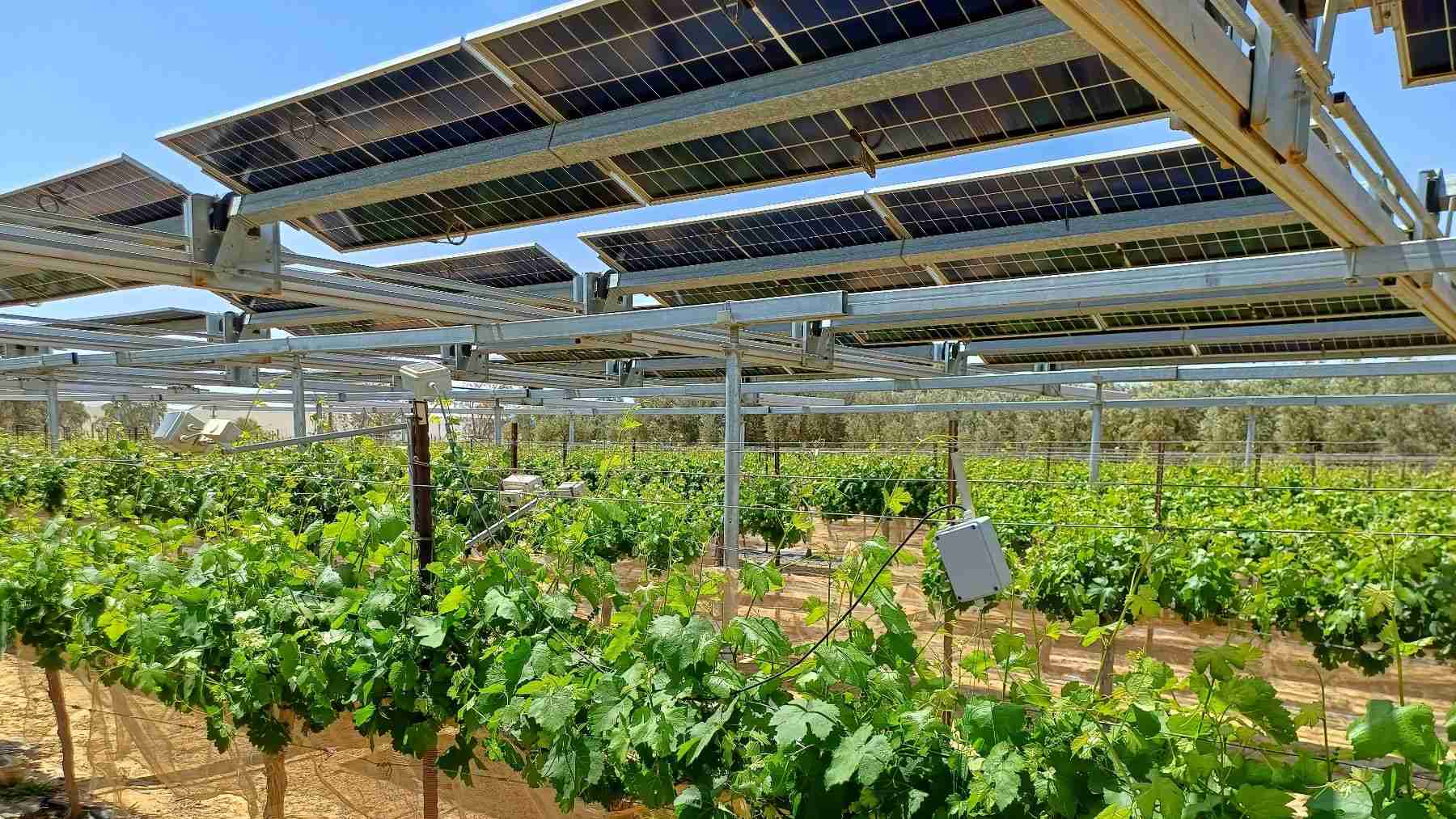
In France, smart solar technology was installed above a vineyard and delivered distinct benefits.
Winemaking is essential to the country’s heritage and economy, and has often conflicted with the clean energy sector over land.
However, without green power generation to offset fossil fuels, the effects of climate change will continue to accelerate.
Ultimately, suspending solar panels above working vineyards is key to meeting national clean energy targets without sacrificing fertile land.
Dynamic agrivoltaics can protect the French winemaking heritage while meeting renewable energy goals.
But how does movable, smart technology benefit grapevines?
How centuries-old heritage conflicts with modern energy needs
In the 6th century BC, Greek settlers planted the first vines near Marseille.
This was the beginning of France’s winemaking heritage.
These methods were later refined by Roman expansion and medieval monasteries across Champagne, Bordeaux, and Burgundy.
Winemakers established the concept of terroir, linking wine character directly to local soil and climate.
Today, viticulture is the cornerstone of French economic strength and cultural identity.
The wine and spirits sector supports about 440,000 jobs nationwide, and also generates approximately $18 billion in annual exports.
But the nation’s rapidly changing energy landscape is threatening this very heritage.
Digitization, electrification, and data centers are driving surging electricity consumption.
Closing this growing power supply gap while meeting 2030 climate goals requires rapid renewable energy capacity expansion.
Large-scale solar expansion is key to satisfying both.
However, these massive projects have triggered a longstanding conflict over the use of fertile land.
The clash over land between clean energy and viticulture
Utility-scale solar power is vital to France’s energy transition.
Photovoltaic installations have become more affordable and can be deployed quickly.
By 2030, installed solar capacity must reach 48 GW to decarbonize the grid.
Yet these massive photovoltaic arrays require vast, flat acreage.
Fertile farmland is often targeted for development, as the soil is already cleared and close to grid connections.
This causes direct competition, sparking fierce opposition from winemakers refusing to sacrifice their winemaking heritage.
Resolving this longstanding conflict is crucial for the wine industry’s survival.
Without renewable power to replace fossil fuels, emissions continue to rise and accelerate climate change.
French viticulture is facing prolonged droughts, late spring frosts, and extreme heatwaves.
These conditions devastate harvests, spike wine alcohol levels, and alter grape ripening cycles.
To overcome these significant issues, agricultural engineers have adopted dynamic agrivoltaics solutions.
Sun’Agri developed an innovative system that suspends smart, movable solar panels above active vineyards.
Addressing longstanding challenges with smart solar technology
Agrivoltaics is rising in popularity as it harmonizes the solar energy and agricultural sectors.
At a family-run vineyard called Domaine de Nidolères in Tresserre, southern France, Sun’Agri tested its smart agrivoltaics technology.
The installation spans 11.1 acres and consists of elevated solar louvers suspended about 14 feet above the grapevines.
This allows harvesting equipment and tractors to pass underneath freely.
An automated tracking system to boost operations
The specialized system utilizes automated tracking algorithms driven by plant growth models and real-time weather sensors.
The louvers tilt during summer heatwaves, providing vines with protective shade.
This also lowers soil evaporation, reducing irrigation needs by 20% to 70%.
On freezing nights, the panels flatten horizontally, trapping radiating ground heat.
This kept soil temperatures 3.6°F warmer during spring frost events, safeguarding fragile buds.
The system also significantly improved wine quality.
Excessive sugar buildup was slowed by the controlled shading.
As a result, natural acidity was preserved while overly high alcohol levels were prevented.
Today, the Tresserre facility is fully operational, serving as a commercial benchmark.
It recently expanded to cover a second vineyard at Domaine de Nidolères.
Its success proves that agrivoltaics can protect crops while producing renewable power.
For the wine industry, this dual-use model offers a scalable framework to conserve historic terroir.
Ultimately, suspending solar panels above working vineyards is key to meeting national clean energy targets without sacrificing fertile land.

Anke Maree is a writer with a clear and engaging editorial style. Her work focuses on making complex topics accessible, informative, and relevant for readers across different areas of interest.
