Crews cut into a Chilean mountainside and temporarily shut a hydropower plant to transport 213-foot blades for 61 wind turbines
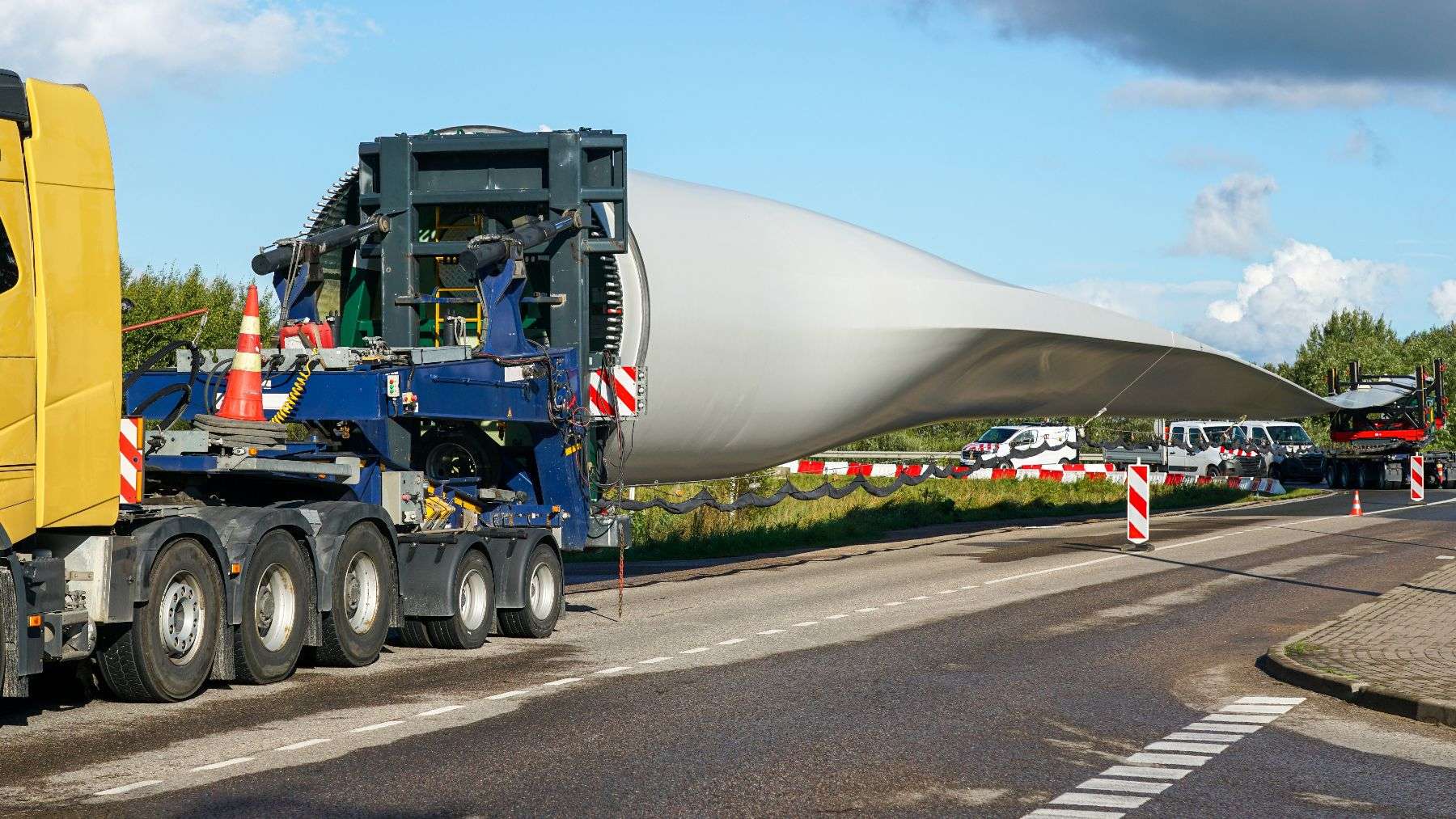
Chile’s renewable energy ambitions hit an unexpected snag before a single turbine could be built to generate electricity. There was existing infrastructure in the way and the mountain road was too narrow.
Transporting required major changes to the landscape, and even a temporary disruption to another power facility.
But what was it that made the parts of these giant wind turbines so difficult to deliver?
Each turbine consisted of several separate parts, including concrete sections of the tower, a generator casing known as a nacelle, a hub and three giant blades.
Wind farm faces extraordinary transport challenge
The project involved the construction of the San Gabriel wind farm in the Araucanía Region of Chile, close to the commune of Renaico, and was built by Spanish renewable energy company ACCIONA as part of its growing renewable energy portfolio in the country.
The site presented an interesting engineering challenge.
Ship-delivered turbine components reached Lirquén Port, close to Concepción, 230 kilometres away from the wind farm. The equipment’s journey inland was a carefully choreographed trip along roads never intended to carry such massive loads.
Transport contractor Mammoet co-ordinated the operation.
The problem was finding a way to move the exceptionally long, heavy machinery components through a landscape that offered little room for manoeuvring.
Each turbine consisted of several separate parts, including concrete sections of the tower, a generator casing known as a nacelle, a hub and three giant blades. The nacelles alone weighed 105 metric tonnes, and each blade weighed around 18 metric tonnes.
The transportation operation included 976 components in total.
Why the route needed major engineering changes
Transporting wind turbine components is particularly difficult because of their dimensions, which are problematic for any normal heavy load transport. A truck with a long blade on board requires a lot more room to turn than a regular goods truck.
Even a fairly tight turn can make a route impassable without modifications.
For the San Gabriel project, the transportation team mapped the entire trip, using both manual measurements and digital simulations. With programs like AutoCAD and AutoTURN, engineers could evaluate road geometry and identify challenging turns before transportation began.
Not every problem could be solved by changing the trucks. The road infrastructure itself had to be changed. Mammoet’s project account says crews cut into part of a mountainside to make room for the enormous blades to turn.
The operation also included a temporary shutdown of a hydropower station to move a transmission line.
This was an important element of the logistical planning. The existing electricity infrastructure intersected the proposed transportation route and this necessitated coordination of work outside the wind farm construction site. Local authorities also had to approve the necessary permits and road changes.
Specialist sub-contractors were employed to co-ordinate the work and enable the transportation route to be prepared within the tight schedule of the project.
213-foot blades arrive
The most striking thing about this operation was the enormous length of the turbine blades, which were each about 213 feet long.
The special equipment included 24-axle trailers, three-blade trailers, low-bed trailers, and expandable trailers for the various turbine sections.
Every route change had one goal, which was to get all 61 wind turbines safely to their final destination.
Eventually, the San Gabriel wind farm was developed into a 183-megawatt renewable energy plant.
According to the project information from ACCIONA Energía, the installation consists of 61 wind turbines of model AW132/3000 with a rated capacity of 3 MW each. Their concrete towers are 120 meters in hub height and have technology that is supposed to provide additional seismic resistance.
ACCIONA estimates that San Gabriel will be able to supply electricity equivalent to that consumed by more than 270,000 Chilean households.
The San Gabriel and Tolpán Sur developments have an installed capacity of 267 MW combined.
Another type of renewable energy engineering
Sometimes the hardest engineering challenge begins before you can even start building.
At 213 feet long, the equipment required a complete rerouting of transport, a temporary shutdown of electrical infrastructure and reshaping of a mountainside.The result was a completed wind farm that could produce renewable power for hundreds of thousands of homes.
It’s a reminder that the transition to renewable energy also relies on the not-so-glamorous engineering work that makes ambitious projects possible.


Bronwyn has over 20 years of experience in media, digital publishing, and storytelling as a journalist, content creator, and publishing editor. She writes about various niches and has a keen interest in science, technology, energy, and innovation.