
Aduro names Saipem as engineering partner for its first industrial-scale HCT plant at Chemelot
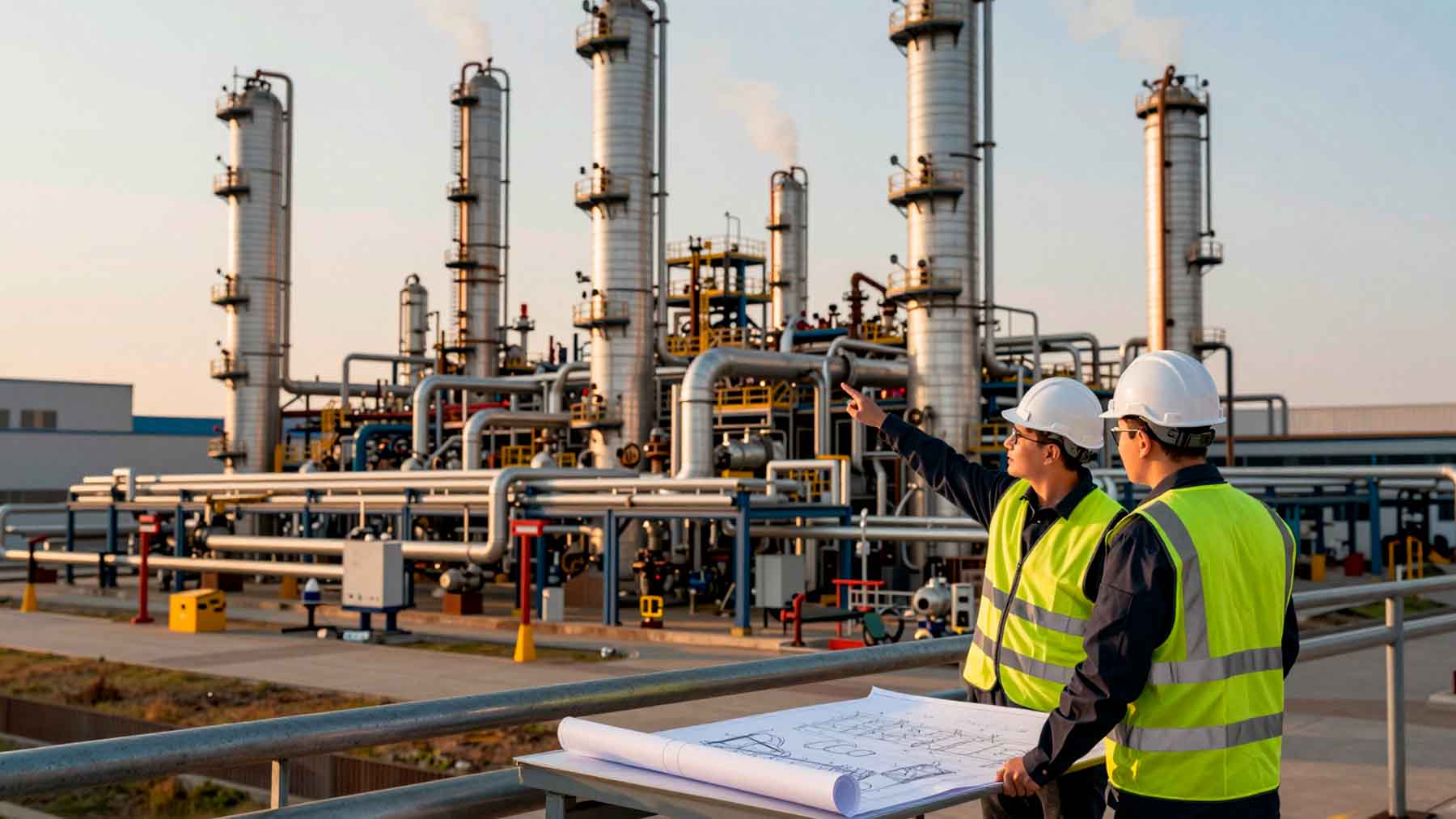 Image generated with artificial intelligence
Aduro just named Saipem as its engineering and project execution partner for the first-of-a-kind (FOAK) Hydrochemolytic Technology facility planned at Chemelot Industrial Park in the Netherlands. The announcement came this week, and it moves HCT meaningfully closer to industrial scale—past pilot operations and into real facility development.
Aduro picks Saipem to engineer its FOAK HCT plant
This wasn’t a handshake deal or a preliminary letter of intent. Aduro ran a comprehensive evaluation before landing here, and what emerged is a structured commitment. Both companies agreed to advance the project through a stage-gated execution model—one that ties engineering development to technical validation at each step.
That structure matters. Scaling a first-of-a-kind technology carries real risk, and a stage-gated model gives both parties defined decision points before either one commits to the next round of investment and engineering work. It’s a disciplined way to move forward without getting ahead of what the data actually supports.
The initial phase covers early engineering and procurement, with a clear pathway to FEED and full project execution if each stage clears its gates.
The facility is planned for Chemelot Industrial Park, one of Europe’s largest integrated chemical complexes. For a technology like HCT—which processes plastic waste into usable hydrocarbon products—Chemelot’s infrastructure and industrial ecosystem make it a natural fit.
Why Saipem was chosen and what the collaboration covers
Aduro didn’t land on Saipem by accident. After evaluating the field, they chose a partner with a proven global track record in complex industrial and energy infrastructure. Saipem brings expertise across process engineering, modular project execution, downstream facilities, and industrial-scale technology deployment—a combination that maps directly onto what a FOAK plant actually demands.
One specific credential Aduro flagged was Saipem’s experience bringing innovative technologies into commercial operation. That’s a narrower bar than general engineering competence. Plenty of firms can execute a known process. Fewer have navigated the particular challenges of scaling something genuinely new.
Getting Saipem involved at the engineering readiness stage also preserves flexibility—both teams can work through process decisions, procurement strategies, and constructability questions before the project locks into a more rigid path. That room to maneuver disappears once you move into FEED.
Initial engineering activities and planned progression to FEED
The first phase focuses on early engineering and procurement: reviewing the Process Design Package, optimizing critical equipment packages, running preliminary utility integration work, and refining capital cost estimates. Not flashy work, but foundational.
Getting the process design package right and pressure-testing it against real cost and constructability constraints is what separates a credible industrial project from one that stalls at the next investment gate. Aduro has also deliberately aligned these engineering activities with its ongoing Next Generation Process (NGP) Pilot Plant campaigns. Data from pilot operations feeds directly into the industrial design—lessons learned at pilot scale reduce execution risk when they’re built in early, not retrofitted after the fact.
If each development stage completes successfully, and if both parties reach agreement at each gate, the project is expected to move through FEED, detailed engineering, procurement, construction, commissioning, and start-up. The sequence isn’t guaranteed, but the roadmap is clear.
The FOAK plant’s role in Aduro’s broader commercialization strategy
The FOAK plant isn’t just a facility to get HCT running at scale—it’s a proof point with a longer purpose. Aduro is explicit that it represents the initial industrial-scale implementation of HCT, designed to establish the engineering, operating, and economic foundation for future commercial plants. That’s a higher bar than simply showing the technology works at scale. The plant needs to generate a repeatable execution model that can be referenced, refined, and deployed again at subsequent sites.
Aduro CEO Ofer Vicus framed the Saipem selection in exactly those terms. “As we transition from pilot-scale toward industrial implementation, it was important to select a partner with deep experience delivering complex process facilities and bringing innovative technologies into commercial operation,” he said. He also pointed to the shared commitment to a stage-gated approach as a way to let engineering decisions evolve alongside operational knowledge from the NGP Pilot Plant.
Chemelot has been the hub for several parallel workstreams running simultaneously—permitting, site integration, feedstock logistics, customer engagement, and commercialization planning have all been advancing alongside the engineering work. The Saipem engagement fits into that broader program as another foundational piece, not a standalone move.
Engineering is tied to live data
Here’s where things stand. Aduro has formally named Saipem as its engineering and project execution partner for the FOAK HCT facility at Chemelot Industrial Park, following a structured evaluation that sets up a stage-gated development model built to manage risk as the project scales.
The initial phase covers early engineering and procurement, with a clear pathway to FEED and full project execution if each stage clears its gates. Engineering activities are tied to live pilot plant data, so the industrial design benefits from real operational experience as it develops.
The FOAK plant is the first industrial-scale implementation of HCT. How it performs—technically, operationally, and economically—will shape how Aduro builds every commercial plant that follows.
Kelly is an experienced writer with 15 years of experience exploring the big stories that shape our world, from tech breakthroughs and space exploration to climate, energy, and the fascinating quirks of science. She has a talent for turning complex ideas into sharp, memorable insights that stay with readers long after they’ve finished reading.
