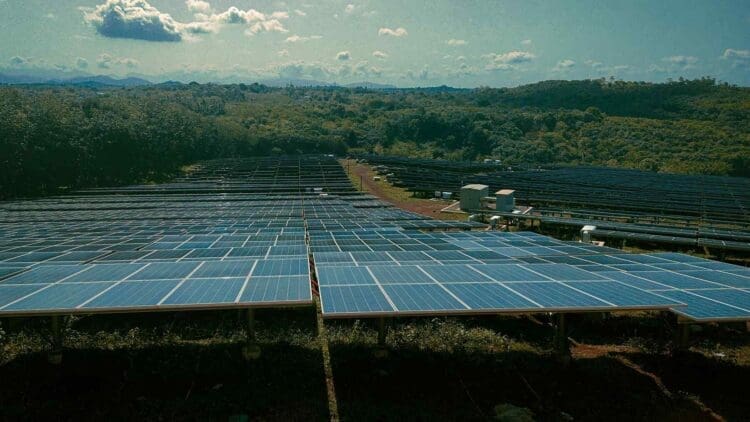

With solar energy facilities becoming more and more sophisticated, the United States is one of the countries leading the charge with the aim of creating a blueprint that the world may follow. When it comes to clean energy projects, countries are open to collaborating and learning from each other’s successes as well as mistakes because the overall aim is for each nation to create cleaner air and reduce the amount of carbon emissions. As such, companies of all sizes are more encouraged than ever before to invest in clean energy projects because demand is at an all-time high. Ever.green began solar deployment to supply clean power to Microsoft’s supplier network in North Carolina.
Ever.green shows commitment to assisting Microsoft with its energy needs
Ever.green is a Saint Paul, Minnesota-based company that was founded in 1998 and specializes in developing, owning, and operating sustainable energy systems. They focus on reducing carbon footprints through high-efficiency energy solutions and infrastructure management, often partnering with communities.
The entity is recognized as a leader in energy conservation and renewable energy, focused on lowering emissions and increasing energy security. Now Ever.green has launched a new phase of solar deployment aimed at supporting Microsoft’s supplier network with clean energy in North Carolina.

The initiative revolves around a newly operational solar project designed to bring additional renewable capacity to the regional grid. By ensuring that corporate sustainability goals are consistent with local infrastructure, the project represents a growing trend of supply chain decarbonization.
Breaking down the unlocking of solar development through supplier collaboration
One thing that has been evident thus far in the energy landscape is that collaborative financing models are accelerating clean energy adoption in rural U.S. communities. Ever.green announced the completion of the 5-megawatt Baron solar project in Anson County, North Carolina. This reflects a significant milestone in its effort to mobilize corporate buyers toward renewable energy investment.
The project was able to materialize because of a group of Microsoft suppliers, including consulting, analytics, and technology firms, that all showed full dedication to purchasing renewable energy certificates (RECs). These commitments were integral in ensuring the project reaches a financial close, which is usually an obstacle for small- to mid-scale solar developments.
As much as companies are credited for initiatives that materialize, the government also deserves an equal amount of credit because of its willingness to approve of initiatives and encourage companies.
Understanding the significance of the initiative to Ever.green’s objectives
The absence of certain or assured revenue streams leads to projects struggling to secure financing even though they are technically viable. Evergreen’s model is able to attend to this gap by combining demand from multiple buyers. Its high-impact REC structure allows participating companies to underwrite new renewable capacity instead of depending on existing energy credits.
Liz Pearce, Chief Revenue Officer at Ever.green said the following:
“Ever.green was designed specifically to make this kind of collective action possible. We’re one of the few organizations that empowers companies of all sizes to advance their carbon-free electricity goals by acquiring High-Impact.”
Unpacking Ever.green dedication to supplying Microsoft’s supply
The initiative is closely linked to Microsoft’s wider sustainability strategy and its requirement that key suppliers transition to 100% carbon-free electricity by 2030. Through allowing suppliers of different sizes to participate, Ever.green is playing a crucial role in extending Microsoft’s climate commitments beyond its own operations. Microsoft has already been instrumental in expanding renewable energy capacity worldwide.
The company has contracted tens of gigawatts of clean power through long-term agreements that assist developers in financing new projects. The Baron solar project is expected to deliver tangible benefits to the local community. For instance, it is estimated to avoid approximately 7,810 metric tons of carbon dioxide emissions annually, equivalent to removing around 1,820 cars from the road each year.
The project’s ability to feed electricity directly into the regional cooperative system makes it helpful in stabilizing the energy supply. Additionally, it helps reduce vulnerability to volatile fuel prices over time.