
In Australia, a giant thermal battery melts silicon at 1,652°F to produce electricity while keeping the surrounding air warm
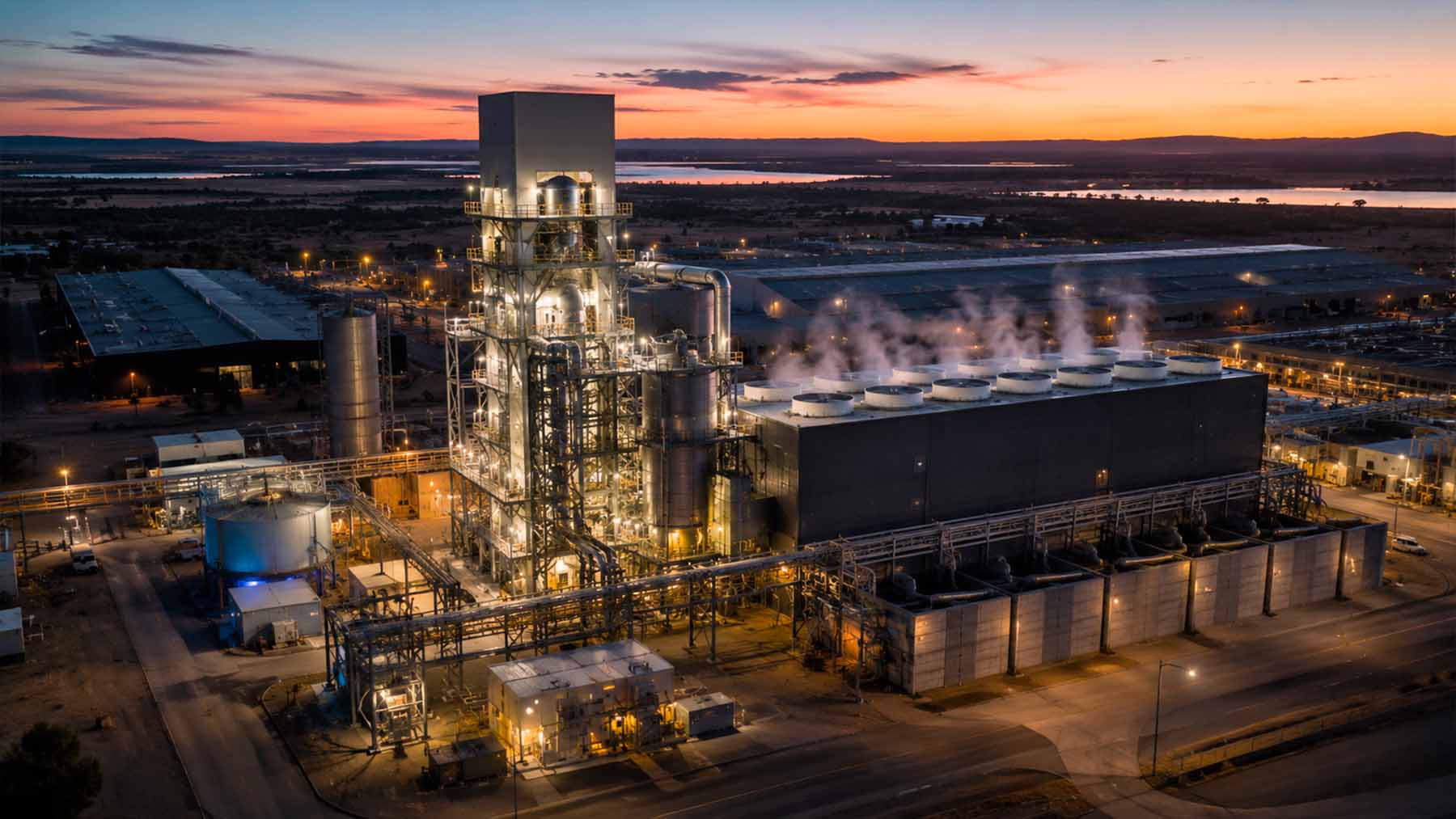 Credits: AI-made
An Australian thermal battery reimagines electricity generation and energy storage by melting silicon at extreme temperatures.
Decarbonizing heavy industry operations remains a significant challenge globally.
Industrial manufacturing requires vast amounts of searing heat, which is primarily provided by burning fossil fuels.
The technology’s use of abundant silicon instead of rare minerals ensures long-duration thermal storage is delivered without performance degradation.
Existing storage methods are insufficient to replace carbon-heavy sources for extreme temperatures needed by heavy factories.
Will turning to alternative high-temperature thermal battery systems help overcome these industry barriers?
How hard-to-abate industries have become primary decarbonization targets
Addressing global warming has become a critical issue worldwide.
An unprecedented rise in greenhouse gas emissions has accelerated climate change.
Industrial operations’ direct emissions account for roughly 25% of all global carbon emissions.
Furthermore, these heavy industries consume nearly half of the world’s total energy.
Continuous, intense heat is required for steel, cement, glass, and chemical manufacturing.
More than 50% of this heat must exceed 752°F. Some heavy processes even require temperatures over 1,832°F.
Currently, fossil fuel combustion supplies the majority of this industrial heat.
This is why industrial heat generation accounts for 35% of the world’s total energy-related carbon emissions.
Transitioning away from fossil fuels in heavy manufacturing remains a primary challenge.
To mitigate the effects of climate change, climate regulations mandate global decarbonization.
However, cleaner approaches such as chemical batteries cannot deliver sustained high-temperature thermal energy cost-effectively.
To achieve net-zero targets, facilities must deploy alternative solutions.
Traditional technologies fall short for high-temperature heat
Grid electricity, heat pumps, and chemical batteries each face fundamental physics and economic barriers when scaled for heavy manufacturing.
In lithium-ion batteries, energy is stored electrochemically.
Converting this energy into high-temperature heat with resistive heating is expensive and inefficient.
Additionally, when chemical batteries discharge quickly at scale, they undergo severe thermal degradation.
Industrial heat pumps deliver high energy efficiency by moving ambient heat.
Nonetheless, the technology experiences limited thermodynamics near 320°F to 392°F.
These temperatures are too low for heavy industry operations.
As for direct grid electrification, sole reliance presents major infrastructure challenges.
Running operations directly off the grid during peak demand creates massive load spikes.
Grid connections usually lack the capacity needed to supply continuous loads without costly infrastructure upgrades.
Grid power is also tied to fluctuating wholesale market prices, which further complicate things.
1414 Degrees addresses these barriers using a giant thermal battery and silicon.
A silicon-based thermal battery facility
Manufacturing operations require high energy efficiency, and unique thermal battery approaches are becoming popular solutions.
1414 Degrees created a thermal battery technology called SiBox.
It is deployed at the pilot plant in Tonsley, South Australia. Central to the plant is SiBrick, a silicon storage medium inside the SiBox container.
Silicon has a high energy density and can absorb latent heat during a solid-to-liquid transformation phase.
Operating through a multi-step thermal process
During excess renewable generation or low-cost power hours, electric heating melts silicon at 2,577°F.
The heat is retained inside insulated storage chambers with minimal energy loss over extended periods.
Energy is continuously captured from the molten material using an integrated fluid loop and heat exchanger.
Clean, high-temperature air ranging between 1,652°F and 1,832°F is dispatched to power industrial furnaces or drive energy turbines.
The technology’s use of abundant silicon instead of rare minerals ensures long-duration thermal storage is delivered without performance degradation.
The thermal battery’s performance was validated by a successful development program with Woodside Energy.
The system demonstrated stable heat output with a minor ±3.6°F variation when internal temperatures exceeded 1,832°F.
1414 Degrees retained full technology ownership and is deploying it as a Heat-as-a-Service model.
It will enable heavy industries to buy reliable, affordable, carbon-free heat directly.
Ultimately, factories will be able to eliminate gas dependence, lower energy costs, and accelerate global decarbonization
Anke Maree is a writer with a clear and engaging editorial style. Her work focuses on making complex topics accessible, informative, and relevant for readers across different areas of interest.
