
Best Fleet Tracking Solutions for Enterprises: Top Picks
Managing a massive fleet in 2026 requires more than just a map and a few phone calls. You need a bird’s-eye view of your entire organization to keep things moving smoothly. Without the right data, your enterprise could be losing thousands of dollars every month to hidden inefficiencies.
Choosing the right fleet tracking solutions for enterprises helps you reclaim that lost revenue and protect your assets. You will find that modern systems do much more than just show vehicle locations. They provide a complete picture of driver performance, fuel use, and maintenance needs across your network.
In this guide, you will explore the top providers in the market and learn how to pick the best fit for your team. We will look at how leading technology can transform your daily operations. Let’s get started by looking at what enterprise-level tracking really entails.
Driver behavior monitoring is associated with a 20-25% reduction in accident rates, according to data from Carsharing Infos, which saves lives and money.
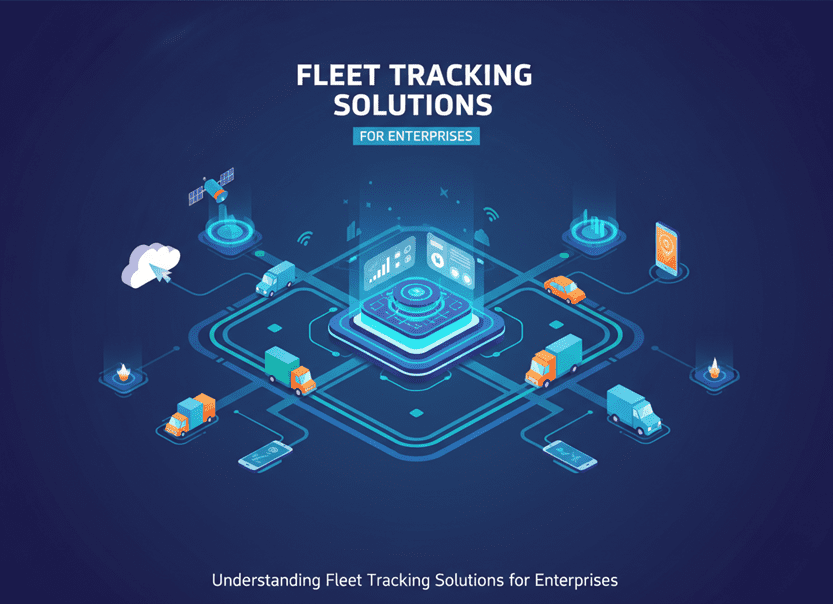
Understanding Fleet Tracking Solutions for Enterprises
You need to recognize that enterprise-level telematics goes beyond simple GPS coordinates to provide a unified view of massive mobile workforces. Managing hundreds or thousands of vehicles requires a system that handles high data volumes without slowing down. The global enterprise fleet management market is projected to reach up to USD 32 billion in 2026, according to Future Market Insights, reflecting how vital these tools have become.
Implementing fleet tracking solutions for enterprises allows you to use real-time tracking for immediate visibility into every vehicle in your network. This means you don’t have to guess where your drivers are or when they will arrive at a job site. You can make faster decisions that improve customer satisfaction and reduce wasted time.
Your organization can utilize geofencing to protect high-value assets and ensure that drivers remain within designated operational boundaries. By setting up virtual perimeters, you receive an alert the moment vehicles enter or exit specific zones. This helps prevent unauthorized use and keeps your team focused on their assigned territories.
Modern systems also simplify compliance reporting by automating the collection of data required for regulatory standards and internal audits. You can say goodbye to messy paperwork and manual logs that lead to human error. These automated tools ensure you stay ready for inspections while saving your office staff hours of tedious work.
Top Enterprise Fleet Tracking Providers Compared
Choosing the right partner requires you to evaluate how well their software integrates with your existing enterprise resource planning (ERP) systems. You don’t want a standalone tool that keeps your data in a silo. A good provider should help your fleet data flow naturally into your payroll and scheduling software.
You should focus on providers that offer scalable hardware options, ranging from simple OBD-II devices to complex, multi-camera setups. Large enterprises often have a mix of light-duty trucks and heavy equipment. You need a partner that can support every asset type in your inventory with the right tracking devices.
This section reviews the industry leaders based on their ability to handle large-scale data and provide actionable insights for your management team. We look at how these brands help you manage the market in 2026. Each option offers unique benefits depending on your specific operational goals.
Matrack: Best for Comprehensive Asset Management and ROI
You will find that Matrack offers a highly competitive balance of advanced features and cost-effectiveness designed to maximize your ROI. Their system is built for managers who want deep insights without a massive price tag. The platform excels at vehicle maintenance scheduling, ensuring your fleet stays on the road by providing proactive diagnostic alerts.
Customizable alerts and notifications allow your dispatchers to respond instantly to unauthorized vehicle use or critical engine faults. You can set up your own rules for when you want to be notified, keeping your inbox clean of fluff. This focus on useful data helps you keep your fleet running at peak performance daily.
| Pros | Cons |
| Exceptional customer support and no-contract options. | Interfaces may feel less modern than some high-end competitors. |
| Very budget friendly for large-scale deployments. | Fewer built-in AI driver coaching tools. |
Verizon Connect: Best for Massive Scalability
You can trust Verizon Connect to handle the complexities of thousands of vehicles across multiple regions with its strong infrastructure. If you remember Fleetmatics, you should know that Verizon completed that acquisition years ago to build this unified platform. The system provides deep visibility into your operations, though you should be prepared for longer contract terms.
Pros: Extensive integration library and powerful reporting tools for big data. Cons: Pricing is often higher than average and usually requires a long-term commitment. You get a lot of power, but it comes at a premium price point.
Samsara: Best for AI-Powered Dashcams and IoT
If your focus is on the latest technology, Samsara provides AI-powered dashcams that automatically detect and coach risky driving in real-time. The platform integrates dashcams with vehicle data to create a complete picture of every incident. This helps protect you from false liability claims and keeps your insurance costs down.
Pros: Industry-leading AI features and a very user-friendly mobile app. Cons: High premium pricing for advanced hardware features can be a barrier. You pay for the innovation, but the data you get is incredibly detailed and accurate.
Motive: Best for ELD Compliance and Ease of Use
Motive simplifies the transition to digital logging, ensuring your drivers maintain ELD compliance without complicated manual entries. The hardware is designed for quick deployment, allowing you to get your entire enterprise fleet up and running in a matter of days. It is a favorite for drivers who want a simple interface.
Pros: Highly rated driver app and excellent compliance tools for safety managers. Cons: Some advanced reporting features are locked behind higher-tier monthly plans. It is a great choice if your main goal is staying legal and efficient.
Azuga: Best for Driver Safety and Gamification
You can improve your safety culture by using Azuga’s gamification tools, which reward drivers for maintaining high driver safety scores. The system focuses on positive reinforcement rather than just punishment, which helps you maintain high driver retention rates. Drivers compete to be the safest on the team.
Pros: Proven to reduce accidents through consistent driver engagement. Cons: Less focus on heavy equipment tracking compared to other major brands. This is a top choice for service fleets that want to lower their accident rates quickly.
Comparison of Enterprise Fleet Tracking Features
Review the following comparison table to see how these top-tier solutions stack up against your specific organizational requirements. You must decide between plug-and-play installation for rapid deployment or a hardwired installation for more secure data collection. Both have their merits depending on your security needs.
| Feature | Matrack | Verizon Connect | Samsara | Motive |
| Installation | Plug-and-play / Hardwired | Professional Hardwired | Plug-and-play / Hardwired | Plug-and-play |
| Contract Length | No Contract Options | Typically 36 Months | Multi-year Contracts | Varies by Plan |
| AI Dashcams | Available | Advanced | Market Leading | Strong AI Support |
| Best For | ROI & Asset Management | Massive Enterprise | Tech-Forward Fleets | ELD Compliance |
Consider the long-term total cost of ownership, including hardware costs and monthly subscriptions. While some systems seem cheaper upfront, hidden fees can add up. Matrack remains a leader in transparency, offering a clear path to value without locking you into decades of payments.
Maximizing Fuel Efficiency and Route Optimization
You can significantly lower your overhead by using route optimization to eliminate unnecessary mileage and reduce idle time across your fleet. Effective routing software integrates live traffic data, allowing your drivers to bypass congestion. This means they arrive at their destinations faster while burning less fuel along the way.
Fleet telematics can lead to average fuel savings of 10-20%, as reported by Fleet Rabbit, which is a massive win for any enterprise budget. Monitoring fuel efficiency helps you identify which vehicles or driver habits are costing you the most. You can then take specific steps to correct those issues.
Reducing fuel consumption often goes hand-in-hand with better engine health. When you use a tracking system to monitor idling, you also reduce wear and tear on your vehicles. This double benefit ensures your assets last longer and cost less to maintain over their lifespan.
Improving Safety through Driver Behavior Monitoring
By analyzing driver behavior, you can identify high-risk patterns such as harsh braking, rapid acceleration, and excessive speeding. Your safety managers can use performance scorecards to provide targeted coaching to specific individuals. This drastically reduces the likelihood of costly collisions and protects your brand reputation on the road.
Driver behavior monitoring is associated with a 20-25% reduction in accident rates, according to data from Carsharing Infos, which saves lives and money. Integrating video telematics with safety programs provides the evidence you need to exonerate drivers. It turns a your-word-against-theirs situation into a clear, factual report.
Promoting safe driving habits also has a positive impact on your insurance premiums. Many providers offer discounts to enterprises that can prove they use active monitoring. You get a safer team and a smaller insurance bill at the same time.
Enterprise Security and System Integration
You must prioritize cybersecurity when selecting a provider, ensuring that your fleet’s location and driver data are protected by encryption. Your fleet data is sensitive business intelligence that must stay private. Look for solutions that offer strong API support to sync data with your existing tech stack.
Advanced integrations allow for predictive maintenance, using IoT data to fix vehicle issues before they lead to expensive roadside breakdowns. When your tracking system talks to your maintenance software, you can automate work orders. This keeps your fleet in top shape without manual scheduling effort.
Using a unified system also helps with time tracking and payroll accuracy. When vehicles enter or exit a job site, the system can automatically log the hours spent on site. This reduces disputes and ensures that your billing is always based on real-time data from the field.
Frequently Asked Questions
What is the best fleet tracking system?
The best system depends on your specific needs, but Matrack and Samsara are frequently cited for their balance of features and reliability. Enterprises should look for systems that offer high scalability and strong data security. You want a partner that can grow with you and integrate with your existing business tools easily.
How much does fleet tracking cost?
On average, you can expect to pay between $20 and $50 per vehicle per month for a professional service. There is also the initial cost of hardware, which varies based on how complex your setup is. Many enterprise providers offer volume discounts, so you should always request a custom quote based on your total fleet size.
Is the GPS tracking business profitable?
Yes, for the enterprise, the profitability comes from huge cost savings in fuel, maintenance, and insurance premiums. These savings often far outweigh the monthly subscription costs of the system. Most enterprises see a full return on their investment within the first year by reducing downtime and optimizing their daily routes.
What are the downsides of enterprise fleet tracking?
Potential downsides include driver resistance due to privacy concerns and the time required to train staff on new software. You can manage these issues by being transparent about how you use the data. Focus on how the system improves driver safety and helps the company stay competitive rather than just using it for surveillance.
