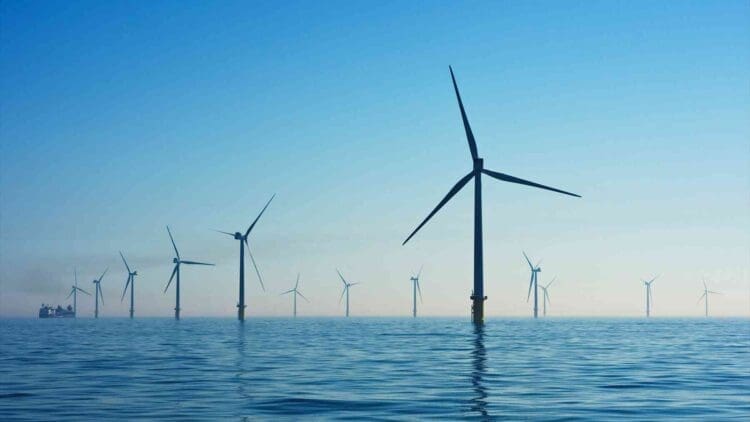

California Attorney General Rob Bonta filed a formal notice of intent to sue the Trump administration on June 23, targeting a federal deal that handed $120 million in government reimbursements to Golden State Wind LLC following the cancellation of its offshore wind lease.
The move signals California is prepared to take legal action over what it views as a problematic use of federal funds—and raises broader questions about how the administration has handled the wind energy contracts it has moved to unwind.
California Attorney General issues formal legal notice
Rob Bonta’s notice of intent to sue, filed June 23, puts the Trump administration on formal notice that California may pursue litigation over the offshore wind lease cancellation. The filing is not a lawsuit—it is a legally required precursor to one. Under federal law, a state must file such a notice before bringing certain claims against the federal government, and by taking this step, California has set the legal process in motion.

The notice centers on a specific concern: the $120 million reimbursement paid to Golden State Wind LLC as part of the lease cancellation agreement. Bonta’s office has not publicly detailed every legal theory it plans to pursue, but the filing makes clear the state views the transaction as legally questionable.
Background on the lease cancellation and the reimbursement deal
Golden State Wind LLC is a joint venture formed by two companies with deep roots in European offshore wind development. One partner is Ocean Winds, a partnership between France’s ENGIE and Portugal’s EDP Renewables. The other is Reventus Power, a London-based offshore wind investment firm. Together they held a federal lease to develop offshore wind capacity in California coastal waters.
Earlier in 2026, the Trump administration reached a deal to cancel that lease, and as part of the agreement, the federal government paid Golden State Wind LLC $120 million in reimbursements. The precise terms have not been fully disclosed publicly, but that payment sits at the center of California’s legal challenge.
The reimbursement raises a straightforward question: why did the federal government agree to pay a private company $120 million to walk away from a lease? That question is driving California’s scrutiny of the deal.
California’s prior investigation into the matter
The June notice of intent did not emerge without warning. California state authorities announced in May 2026 that they had opened a formal investigation into the lease cancellation — one that appears to have laid the groundwork for the legal notice filed weeks later.
The sequence matters. An investigation first, then a formal notice of intent. This suggests California has been building a record before escalating to potential litigation. No lawsuit has been filed yet, and it is not guaranteed. But the notice of intent is the first concrete legal step in that direction, and it carries real weight.
Bonta’s office has not announced a timeline for deciding whether to proceed with a full lawsuit. The notice itself signals that the attorney general’s office has reviewed the matter seriously enough to trigger the formal legal process.
Broader Context: Offshore wind policy under the Trump administration
California’s legal challenge does not exist in isolation. The Trump administration has moved broadly to roll back offshore wind development along multiple U.S. coastlines, with offshore wind leases in federal waters falling under the jurisdiction of the Bureau of Ocean Energy Management—known as BOEM—whose decisions carry significant consequences for states that have built renewable energy plans around offshore wind capacity.
California had been counting on offshore wind as a meaningful part of its long-term clean energy strategy. The state has set ambitious renewable energy targets, and offshore wind along its Pacific coast was seen as a resource capable of contributing substantial generating capacity over time. Cancellation of the Golden State Wind lease represents a direct setback to those plans.
Other coastal states have also found themselves at odds with federal energy policy under the current administration. Legal challenges from state governments are becoming a more common response to federal decisions that reverse or disrupt existing energy development agreements — and California’s notice of intent fits squarely within that pattern.
Gold State Wind is a joint venture
The core facts are these: California Attorney General Rob Bonta filed a notice of intent to sue the Trump administration on June 23 over a $120 million federal reimbursement paid to Golden State Wind LLC following the cancellation of its offshore wind lease. Golden State Wind is a joint venture involving Ocean Winds — a partnership of France’s ENGIE and Portugal’s EDP Renewables — and London-based Reventus Power.
California opened a formal investigation into the matter in May 2026. The June notice is the next legal step, though no lawsuit has been filed. The dispute reflects a wider tension between state renewable energy goals and the Trump administration’s approach to federal offshore wind policy. Whether California proceeds to litigation will depend on decisions still to come from Bonta’s office.
Kelly is an experienced writer with 15 years of experience exploring the big stories that shape our world, from tech breakthroughs and space exploration to climate, energy, and the fascinating quirks of science. She has a talent for turning complex ideas into sharp, memorable insights that stay with readers long after they’ve finished reading.