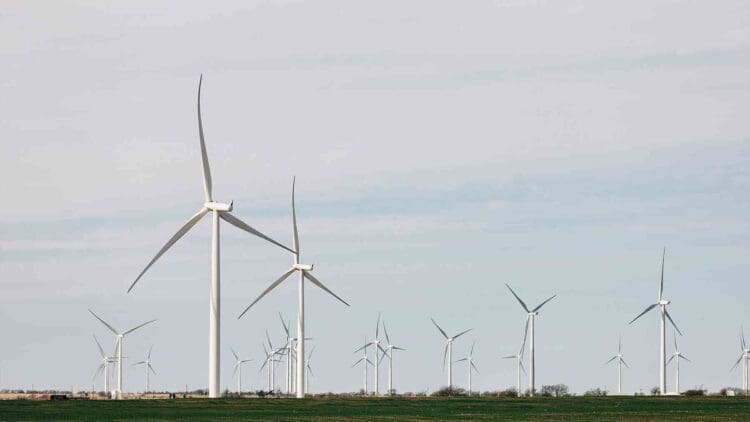

The continent of Asia and the United States often receive a tremendous amount of attention for their success in the wind energy sector. However, European countries have shown solidarity and togetherness as they work toward meeting the continent’s carbon emissions targets. When it comes to energy projects, countries are more inclined to work with each other rather than being competitive simply because they are all working toward the same goal of extending Earth’s longevity. Copenhagen Infrastructure Partners secures financing for 392 MW onshore wind project in Romania.
An assessment of Europe’s ever-changing wind energy landscape
Wind and solar energy developers have often expressed hesitation to invest millions of dollars in projects that may not be successful, considering that there is no reliable way to guarantee the availability of sunlight and wind throughout the year. However, this is rapidly changing following the integration of technological innovation into the wind sector.
Europe’s wind energy landscape is viewed as a global powerhouse as it provides for an estimated 20% of the entire continent’s electricity. With approximately 304 GW of total installed capacity, the wind sector is an essential part of Europe’s energy independence. According to reports, almost 500,000 people are employed in the wind energy sector within Europe.

The leading countries include the likes of Denmark, which has 50% of its power generated by wind. When it comes to just the volume, Germany has the highest total installed wind energy capacity.
Analyzing Copenhagen Infrastructure Partners’ ability to finance the Romanian wind project
Copenhagen Infrastructure Partners (CIP), founded in 2012, is a global fund manager and leading investor in energy infrastructure. The entity has developed a reputation for building value that matters by developing and constructing critical infrastructure projects that have the ability to shape the future of energy initiatives.
With the funds, Copenhagen Infrastructure Partners invests in power generation (solar and wind), energy storage, advanced bioenergy, and carbon capture. As seen in most of the modern-day wind energy facilities, it is important that energy generation and storage are combined in order to overcome intermittency issues and ensure consistent electricity availability.
As of now, there are 15 funds under CIP’s management. This means the entity is trustworthy, which often results in reaching more agreements and generating gains. According to reports, there are over 200 of the world’s largest and most sophisticated institutions that are behind the CIP, as they have raised EUR 37 billion.
It is fitting that the entity is from Denmark, considering that the nation is viewed as the leader of wind energy generation, taking into account the statistics. Copenhagen Infrastructure Partners revealed through its Growth Markets Fund II (GMF II) a financial close for the 392 MW Pestera II onshore wind project in Constanta County, Romania.
Delving deeper into the financing secured by CIP in Romania’s wind sector
One of the reasons why there has been a bright spotlight on the financing secured for the Constanta-based project is that it represents one of the largest investments in new renewable energy infrastructure in Romania. Additionally, it also reflects one of the largest project finance transactions in Central and Eastern Europe.
The Pestera II means the finalization of a 15-year contract for difference (CfD) for 245 MW of its capacity in December 2024. There are expectations for the project to reach commercial operation in 2028, with the developers seeing it as an initiative that will strengthen Romania’s security of energy supply.
Assessing the Pestera II project and its importance to Romania’s wind sector
The Petera II project consists of facilities of an estimated EUR 510 million which was provided by a consortium of seven local and international commercial banks. These include Erste Bank and Banca Comerciala Romana, Deutsche Bank, Societe Generale and BRD, and Eurobank and Piraeus Bank.
The construction contracts include the reputable Nordex, which is the turbine supplier for 56 of its N163-6.X 7.0 MW turbines and Electrogrup. Blue Power Partners is expected to provide construction management services.
Prince is a versatile writer focused on energy, automotive, environmental, and general news topics. He makes complex technical and policy issues clear, engaging, and accessible for a broad audience.