
Coal and uranium mining are moving into nearly 3 million acres surrounding two of America’s most breathtaking cycling routes
 AI-made
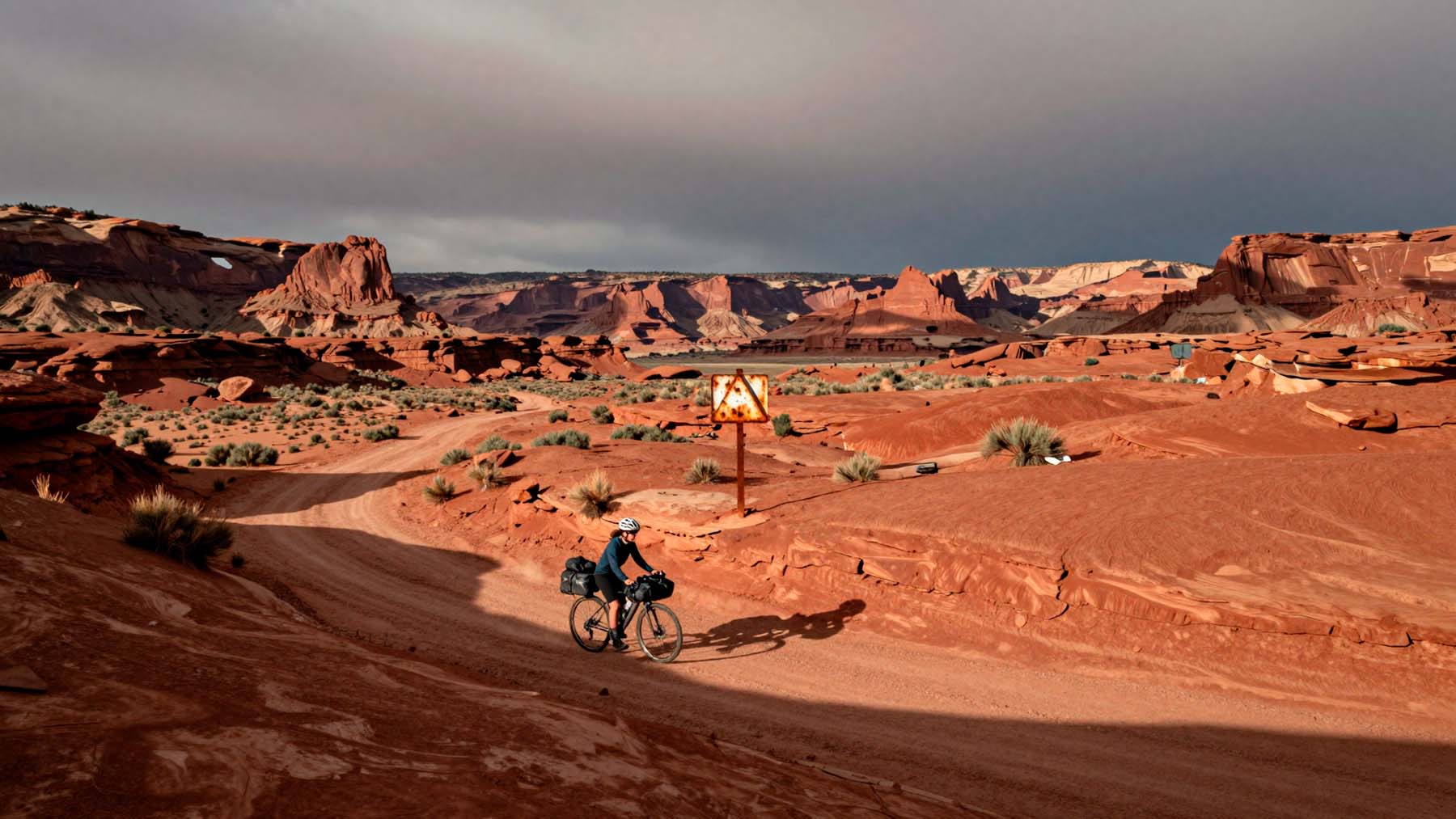
For years, two wild dirt loops in Utah have drawn adventurous riders from all across the country. The Cedar Mesa Loop and the Grand Staircase Loop offer something rare. You get rugged red rock, silence, and an endless horizon.
Outdoor Alliance calls this terrain world-class. Few places in the American West match this mix of scale, peace, and trail quality.
Bikepackers carry their own gear for days just to touch this landscape. They ride through towering sandstone cliffs and quiet canyons. They sleep under clear desert skies.
The Department of Transportation labeled urban bike lanes as “DEI initiatives.” It pulled $1.73 billion away from bicycle infrastructure.
Yet the peaceful conditions that made these legendary rides possible have suddenly shifted.
Two monuments, three million acres, one executive order
On July 13, 2026, President Trump signed executive orders cutting protections for two massive Utah sites. These are Bears Ears National Monument and Grand Staircase-Escalante National Monument.
The scale of these cuts is staggering. Grand Staircase-Escalante shrank from 1.87 million acres down to just 181,500 acres. Bears Ears dropped from 1.36 million acres down to 121,100 acres.
Together, these two national monuments lost nearly three million acres of protected federal land. They were chopped down to about a tenth of their original footprint.
That lost territory did not just disappear into thin air. Instead, it opened up for heavy industrial use. The land is now available for mineral extraction, new road construction, oil drilling, and off-highway vehicle access.
The underlying financial motives are clear. Reports from the Associated Press confirm that Grand Staircase-Escalante sits right on top of vast coal deposits. Meanwhile, Bears Ears overlaps critical uranium fields.
Under full monument status, those energy resources stayed strictly off-limits. Now, that barrier is gone.
What cyclists stand to lose on the ground
The Cedar Mesa Loop and the Grand Staircase Loop run straight through these altered boundaries. These are not minor side trails. People travel thousands of miles to experience them.
Advocates at Outdoor Alliance emphasize what is truly at risk here. These public lands offer world-class bikepacking. At the same time, they safeguard priceless cultural sites, wildlife habitats, and tribal homelands.
Monument status was designed to keep that unique balance safe forever.
When President Biden previously restored these monument borders, his orders named specific outdoor sports. He explicitly listed mountain biking, backcountry riding, and canyoneering as protected uses.
That legal phrasing gave non-motorized cyclists a recognized seat at the table.
Without those explicit protections, heavy industry and noisy off-road vehicles can move right in. They will compete directly with quiet dirt touring, grinding away the solitude that made these famous routes special.
A shrinking safe space for cyclists on and off the road
This loss of wilderness does not happen in a vacuum. It comes during a severe safety crisis for American road cyclists.
Bicycle riders now account for a record high percentage of total U.S. traffic deaths. Because paved roads are getting deadlier, remote gravel and dirt routes have become vital sanctuaries.
Yet paved options are growing more dangerous by design. Under Transportation Secretary Sean Duffy, federal transit policies have reversed course.
The Department of Transportation labeled urban bike lanes as “DEI initiatives.” It pulled $1.73 billion away from bicycle infrastructure.
The Federal Highway Administration even removed protected bike lanes, speed cameras, and road diets from its list of proven safety measures.
A grim squeeze is underway. Riders are getting squeezed off paved city streets by rollbacks in federal safety rules.
At the exact same time, they are losing their peaceful off-road escapes to mining trucks and industrial bulldozers.
A legal battle with no settled precedent
The power of a president to shrink national monuments remains legally shaky. The Antiquities Act of 1906 allows presidents to create national monuments to protect historic and scientific sites.
However, the original text says nothing about shrinking or erasing monument boundaries once established.
The current administration argues that the authority to create monuments implies the authority to alter them. Opponents point to the U.S. Constitution.
Article IV, Section 3—known as the Property Clause—gives Congress exclusive authority over public lands. The Supreme Court has never issued a final ruling on this specific dispute.
Legal battles are already forming. The Southern Utah Wilderness Alliance announced lawsuits against the boundary cuts. A coalition of Native American tribes is joining the legal fight.
Tribal leaders were not consulted before these new orders came down. That lack of notice violated years of collaborative management agreements.
Similar lawsuits during Trump’s first term were cut short when Biden restored the boundaries. This time, that automatic reset might not happen.
How riders and advocates can respond
Court fights take time, and outcomes remain uncertain. However, everyday cyclists still have options to make their voices heard.
You can start by signing public petitions sent straight to the White House. It provides a direct way to log your official opposition.
You can also contact federal management agencies. The Bureau of Land Management and the U.S. Forest Service oversee these newly opened territories. Writing to local and national agency offices holds leaders accountable.
Reaching out to state representatives adds political pressure, especially in Utah and neighboring Western states.
Organizations like Outdoor Alliance are actively organizing campaigns to protect trails. Joining forces turns individual riders into a powerful movement.
Here is the real truth behind this whole battle. This was never just a fight over a few remote dirt tracks in Utah.
The loss of these trails reveals a single, sweeping policy shift: the systematic elimination of safe, non-motorized space anywhere in America. Whether you ride on city asphalt or deep desert gravel, the sanctuary is disappearing.
Kelly is an experienced writer with 15 years of experience exploring the big stories that shape our world, from tech breakthroughs and space exploration to climate, energy, and the fascinating quirks of science. She has a talent for turning complex ideas into sharp, memorable insights that stay with readers long after they’ve finished reading.
