
Blue Castle nuclear project in Utah revived as small modular reactor facility in partnership with Holtec International
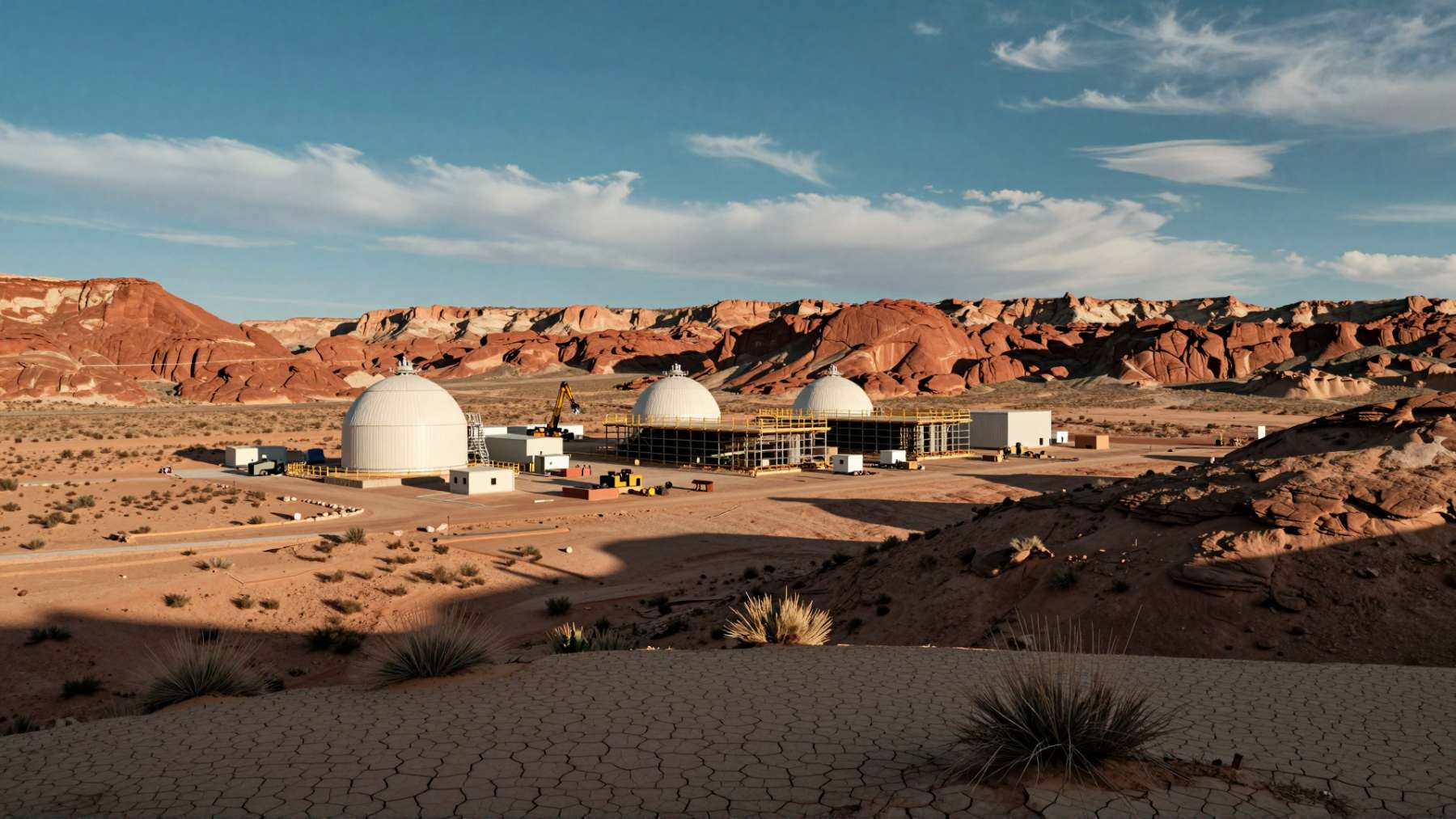
A nuclear project nearly two decades in the making is getting a second life in the Utah desert. Blue Castle Holdings and Fulcrum Point Holdings announced last week a joint venture to revive the long-dormant Blue Castle nuclear project in Green River, Utah — this time as a small modular reactor facility. The two developers plan to partner with Holtec International to deploy between two and four SMR-300 pressurized water reactors at the site, with a potential output of 600 MW to 1,200 MW.
Joint venture announced to restart Blue Castle project
Blue Castle Holdings and Fulcrum Point Holdings — the latter founded by the owner of Hi Tech Solutions — announced the joint venture last week to advance the long-stalled Blue Castle project. Working alongside Holtec International, the two developers will deploy SMR-300 pressurized water reactors at the Green River site in southeastern Utah.
The plan calls for two to four SMR-300 units generating between 600 MW and 1,200 MW of total capacity, a range that would make the facility a meaningful contributor to regional energy supply. The project remains in its preliminary phase. Blue Castle says additional details on a timeline and community input opportunities will follow as development progresses.
It now enters a new phase under a different reactor design, a new development partnership, and a state policy environment actively encouraging nuclear investment.
Why the project shifted from large reactors to SMRs
The original direction for Blue Castle looked quite different. A 2014 memorandum of understanding between Blue Castle and Westinghouse Electric Company called for two AP1000 pressurized water reactors — large, conventional units of the kind being built at Plant Vogtle in Georgia.
The move to SMR-300 units reflects both site-specific and industry-wide realities. Holtec officials noted that the SMR-300’s air-cooling technology is well suited to arid environments where water availability is limited — a genuine constraint at the Green River site, which sits in a high-desert region of southeastern Utah where large-scale industrial operations have always had to contend with scarcity.
The shift also mirrors a broader trend. Developers increasingly favor smaller, modular designs for new deployments, pointing to lower upfront capital requirements and greater siting flexibility than conventional large reactors can offer.
Expected economic and energy output for Utah
Blue Castle projects more than 2,500 jobs will be created during construction, along with hundreds of permanent full-time positions once the plant is operating. CEO Aaron Tilton described the project as the product of nearly two decades of groundwork aimed at reducing site risk and creating economic value in rural Utah. He also pointed to potential behind-the-meter uses for advanced technology applications as part of the site’s long-term value proposition.
Holtec president Rick Springman framed the announcement in strategic terms, describing it as central to the company’s Mountain West expansion under Utah’s Operation Gigawatt initiative. Supply chain development follows reactor deployments, he noted, making the project’s advancement important to downstream investments across the state’s nuclear ecosystem.
Green River city manager Edward Castro Bennett expressed continued community support, saying southeast Utah has long played a role in powering the state and that Green River is well-positioned to remain part of Utah’s energy future as new technologies emerge.
Nearly two decades of legal and regulatory history
The Blue Castle project has a complicated past. It first appeared in news coverage around 2007 and was formally announced in February 2009, when the company was still operating under the name Transition Power Development. Early plans called for a Nuclear Regulatory Commission application in 2010 for a combined construction and operating license — a target date that moved several times before the proposed application type eventually shifted to an early site permit, which also faced repeated delays.
Utah granted the project water rights in 2012, but that decision triggered a legal challenge from the Healthy Environment Alliance of Utah, known as HEAL Utah. The dispute worked through the courts for years before the Utah Court of Appeals ruled in Blue Castle’s favor in 2016.
HEAL Utah has not stepped back from its concerns. In response to the revived project, the group told local news outlet KSL.com that it remains worried about water use, the Colorado River ecosystem, radioactive waste management, and the potential long-term costs to taxpayers if the project were to fail.
Blue Castle announcement fits broader Utah nuclear expansion
The Blue Castle revival is the latest development in a rapidly expanding nuclear landscape across Utah. The state’s Operation Gigawatt program aims to double Utah’s energy production by 2034, with nuclear energy positioned as a central component of that goal.
A separate Holtec SMR-300 project in Brigham City was announced last November, also carrying ties to Fulcrum Point and Hi Tech Solutions — making Holtec a recurring partner in Utah’s nuclear buildout. Other companies active in the state include TerraPower, Valar Atomics, Anfield Energy, Nusano, and General Matter, each advancing projects at various stages of development.
On May 22, the Operation Gigawatt Summit in Park City brought together state and federal officials, industry leaders, and investors to discuss Utah’s energy needs and the role nuclear could play in meeting them.
The Blue Castle announcement marks a project that has survived legal battles, market shifts, and nearly two decades of delays. It now enters a new phase under a different reactor design, a new development partnership, and a state policy environment actively encouraging nuclear investment.

Carlos is an engineer with strong expertise in technical and industrial topics. He previously worked at international companies such as Siemens and is multilingual.
