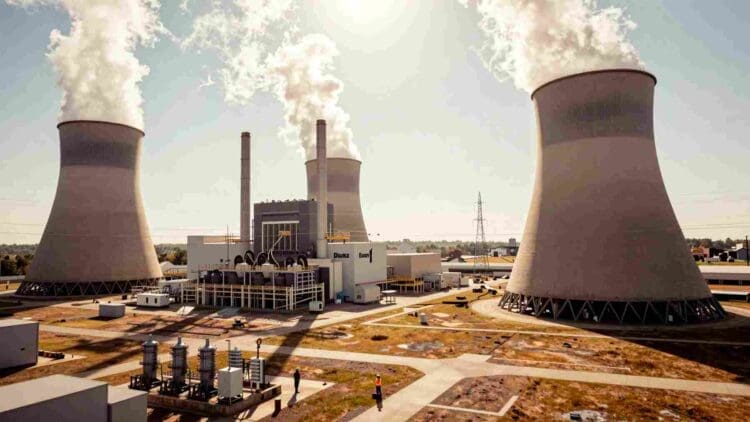

The U.S. Department of Energy issued an emergency order on June 11, 2026, allowing Duke Energy to run its power plants at maximum output across the Carolinas — temporarily setting aside air quality and other environmental permit limits — as the region braces for an anticipated surge in electricity demand driven by high temperatures.
DOE Authorizes Duke Energy to Override Permit Limits During Heat Period
The emergency order took effect at 4:00 PM ET on June 11, 2026, and is set to expire at 10:00 PM ET on June 12, 2026 — a window of roughly 30 hours. It covers two Duke Energy subsidiaries: Duke Energy Carolinas, LLC and Duke Energy Progress, LLC.
Under the order, specified generating units within Duke Energy’s service territory may operate at their maximum generation output levels, regardless of air quality restrictions or any other permit limitations under federal, state, or local law. The scope of the override is intentionally broad. The DOE did not act unilaterally here — Duke Energy submitted a formal application requesting the order, and the DOE granted it the same day.




Duke Energy Cited Permit Constraints and High Demand as Cause for the Request
Duke Energy’s application explained the core problem: certain generating units are constrained by conditions written into their existing environmental permits, which under normal circumstances limit how much power those units can produce.
The company projected that available generation may not be sufficient to meet what it described as unusually high forecasted load. The demand Duke Energy expected during the heat event could exceed what its permitted generation capacity could legally deliver — a gap that created serious operational risk. Duke Energy warned it could be forced to curtail load, a utility term for rolling blackouts, in order to maintain grid security. That prospect prompted the company to seek federal intervention through a Section 202(c) order.
Order Aims to Prevent Blackouts for Customers Across the Carolinas Service Territory
The stated purpose is straightforward: reduce the risk of blackouts for Duke Energy customers across the Carolinas. By allowing generating units to run above their permitted output levels, the order creates additional headroom between available supply and anticipated demand.
Without the override, environmental permit caps would have stayed in place even as temperatures climbed and electricity use surged. Energy Secretary Chris Wright framed the decision plainly. “Maintaining affordable, reliable, and secure power in the Duke Energy service territory is non-negotiable,” he said in a statement accompanying the order. Its short duration — just over a day — limits the period during which permit conditions are suspended to the window of greatest risk.
Section 202(c) of the Federal Power Act Provides the Legal Basis for the Order
The DOE’s authority to issue this directive comes from Section 202(c) of the Federal Power Act,, which allows the federal government to order electricity generators to operate during emergencies, even when doing so requires setting aside regulatory and permit constraints that would otherwise apply.
The provision is designed for situations where grid reliability is at risk. It gives the DOE a tool to act quickly when normal regulatory processes cannot respond fast enough to a developing supply shortfall. Emergency orders under Section 202(c) have historically been invoked during extreme weather events — the provision exists because grid failures can cause cascading harm to public health, safety, and critical infrastructure, harm serious enough to justify temporary federal override of state and local permit requirements.
The current order also fits within a broader policy context. On his first day in office, President Trump declared a national energy emergency, citing concerns about grid vulnerability. Secretary Wright’s statement referenced that declaration and framed the Carolinas order as consistent with the administration’s approach to grid reliability.
Permits Suspended During the Heat Event
The DOE’s June 11 emergency order gives Duke Energy Carolinas and Duke Energy Progress legal authorization to run specified power plants at maximum output through 10:00 PM ET on June 12, 2026, suspending air quality and other environmental permit limits for the duration of the heat event.
Duke Energy requested the order after determining that permit-constrained generation may be insufficient to meet projected demand — raising the risk of rolling blackouts. The legal mechanism is Section 202(c) of the Federal Power Act, which grants the DOE authority to prioritize grid reliability in declared emergencies. Once the high-demand window passes, the order expires automatically.
Kelly is an experienced writer with 15 years of experience exploring the big stories that shape our world, from tech breakthroughs and space exploration to climate, energy, and the fascinating quirks of science. She has a talent for turning complex ideas into sharp, memorable insights that stay with readers long after they’ve finished reading.