
American beekeepers just reported losing 55% of their colonies in a single year, and researchers say the crisis is only getting harder to stop
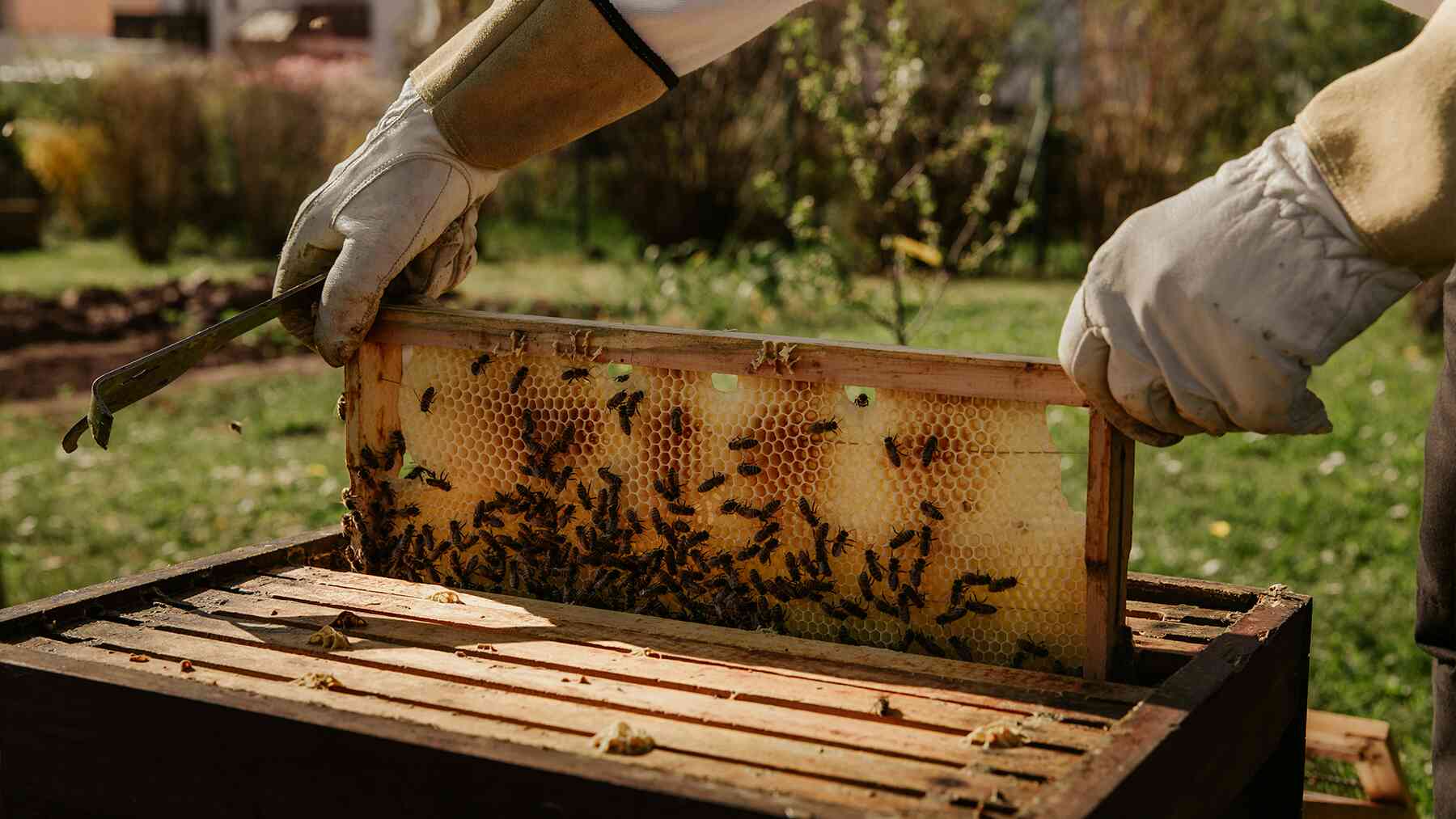 Credits: Energies Media Internal edition
The collapse of honeybee populations creates a severe systemic crisis for the agriculture sector.
In the U.S., American beekeepers have reported a significant decline in colonies after one year.
This increases the risk of international food insecurity. Over 75% of food crops rely on pollinators to maintain yields and nutritional density.
Auburn University researchers are leading the action, urging beekeepers to implement these strategies before hives are destroyed.
What could have led to this widespread decline in America’s vital bee colonies, and how can it be prevented?
How honeybees anchor the food supply
Agricultural reproduction is fundamentally reliant on honeybees for their pollination.
The process begins when bees land on flowers to forage for pollen and nectar.
A bee has a fuzzy body, and when it moves, pollen grains from the male anther will stick to it.
When bees seek other blossoms of the same species, the pollen is transferred to the female stigma.
This is known as cross-pollination, and it is critical for plant fertilization.
This process allows seeds, nuts, and fleshy fruit to develop.
Many crops rely on this mechanical transfer to reproduce and set fruit properly.
While wind and self-pollination are alternative options, they are insufficient for high-value crops. These include apples, almonds, blueberries, and melons.
In the U.S., pollinators add nearly $15 billion in annual economic value to agricultural systems.
A population collapse triggers food scarcity and price inflation at grocery stores.
The impact of inadequate pollination on harvests
Honeybee scarcity limits the quantity and quality of harvests.
Without bees, the total volume of food harvested during a single growing season decreases.
Global models project that inadequate pollination directly lowers fruit, vegetable, and nut production up to 5% annually.
Furthermore, if pollen is not transferred sufficiently, the fruit will develop asymmetrically.
Berries are small and misshapen, while apples and melons grow lopsided.
This is caused by unfertilized segments within the fruit that fail to swell.
These crops are not only smaller, but also less nutritious and lack uniform color.
Consequently, they are rejected for retail grocery display, causing major food waste.
Another major consequence is the changes to honey production.
Recent USDA data indicate that honey yields dropped by 14% in a year in the U.S.
This is because American beekeepers experienced a 55.6% annual loss in bee colonies.
Auburn University played a central role in tracking this crisis.
America’s major loss of valuable bee populations
Researchers found that a combination of threats was the primary cause of the record-breaking colony losses.
However, the single greatest threat to honeybees is a tiny parasitic mite.
This mite is the Varroa destructor, which latches onto bees and feeds on their fat bodies.
They severely weaken individual bees and transmit deadly pathogens into the colony.
The incredibly harsh winter was another heavy driver of this massive annual loss.
40.2% of colonies were lost over the winter season. This number far exceeds historical averages.
Pest infestations and weather impacts fluctuated across the U.S.
Some states experienced a manageable 34.3% decline, while others experienced a catastrophic 90.5% loss.
Some beekeepers are manually splitting and rebuilding hives. However, this process is time-consuming and labor-intensive.
Business margins are extremely tight, and this constant recovery loop increases the strain.
Overall, this honeybee crisis is becoming increasingly more difficult to halt.
Strict monitoring and Integrated Pest Management (IPM) strategies will help slow this critical ecological decline. That is why widespread adoption is being encouraged.
Auburn University researchers are leading the action, urging beekeepers to implement these strategies before hives are destroyed.
These operations are being supported by university extension programs. The goal is to deliver free and low-cost field training for American beekeepers.
Immediate, coordinated field management is essential to protect the remaining honeybee populations in the U.S.
Anke Maree is a writer with a clear and engaging editorial style. Her work focuses on making complex topics accessible, informative, and relevant for readers across different areas of interest.
