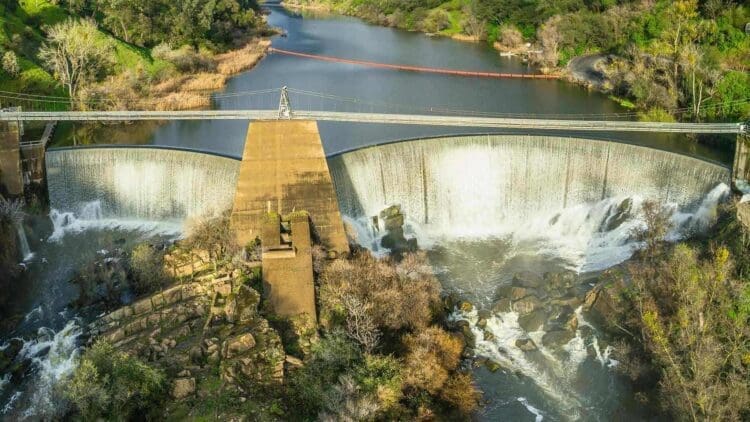

River management and hydropower operations often receive media attention only when sudden changes occur. In practice, water release decisions are made months in advance, shaping downstream conditions long before water is released. That context applies to Eagle Creek Renewable Energy’s new notice for its Rio Project, which outlines how the company plans to manage water releases and operate the facility during the 2026 season.
A framework for operating plans for the 2026 season
Eagle creek renewable energy posted an updated whitewater release schedule for its Rio Project, which is a part of the Mongaup River Hydroelectric System. This release schedule is designed to outline the planned releases with the Whitewater releases that will be occurring at the facility from April 15th until October 31st, 2026. The release schedule includes several different time frames when water will be released downstream from the facility.
Eagle Creek Renewable Energy states that whitewater releases will take place between 11 a.m. and 3 p.m. on selected days during the season, using either one or two units with an approximate flow of 435 cubic feet per second per unit. The published schedule details specific dates and unit configurations, providing river users and stakeholders with advance visibility into water release operations during the 2026 season.




By including both the timing and volume of water discharged, Eagle Creek established an obvious operational strategy for managing releases from the Rio facility during scheduled release periods. The published release schedule provides river users and stakeholders with insight into when increased flow rates can be anticipated, as well as when such increases are anticipated to occur within the confines of an operating power generation system.
Hydroelectric power generation and release coordination
While this publication primarily addresses whitewater activities, it also reflects broader coordination at the Rio facility. Scheduled releases form part of routine plant operations that balance power generation with the need to maintain adequate downstream water flows.
Eagle Creek indicates that all scheduled releases remain contingent on weather‑related and other local conditions. As a result, releases may be adjusted based on factors such as reservoir inflows, meaning operating conditions can vary as hydrologic circumstances change.
Alongside the seasonal release calendar, Eagle Creek provides daily forecasts through its Mongaup River system reporting tools. These forecasts offer near‑term visibility into potential releases, supporting long‑range planning with up‑to‑date operational information and illustrating how planning and real‑time conditions intersect in hydropower‑based water management.
Operational transparency and downstream planning expectations
The update also demonstrates Eagle Creek’s commitment to clearly communicating expectations related to operational practices prior to initiating operations. By releasing dates, times, and operational configurations of units involved in releases, Eagle Creek has provided important information necessary to allow downstream users to make informed decisions about planning.
However, it should be noted that Eagle Creek is indicating that the release schedule is conditional and not set in stone. Furthermore, eagle creek emphasizes that releases may be altered based on changing local conditions. This philosophy is reflective of a dynamic relationship between planning and flexibility. Flexibility is essential in hydropower operations since environmental and hydraulic variables continually impact water resource availability.
Notably, this update did not indicate any changes to generator configurations, installed capacity, or system design. Rather, it indicated how existing facilities would be utilized during specific periods in 2026. Therefore, this was an operational update rather than a development or expansion announcement.
An operational view of 2026 water management
Through its revised Rio Project notice, Eagle Creek Renewable Energy presents a practical view of how hydropower generation and water releases are expected to interact during the 2026 season. The published release schedule and forecasting tools show how water management is routinely integrated into hydropower operations, without signaling any major shift in strategy.