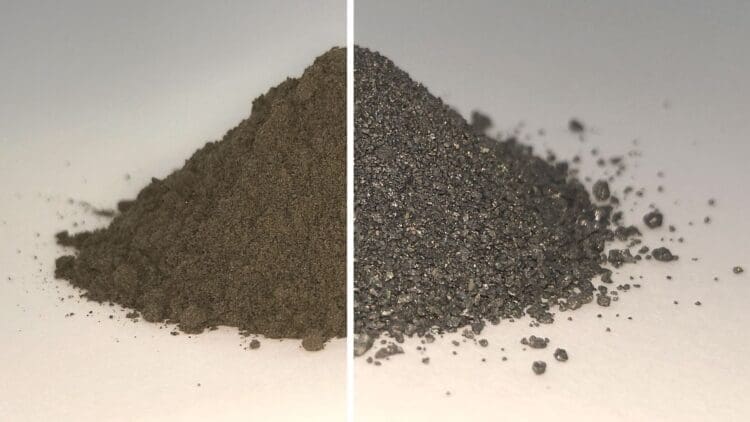

Moon dust can turn the surface into the ideal self-sustaining pitstop for cost-effective space travel and construction.
Years ago, humanity made history by taking the first step on the moon, marking the beginning of a new era.
Since then, humans have gone to the moon several times, but none has remained on it for an extended period.



Could exploiting the energy locked within the lunar soil finally change the course of events?
How the moon could become the new home base
Colonization has formed a key part of Earth’s history, and now, pioneers want to extend this phenomenon to the moon.
However, while curiosity pushed humans to explore the unknown in the past, colonizing the moon is now a strategic necessity.
A permanent presence will help fast-track the next century of human development.
The planet’s atmosphere has a significant interference and radio noise, limiting the use of telescopes to peer into the universe.
By exploiting the moon as a “deep-space laboratory,” radio telescopes can be used in a more pristine environment.
Beyond the possibility of increased scientific insights, it is also a vital testing ground for technologies needed to reach Mars.
It is a vital stepping stone to more advanced and further space travel.
However, before any of this can be achieved, there are a few obstacles that must be overcome first.
The bigger the ambition, the greater the challenges
Conventional air travel is facing hurdles due to the use of sustainable aviation fuels (SAF) becoming mandatory.
The new regulations have been put in place due to the significant contribution to climate change.
Space travel is also a big contributor to emissions. SAF may not be mandated for rocket fuels yet, but cleaner alternatives are being explored.
The “cleaner” fuels increase travel expenses by necessitating special storage and engine requirements. For these reasons, conventional fuels are still more in use.
However, the cost of logistics remains a primary hurdle in general.
Significant amounts of oxygen and fuel must be transported during missions to the moon, which is extremely expensive.
The 14-day-long lunar night with its freezing temperatures (-200°F) also make survival challenging,
Fortunately, scientists found an In-Situ Resource Utilization (ISRU) approach to overcome these obstacles.
It is detailed in the study “Using the moon’s soil to support life, energy generation, and construction” published by the University of Waterloo.
Tapping the energy of the moon’s dust
The moon is full of intriguing surprises, but the source of power hidden within its soil is the most exciting.
Artemis II completed a mission, and scientists are now focusing on the dust the crew observed from orbit.
Analysis unveiled that the soil’s top layer, known as lunar regolith, is rich in metallic dust embedded with oxygen.
The oxygen-rich regolith opens the door to many applications.
From a thermite reaction to scavenging the orbits
The absence of oxygen on the moon places it in a “vacuum.” Using the soil, thermal energy is generated within this vacuum, creating an efficient way to survive the harsh lunar conditions.
This is done by mixing the regolith with a fuel source.
The “hidden” energy can be ignited by utilizing the aluminum from obsolete satellites, or “space junk.”
Future missions could thus face less of a threat by recycling the millions of junk cluttering the orbit.
The lunar energy source could soon transform the moon into a true self-sustaining manufacturing hub.
Space travel will require less of Earth’s resources by fueling journeys with the ISRU solution.
By repurposing “strange dust” and obsolete space clutter into life-sustaining heat and power, humanity is moving into the Artemis era. The next stop is Mars, and beyond.
Anke Maree is a writer with a clear and engaging editorial style. Her work focuses on making complex topics accessible, informative, and relevant for readers across different areas of interest.