
EBRD and EU funds back €18.9 million solar park to power Greek steel producer Hellenic Halyvourgia
 AI-made
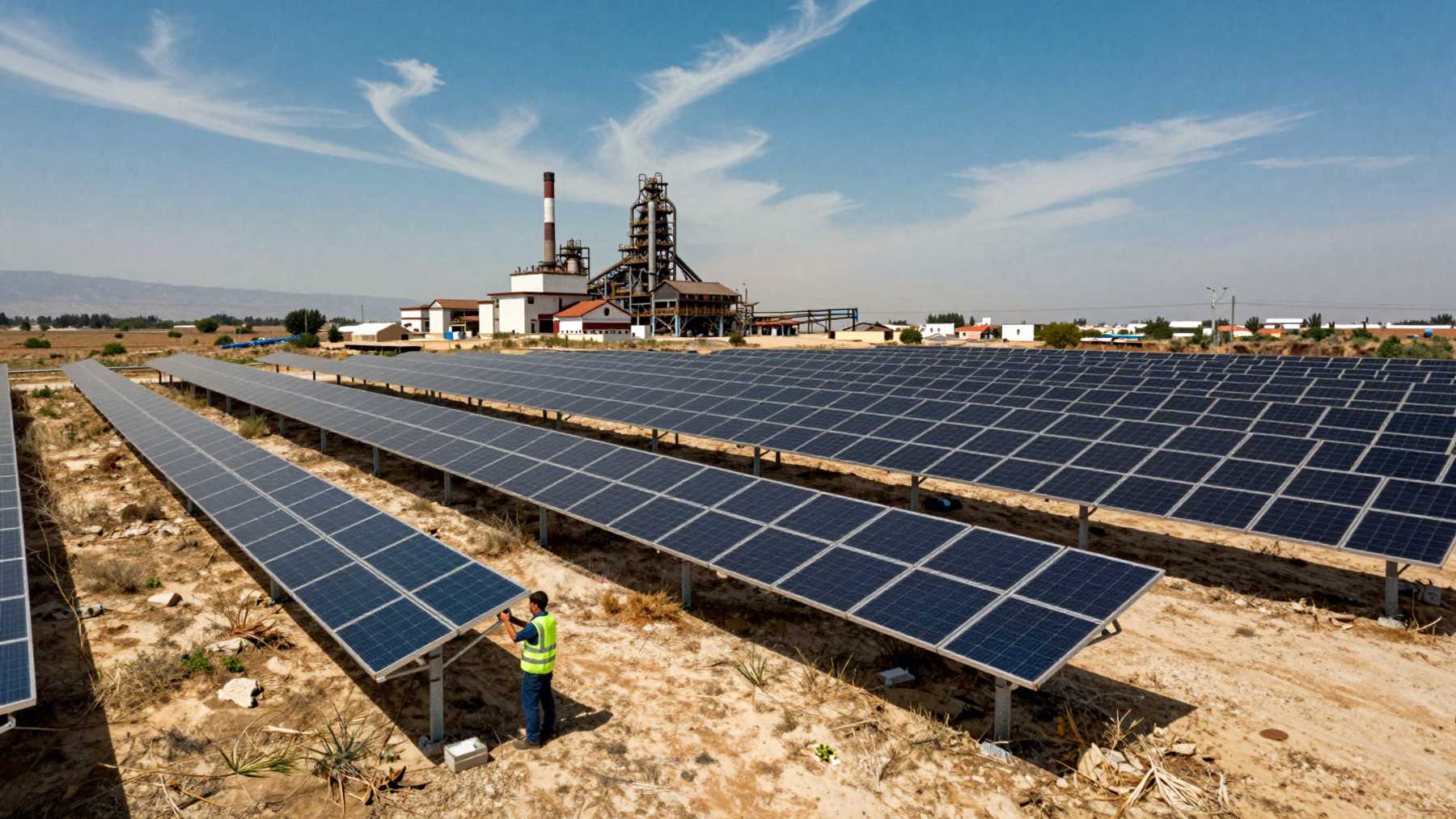
The European Bank for Reconstruction and Development has signed an €18.9 million financing package to fund the construction of a 32 MW solar photovoltaic park in Greece. The project will supply renewable electricity directly to the production facilities of Hellenic Halyvourgia, one of the largest steel producers in the Balkans, covering roughly 20 percent of the company’s electricity needs.
EBRD Signs €18.9 Million Financing Deal for 32 MW Solar Park
The total financing package draws from three sources. The EBRD is providing a €5.7 million loan, while €9.4 million comes from Recovery and Resilience Facility loans channeled through the Greek authorities. Hellenic Halyvourgia itself contributes the remaining €3.8 million from its own funds.
That combination of institutional lending and private co-investment reflects a deliberate structure. By requiring the company to commit its own capital, the deal aligns incentives and signals that Hellenic Halyvourgia has a direct stake in the project’s success.
The project is expected to cover around 20 percent of the steelmaker’s electricity needs and cut annual carbon emissions by more than 22,000 tonnes.
Why the Project Was Structured Under the Greek RRF Co-Financing Framework
The deal was signed under the EBRD’s Greek RRF Co-Financing Framework, which operates as part of the “Greece 2.0” National Recovery and Resilience Plan. EU funding flows through the NextGenerationEU programme — the bloc’s flagship initiative targeting post-pandemic economic recovery and the green transition at the same time.
This framework matters because the EBRD’s formal mandate in Greece ended on 31 December 2025. The bank is still signing projects that received approval in 2025 and continues to manage its existing portfolio in the country. The RRF Co-Financing Framework keeps the EBRD active in Greece through a mechanism tied to EU recovery funds, even as its broader operational mandate winds down — a practical arrangement that preserves institutional expertise during a critical period for Greek infrastructure investment.
Expected Impact on Hellenic Halyvourgia’s Energy Use and Carbon Footprint
Once operational, the solar park is expected to cover approximately 20 percent of Hellenic Halyvourgia’s total electricity needs. For a steel producer — a sector that runs on continuous, high-volume power consumption — that is a meaningful share.
The environmental benefit is equally significant. Annual carbon emissions are expected to fall by more than 22,000 tonnes once the park reaches full capacity, a reduction that comes directly from displacing grid electricity, which in Greece still carries a carbon intensity tied to fossil fuel generation.
The project also addresses a financial vulnerability. Steel producers are exposed to swings in wholesale energy markets, and electricity costs can represent a substantial portion of operating expenses. Generating a fifth of its own power through a fixed-cost solar asset lets Hellenic Halyvourgia reduce that exposure in a measurable, durable way.
Broader Context: Decarbonizing Heavy Industry in Greece
Steel production sits among the most energy-intensive industrial activities in Greece — making it both a significant source of emissions and a high-priority target for decarbonization under national and EU climate frameworks. Reducing the carbon footprint of sectors like steel is harder than electrifying transport or retrofitting buildings, which is precisely why targeted financing instruments like this one matter.
The EBRD has framed the project as a demonstration of what structured financing can achieve. According to the bank, the deal shows how established industrial companies can invest in cleaner technologies while protecting jobs and maintaining their role in domestic supply chains. That framing carries real weight in a country where heavy industry remains a source of stable employment.
Greece’s national energy and climate objectives require increasing renewable energy use across all sectors, not just power generation. Industrial self-generation projects like this one contribute directly to those targets while keeping the investment decision within the private sector.
Hellenic Halyvourgia Will Cover 20% of Needs
The EBRD’s €18.9 million financing package will fund a 32 MW solar photovoltaic park supplying renewable electricity to Hellenic Halyvourgia’s steel production facilities in Greece. Funding combines an EBRD loan, EU Recovery and Resilience Facility loans via the Greek authorities, and a direct contribution from the company itself.
The project is expected to cover around 20 percent of the steelmaker’s electricity needs and cut annual carbon emissions by more than 22,000 tonnes. It was structured under the EBRD’s Greek RRF Co-Financing Framework, part of the “Greece 2.0” plan funded by NextGenerationEU, and was approved before the EBRD’s formal mandate in Greece closed at the end of 2025. The bank has invested more than €8.9 billion in the Greek economy overall, and this project represents one of its final contributions under that mandate.

Carlos is an engineer with strong expertise in technical and industrial topics. He previously worked at international companies such as Siemens and is multilingual.
