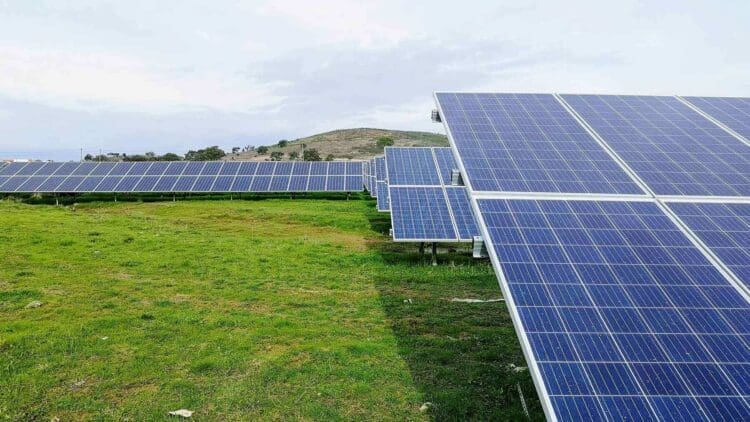

As countries around the world are quickly attempting to establish a strong clean energy portfolio, solar developments are becoming increasingly important for nations worldwide. In the European landscape, countries have shown a great desire to collaborate with each other as they are prioritizing achieving the continent’s clean energy objectives instead of solely making a profit. The continent has also shown a willingness to permit companies from outside to enter and assist in establishing groundbreaking initiatives. In the most recent occurrence, EDF Power Solutions obtained regulatory approval to advance the 800 MW Springwell solar development.
EDF Power Solutions makes significant progress in building its solar facility
Although companies are at the forefront of initiatives that materialize, it is equally important to acknowledge the government and energy departments that approve of all projects. EDF Power Solutions is a global developer, builder, and operator of renewable energy projects with a specific focus on wind, solar, and battery storage.
The entity’s current concern is accelerating the energy transition through low-carbon flexible energy solutions. As such, it has a strong presence in a wide range of countries, such as South Africa, Brazil, and also within Europe. In its latest endeavor, EDF Power Solutions has secured a major regulatory milestone for its flagship Springwell solar project in the United Kingdom.


This is a significant step forward in the country’s clean energy transition and in the company’s aspirations to possess a strong portfolio. The 800 MW development, located in Lincolnshire, has received a Development Consent Order from the UK government, allowing construction to move forward. The project will be developed in partnership with Luminous Energy and is expected to become the largest solar installation in the UK once operational.
Analyzing the forthcoming impacts of the Springwell solar development in the UK
Wind energy initiatives have often faced criticism over the years because they are prone to intermittency issues. However, the introduction of technological innovation and scientific expertise is allowing developers to come up with different solutions. The approval of EDF’s latest initiative displays growing political and institutional support for utility-scale renewable energy infrastructure.
According to reports, the UK Department for Energy Security and Net Zero granted approval through the Nationally Significant Infrastructure Project (NSIP) process, which applies to large-scale developments reaching over 100 MW.
The UK government is utilizing this approach to energy initiatives to eliminate local decision-making and ensure that strategically important energy projects can move forward accordingly. For EDF Power Solutions, the permission granted to move forward conveys the benefits of a long planning and assessment process, including environmental reviews and public consultations.
A general overview of the UK’s solar energy landscape and the impacts of the project
The UK solar energy landscape is enduring rapid growth at the moment, largely because of the publicized net-zero targets that all companies are eager to reach. Reports suggest that the nation has solar technology installed on roughly 1.6 million buildings and over 1,300 operational solar farms.
There are no signs of the nation slowing down, as in the latest project, the Development Consent Order was granted to clear the final regulatory hurdle, allowing the project to enter its construction phase. However, the decision was not reached without any pushback from local councils and community groups.
Nevertheless, national authorities reiterated the project’s importance in meeting long-term energy and climate targets.
Analyzing the specific features of the Springwell solar farm coming soon
The Springwell solar farm will possess an installed capacity of 800 MW, making it the largest solar power facility in the UK. Situated between Lincoln and Sleaford, the site will include photovoltaic panels alongside a battery energy storage system (BESS).
The project is expected to connect to a new 400 kV substation being built by National Grid, supporting a wider range of renewable energy projects in the region.
When operational, the facility will generate enough electricity to power more than 180,000 homes per year. The UK continues to prosper in its solar sector. The nation has established valuable blueprints thus far in 2026.