
Global energy is shifting toward ‘nature-positive’ infrastructure.
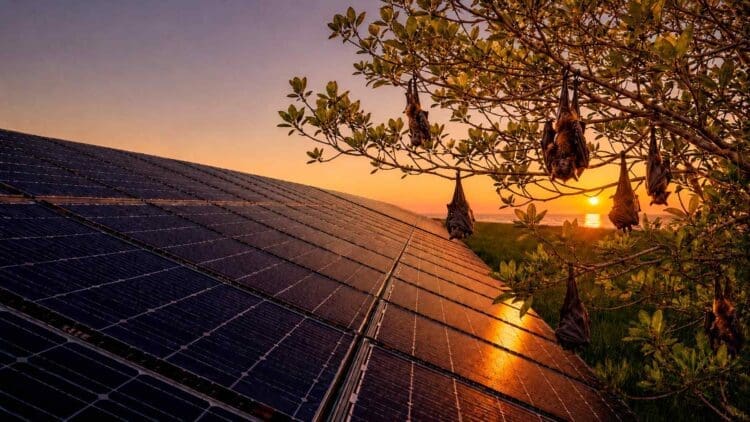
Solar farms are engineered to function as active ecosystems rather than industrial voids.
Solar capacity increased by a record 375 GW globally in 2023. This was driven by an urgent need for carbon-free baseload power.

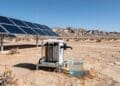

Concerns grew that the rapid deployment of solar panels would displace wildlife.
Is it possible to bridge the gap between industrial power and the fragile survival of nocturnal wildlife?
How global demands led to a burst in solar expansion
Global electricity demand is projected to rise by 3.4% annually in 2026.
The rapid expansion of energy-intensive industries is behind the surge.
Traditional steady growth has been replaced by the accelerated deployment of renewable energy facilities.
This sudden “burst” is driven by three main catalysts: revolutions in computing, decarbonization, and economic industrialization.
AI and data centers now account for 2% of global electricity use.
A single ChatGPT query consumes roughly 10 times more power than a Google search.
Processing tasks have become so complex that many centers now require hundreds of megawatts. This strains both hardware and the grid.
Electrification is another driver of demand.
This shift requires a significant influx of new production capacity to maintain reliability.
High-tech manufacturing needs high power density levels.
Only large-scale renewable projects have the capacity to deliver that quickly.
Solar is the fastest-deployable energy source.
Costs have dropped 89% over the last decade, making it the primary solution for rapid grid expansion.
Greater power has brought forward greater responsibility
The global surge in solar capacity has not been without consequences.
While the source may be essential for a sustainable future, the sheer scale of modern solar plants requires substantial land.
Utility-scale solar needs 5 to 10 acres per megawatt.
To meet 2050 Net Zero goals, the U.S. alone may require a land area the size of West Virginia.
It means that some sites now span thousands of acres and utilize several miles of perimeter infrastructure. This brought the impact on the surrounding environment into sharp focus.
The construction phase typically involves clearing land and removing old structures.
This can temporarily or permanently displace native species that have lived or migrated there for generations.
This was noted at the Groß Dölln solar farm, also known as the Templin Solar Park, in Germany.
A report from Belectric indicated that bat colonies suddenly disappeared at the site.
This motivated the company to transform the solar plant into a nature-positive area.
Designing a solar plant sanctuary for bats
The local bat colonies avoided the solar plant due to “habitat fragmentation.”
The project removed 80% of the site’s old buildings. This resulted in the loss of their homes and a change in the microclimate.
To reverse the population decline, Belectric came up with a recovery plan to transform the solar plant into a specialized habitat.
A modern, artificial replacement for the lost roosting spaces was the solution.
The design of a specialized bat habitat
Belectric installed 3,000 thermal-regulated nesting boxes, mimicking the natural crevices bats need for survival.
Specialized hiding spots with optimized internal climates were also created.
By establishing ideal humidity and temperature levels, bats could hibernate safely.
Wild flowers and local vegetation were planted beneath and around the solar panels to attract insects.
This provided the 11,000 bats with an abundant hunting ground.
This nature-positive approach at the 300-acre park delivered as hoped.
By 2024, the bat population surged from a few hundred to over 11,000, creating one of Europe’s largest artificial bat colonies.
Belectric proved that proper, responsible site planning and management enable renewable infrastructure to coexist with nature.
Project developers can even use these bio-friendly methods to rehabilitate local biodiversity.
The result is striking the perfect balance to achieve sustainability.
With global biodiversity declining by 69% since 1970, integrating wildlife sanctuaries into energy projects is no longer optional.
It is a blueprint for survival.
Disclaimer: Our coverage of events affecting companies is purely informative and descriptive. Under no circumstances does it seek to promote an opinion or create a trend, nor can it be taken as investment advice or a recommendation of any kind.
Anke Maree is a writer with a clear and engaging editorial style. Her work focuses on making complex topics accessible, informative, and relevant for readers across different areas of interest.