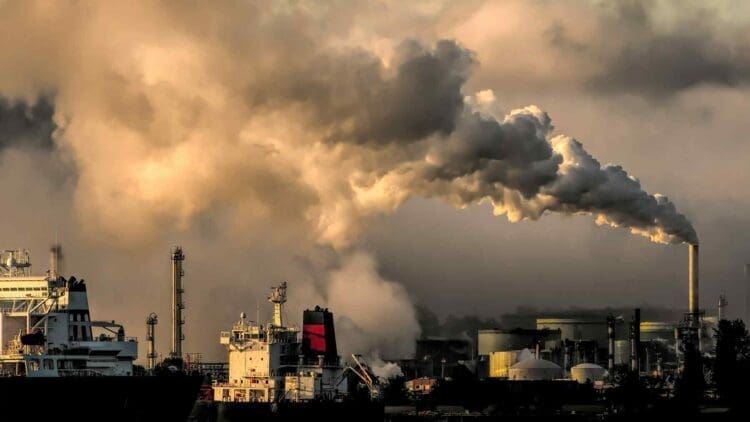

Making carbon capture an everyday reality for heavy industry requires overcoming challenges that have slowed the technology since its earliest proposals. For energy‑intensive operators, reducing emissions involves trade‑offs that affect both competitiveness and operational reliability. What’s missing is a catalyst that bridges the gap between ambition and action.
Why scaling carbon capture is much harder than it appears to be
Carbon capture and storage, commonly referred to as CCS, has been a subject of interest for over thirty years. However, despite the many years of consideration, CCS has experienced variable levels of progress during its history due to both the technical and operational challenges that have arisen.
A major obstacle to developing generic CO₂ removal methods is the variability of industrial sources. Carbon dioxide is produced under different temperatures, pressures, and chemical conditions across industries, leaving few shared characteristics and making broadly applicable solutions difficult to design.




When carbon capture is introduced at an industrial facility, it often requires retrofitting an operating plant. This can involve process modifications, added space requirements, and careful planning to limit production disruptions, creating barriers that go beyond the design and engineering of capture technologies themselves.
Although public awareness of greenhouse gas emissions is increasing, industrial operators still face long‑standing constraints. Carbon capture systems must integrate into existing plants, operate continuously, and do so without excessive energy use or capital cost. When these conditions cannot be met, otherwise viable technologies tend to remain limited to pilots or small‑scale demonstrations rather than moving toward large‑scale deployment.
From momentum to industrial readiness
Over the past decade, carbon capture has gained momentum as government incentives, customer requirements, and corporate decarbonization commitments have begun to align. However, momentum alone does not translate into meaningful results, particularly when technologies must perform reliably at an industrial scale.
To achieve broad deployment, developers must demonstrate that carbon capture systems can operate effectively in real production environments and at scales typical of energy‑intensive industries. This requirement has shifted attention away from proof‑of‑concept demonstrations toward practical performance under everyday operating conditions.
As a result, there is a growing emphasis on industrial readiness. Today, solution providers are expected to deliver systems that work within existing infrastructure, remain operational over long periods, and handle very large volumes of CO₂ efficiently. While the technical challenge of capturing carbon remains relevant, the broader hurdle now includes meeting the commercial expectations of industrial users.
Improving membrane-based carbon capture systems
ExxonMobil has identified advancements in carbon capture technologies, including membrane‑based systems, as a key part of its broader carbon capture and storage (CCS) strategy. The company views progress in membrane‑based capture as an important step in moving CCS from early momentum toward measurable, large‑scale outcomes.
According to ExxonMobil’s Viewpoints publication, capture technologies used by ExxonMobil must support industrial customers across a variety of sectors and operating conditions. Although specific performance metrics related to membrane systems were not provided by ExxonMobil, membranes are described as part of a portfolio of approaches that are being developed to enhance flexibility and scalability in CO2 separation.
ExxonMobil’s work to improve capture efficiency and scalability through membrane‑based systems is closely linked to its broader CCS capabilities, including capturing, transporting, and safely storing CO₂. The company points to growth in its project portfolio and industrial customer base as evidence that it is developing carbon capture technologies intended for practical deployment rather than purely hypothetical use.
What this means for industrial decarbonization
The fact that ExxonMobil is focusing on enhancing capture efficiency and scalability using membrane-based systems illustrates a broader trend in how industrial decarbonization is progressing. The emphasis is shifting away from identifying singular breakthroughs that can be applied independently, toward systems that can be replicated, scaled, and integrated into existing industrial supply chain structures.